



Gilt Wood Wall Lights
Gilt wood wall lights bring immediate warmth and reflected candle or electric glow to a room.
Gilt Wood Wall Lights
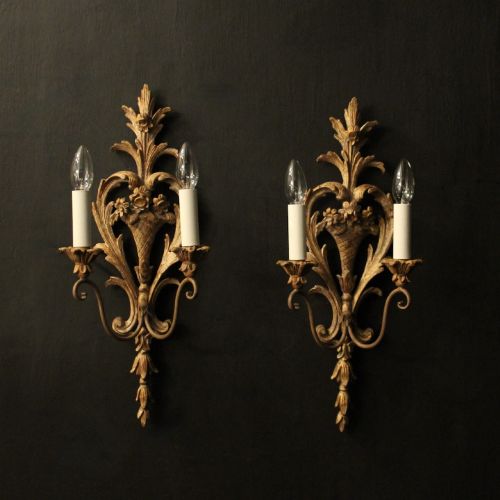
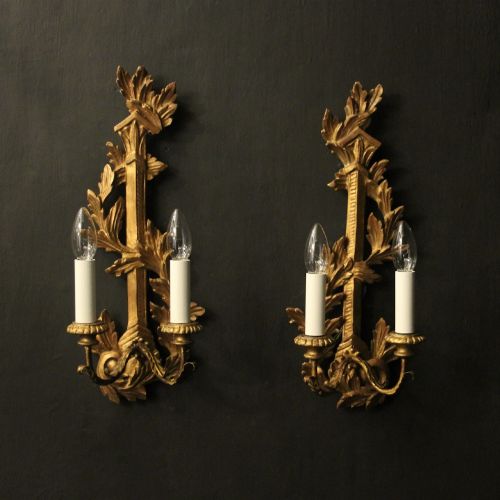
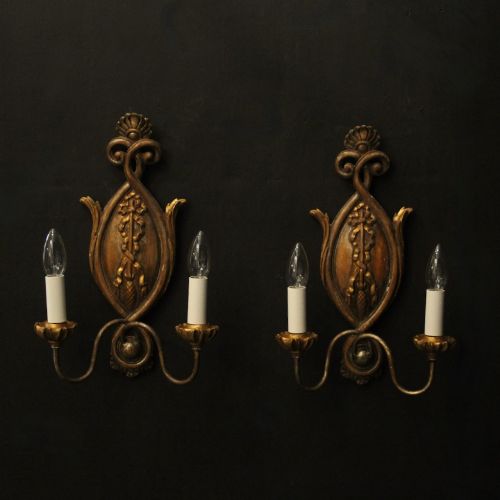
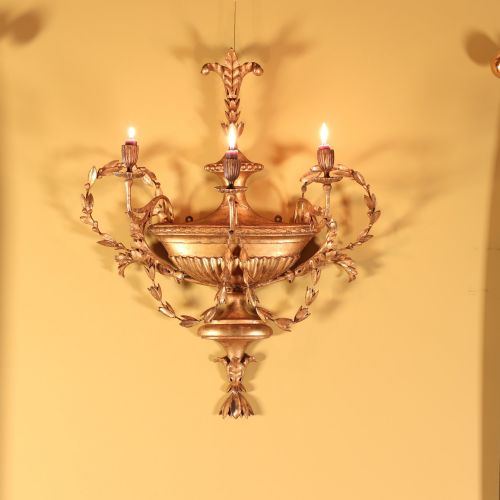
When you examine gilt wood wall lights, you are looking at carved wooden wall fixtures finished in gold or silver leaf, gesso, or polychrome paint. These pieces function both as functional illumination and as sculptural wall art.
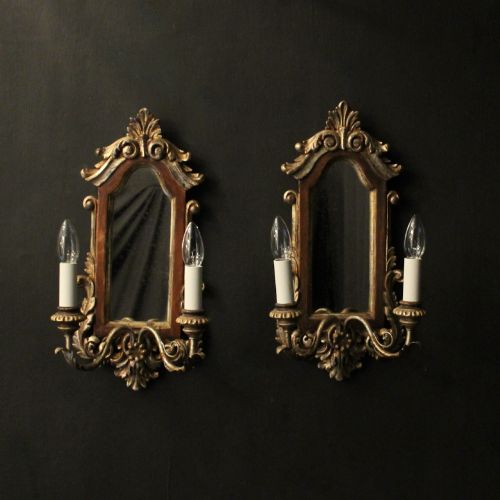
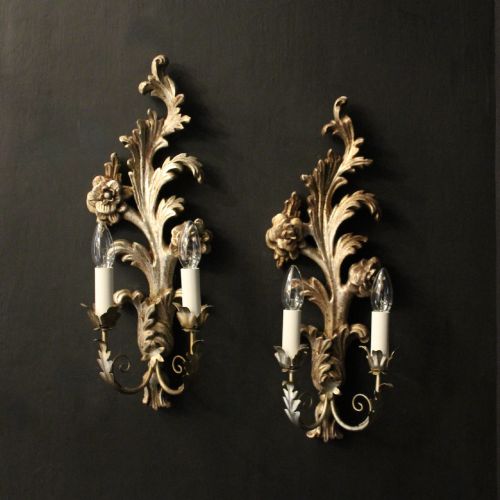
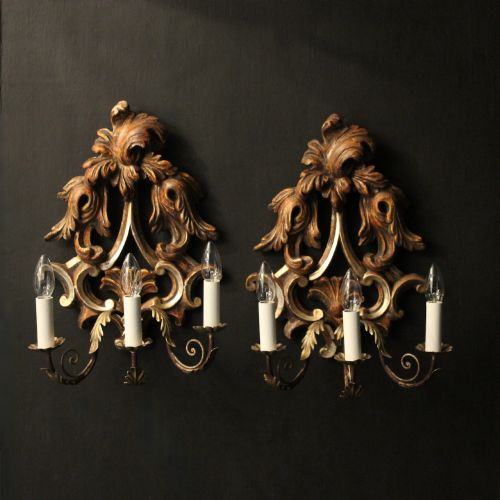
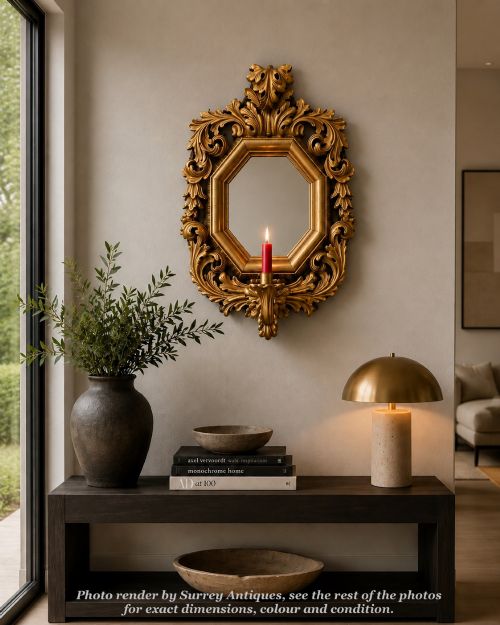
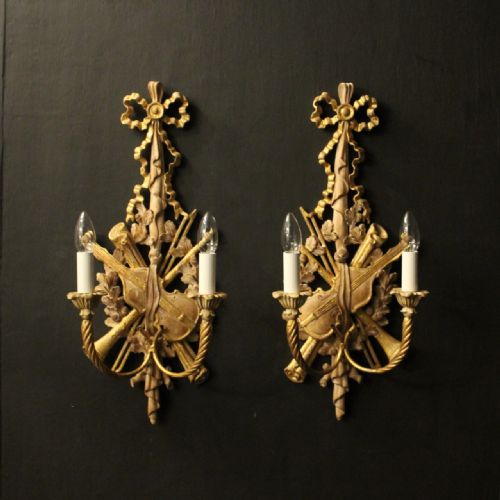
You are most likely to meet pairs dating from the early twentieth century, particularly Florentine designs with twin or triple arms, alongside nineteenth-century French and Italian examples. The selection also includes single sconces, girandoles incorporating mirrors, and occasional eighteenth-century pieces.
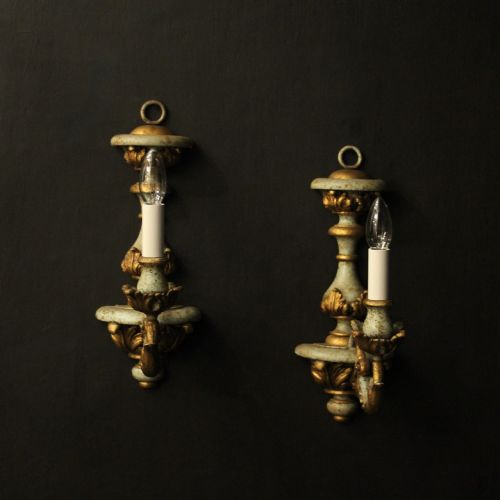
The forms range from simple carved wooden brackets to elaborate multi-arm fixtures decorated in the Florentine Baroque or Rococo style. They mount directly to interior walls, often reflecting light across domestic spaces.
How they were made
Artisans carved the bodies from solid wood, applying layers of gesso to smooth the surface before laying fine gold or silver leaf by hand. Many pieces also incorporate polychrome painting and metal components to achieve their final decorative effect.
The construction relies on traditional joinery and hand-carving techniques, resulting in detailed foliage, scrolls, and arm assemblies. Surfaces were often burnished to create contrasting matte and glossy areas across the gilt finish.
Gilt Wood Wall Lights Retail Price Guide 2026
Typical asking prices for gilt wood wall lights among the pieces listed under this phrase on Sellingantiques today, from the lower quarter to the upper quarter. They describe what is for sale here now, not the wider market.
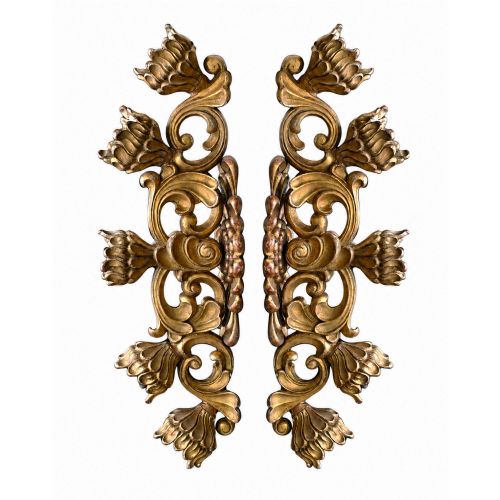
Some eighteenth-century Italian bed crowns moonlight as wall lights when imaginative owners repurpose architectural salvage for domestic illumination.
What varies in quality
The depth and crispness of the hand-carving separate ordinary production from superior examples, as skilled carvers achieved naturalistic movement in wooden foliage and scrolls. Finer pieces display meticulous application of gold leaf and gesso that retains sharp detail rather than softening under thick layers of later paint.
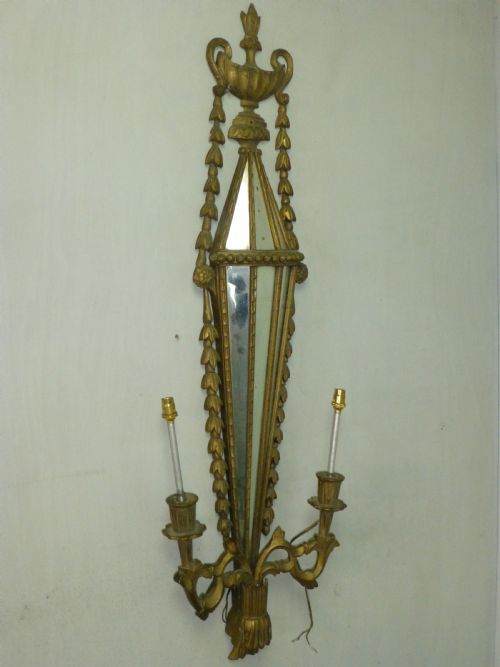
Proportion and structural balance also dictate quality, with better fixtures maintaining harmonious symmetry between the backplate and the candle arms. The integration of mirrored glass or specialised silver gilt finishes further distinguishes higher-tier commissions.
The Gilt Wood Wall Lights Glossary
- Giltwood
- Wood that has been coated with gold leaf or gold paint. This finish creates a reflective metallic surface that catches interior light.
- Gesso
- A plaster-like mixture applied to wood surfaces as a smooth base for gilding. It allows carvers to achieve fine relief details before applying gold leaf.
- Girandole
- A branched wall light that incorporates a mirror. The glass plate multiplies the illumination thrown into the room.
- Polychrome
- Painted in several colours. This decorative treatment often accompanies gilding on Italian and French wall fixtures.
- Sconce
- A wall-mounted lighting fixture attached directly to a vertical surface. These pieces project outward to hold candles or electric bulbs.
Gilt Wood Wall Lights: Frequently Asked Questions
How do I hang heavy gilt wood wall lights?
These fixtures require secure fixing into wall studs or appropriate masonry anchors to support the weight of the carved wood and metal arms.
Consult a professional electrician and installer to ensure the wiring and wall brackets bear the load safely.
Are these wall lights wired for electricity?
Many surviving antique pieces have been adapted over time to accept modern electrical fittings for interior domestic use.
Buyers should inspect individual listings to confirm whether a piece retains candle-only operation or includes modern internal wiring.
How can I tell Florentine styles apart?
Florentine pieces frequently feature ornate carved foliage, scrollwork, and rich gold or silver leaf treatments dating from the early twentieth century.
French designs from the nineteenth century tend to emphasise different rococo asymmetries or distinct regional carving profiles.