


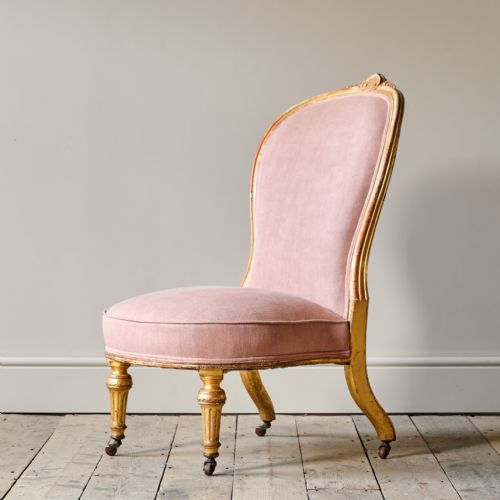
Gilt Wood Side Chairs
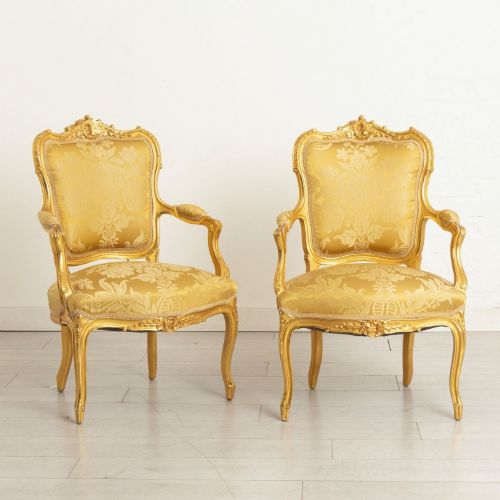
These gilt wood side chairs bring metallic brilliance and carved form to a room, offering functional seating with sculptural presence.
Gilt Wood Side Chairs
Gilt wood side chairs are unarmoured seats designed for occasional use or dining, surfaced in gold leaf or metallic paint. When searching this phrase, a buyer encounters pieces originating mainly from the eighteenth and nineteenth centuries, alongside later twentieth-century revivals.
The selection includes dining chairs, bedroom chairs, and salon suites created in styles such as Regency, Louis XVI, and French Rococo. Many surviving examples hail from continental workshops, reflecting classical European design traditions.
Makers utilised various timbers beneath the metallic finishes, including walnut, kingwood, and painted hardwoods. Pieces often arrive upholstered in silk, damask, velvet, or leather, ranging from original textiles to recent replacements.
Materials and construction methods
Carving timber formed the structural basis for these frames, utilising woods like walnut or painted softwoods shaped into scroll arms, fluted legs, and cabriole supports. Artisans applied thin sheets of gold leaf over a prepared gesso ground, or used liquid metallic paint to achieve the luminous surface.
Upholstery techniques involved stuffing hair or natural fibres into webbed seat frames before securing top layers of silk, velvet, or leather with decorative brass tacks. Joinery relied on traditional mortise and tenon joints to ensure stability across delicate frames.
Materials recorded across the inventory include solid giltwood, painted wood, kingwood, silk, velvet, and leather upholstery.
Assessing quality in gilt wood seating
The crispness of the carved detail separates superior examples from softer, mass-produced revivals. Master carvers produced deep, sharp foliage and scrolls that retain definition beneath layers of gilding.
The integrity of the underlying timber and the method of gilding dictate long-term durability. Traditional water gilding over gesso demonstrates higher craftsmanship than simple painted metallic finishes.
Lamb of Manchester
The Gilt Wood Side Chairs Glossary
- Giltwood
- Timber coated with gold leaf applied over a prepared gesso ground. This technique creates a rich reflective surface characteristic of formal antique seating.
- Ormolu
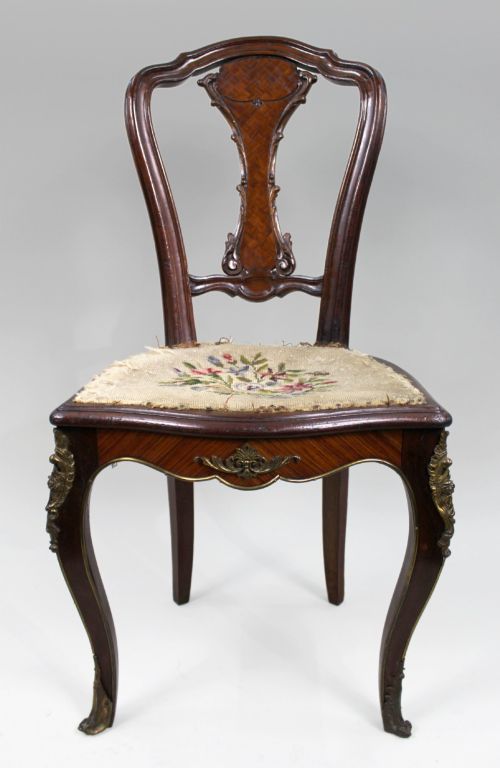
- Gilt bronze mounts applied to furniture for decorative effect. These metallic ornaments appear on select polished wood frames.
- Gesso
- A plaster mixture applied to wood frames to provide a smooth base for gilding. It allows carvers to achieve sharp details before applying gold leaf.
- Parquetry
- Geometric patterns formed by fitted wood veneers on furniture surfaces. This technique adds visual texture to the body of the chair.
- Damask
- A reversible figured fabric traditionally woven from silk or wool. It frequently serves as formal upholstery on period salon chairs.
Gilt Wood Side Chairs: Frequently Asked Questions
Where should I place gilt wood side chairs?
These chairs suit formal dining rooms, drawing rooms, or bedrooms where their decorative frames can stand against plain walls. Their compact proportions allow them to sit comfortably in hallways or act as accent seating.
Pairing them with neutral backgrounds lets the metallic finish and carved woodwork stand out as decorative focal points in the interior.
How do I distinguish eighteenth-century chairs from later revivals?
Examination of the timber tool marks, joinery methods, and the wear patterns on the gold leaf helps reveal the true age of a piece. Eighteenth-century frames often show hand-cut joinery and signs of historical hand-applied gesso.
Nineteenth and twentieth-century revival pieces display machine-influenced precision or different ageing characteristics in the gilding and underlying wood.
Are these chairs suitable for daily dining use?
While many examples served as dining chairs historically, their structural delicacy requires mindful use. Eighteenth and nineteenth-century frames constructed from carved wood need careful handling during daily seating.
Chairs upholstered in delicate silk or damask benefit from occasional rather than heavy everyday use to preserve the fabric and the gilt finish.
How do I clean and maintain gilt wood surfaces?
Maintenance requires gentle dusting with a soft, dry microfibre cloth to prevent abrasive particles from scratching the metallic leaf. Moisture and chemical polishes damage water-gilded surfaces.
Keeping the chairs away from direct sunlight and significant humidity fluctuations protects both the gesso ground and the underlying timber frame.