
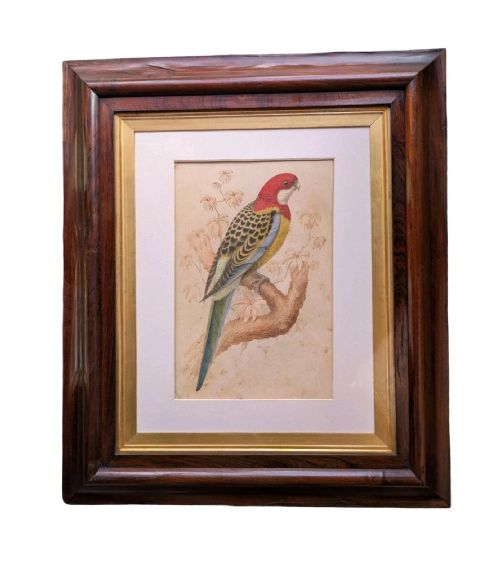
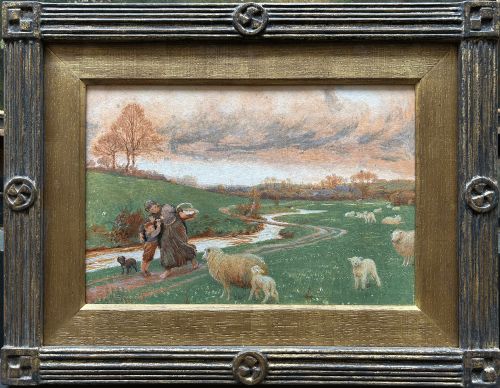
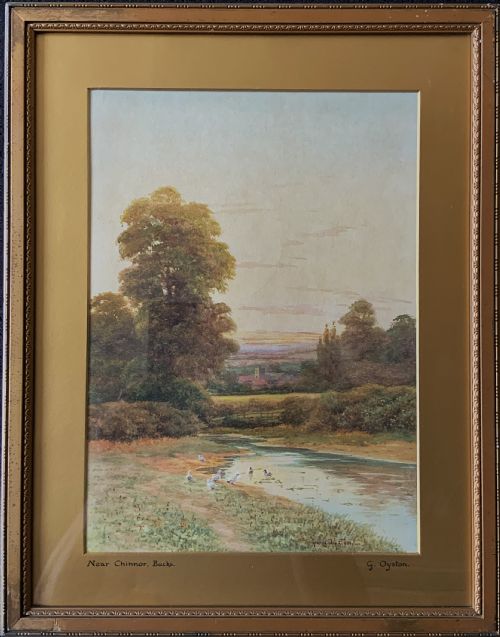
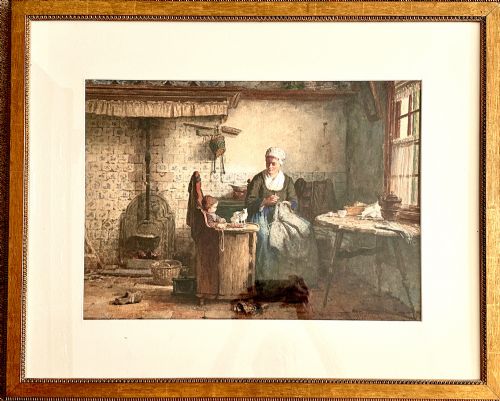
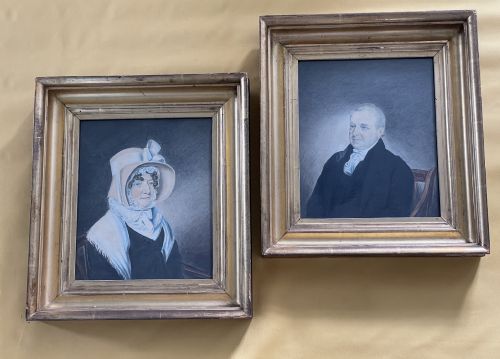
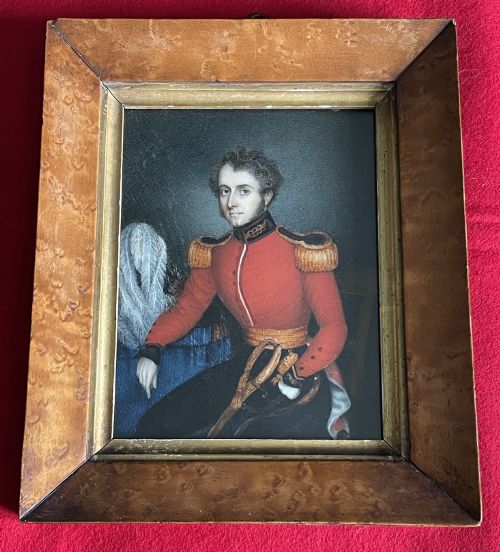


Gilt Wood Framed Watercolour
Gilt wood framed watercolour works bring together pigment, paper and carved gold leaf moulding to capture centuries of British and continental life.
Gilt Wood Framed Watercolour
When searching for a gilt wood framed watercolour, you encounter original works on paper housed in period wooden frames finished with gold leaf or metal leaf. The selection spans Georgian, Victorian and Edwardian eras, encompassing landscape, portraiture and narrative scenes.
Most examples on this page date from the nineteenth century, including intimate portrait miniatures and expansive topographical views. These works demonstrate the versatility of water-soluble pigments applied to paper substrates, preserved behind protective glass.
Subjects range from coastal views and agricultural landscapes to detailed character studies and military portraits. The framing often matches the period of execution, providing an integrated decorative object ready for display.
How they were made
Watercolour paintings rely on finely ground pigments suspended in a water-soluble binder, traditionally gum arabic, washed over absorbent paper or card. Artists frequently combined these translucent washes with bodycolour or gouache to introduce opaque highlights and depth.
The enclosing frames utilise carved timber mouldings treated with layers of gesso before the application of gold leaf or gilt finishes. Glazing protects the delicate paper surface from atmospheric moisture and dust while permitting clear viewing of the pigment layer.
A soldier and a sailor with wooden legs stand side by side in early nineteenth-century paper.
What varies in quality
Quality rests upon the skill of the brushwork and the stability of the pigment against fading from light exposure over time. Finer paintings display confident draftsmanship, subtle tonal gradation and effective composition that hold the eye from a distance.
The construction and original gilding of the frame also dictate overall standard, with hand-carved ornamentation and intact gold leaf surface texture outperforming plain or later replacement mouldings.
George Oyston·Frank Wood·Samuel Palmer·Karl Feiertag
The Gilt Wood Framed Watercolour Glossary
- Watercolour
- A painting method where paint is made of pigments suspended in a water-based solution. This technique allows for transparent washes of colour that let the white of the paper illuminate the composition.
- Gilt Wood
- Timber that has been decorated with gold leaf or a gold-coloured metallic finish. It provides a reflective border that isolates the painting from its surroundings.
- Gouache
- An opaque water-based paint often used alongside watercolour. It contains white pigment added to the mixture to create solid, light-reflecting highlights.
- Miniature Portrait
- A small, highly detailed painting depicting a specific person. These works required fine brushes and intense concentration from the artist.
- Provenance
- The documented history of ownership surrounding a work of art. It establishes authenticity and traces the path of the object through time.
Gilt Wood Framed Watercolour: Frequently Asked Questions
How do I hang a gilt wood framed watercolour?
Hang these pieces away from direct sunlight to prevent the watercolour pigments from fading and to protect the paper from heat damage. Use sturdy picture hooks rated for the combined weight of the timber frame and glass.
Ensure the wall is structurally sound and position the artwork at eye level for optimal viewing. Avoid damp rooms like bathrooms where moisture might affect the paper and the wooden frame.
How can I tell the period of the frame?
Examine the construction joints at the corners of the frame and the composition of the gesso layer beneath the gold leaf. Earlier frames often show hand-carved wooden details and varied preparation layers.
Compare the style of the moulding with known period designs, keeping in mind that frames were occasionally updated to suit changing interior fashions. Look for old fixings, backing boards and labels that provide clues to the age.
Why do some watercolours use gouache?
Artists added gouache, or bodycolour, to introduce opaque passages and bright highlights that transparent watercolour washes could not achieve alone. This combination added textural variety and contrast to the finished image.
Using gouache allowed painters to build up solid areas of light on clothing, water or clouds. It remains stable alongside traditional watercolours under glass protection.