

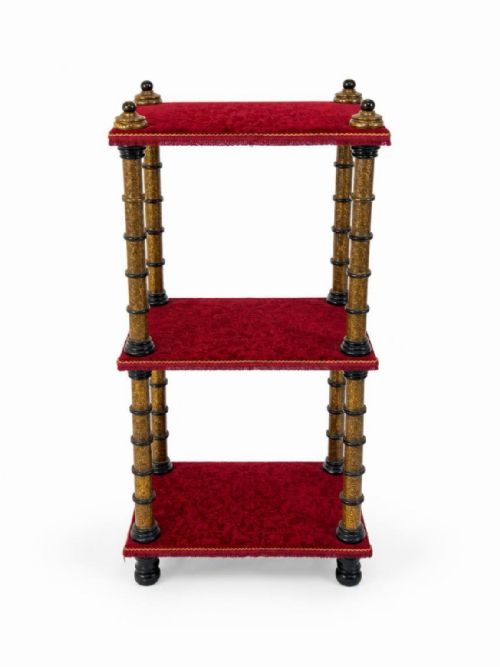
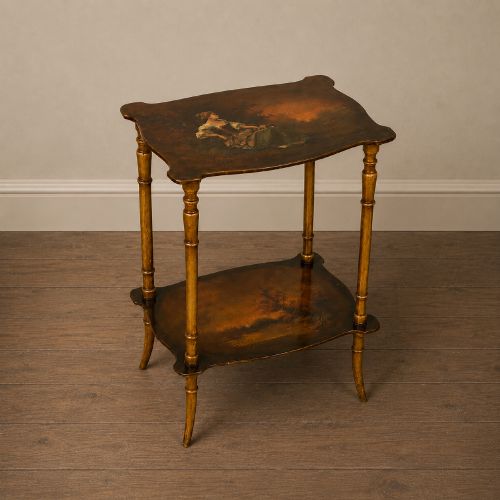
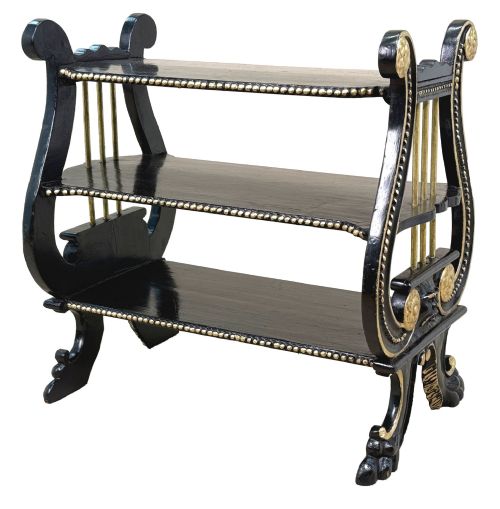
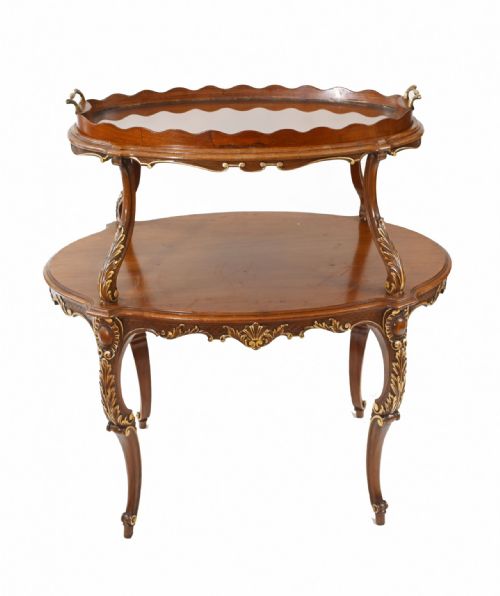
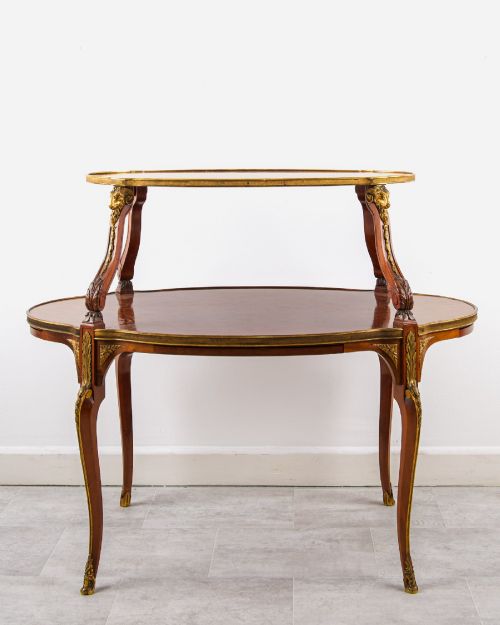


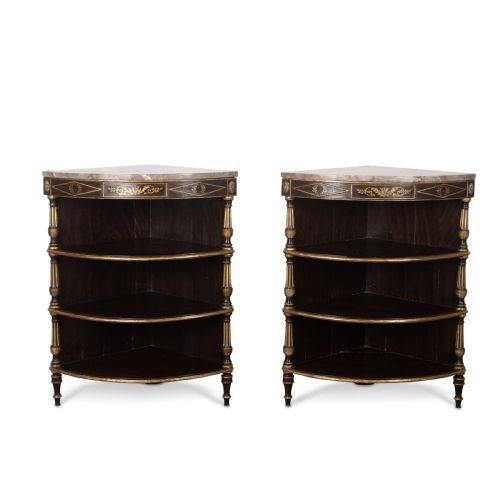
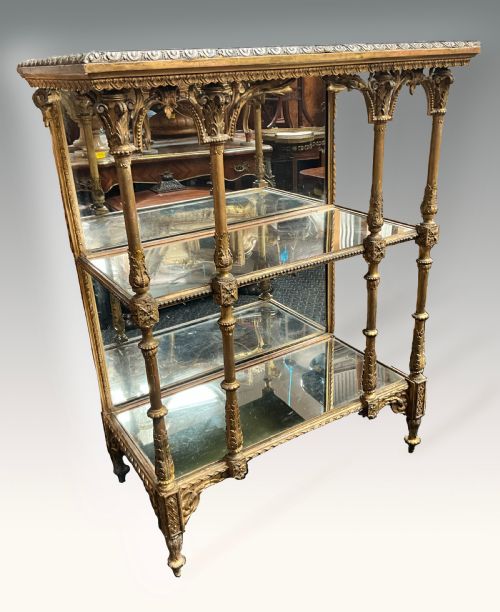
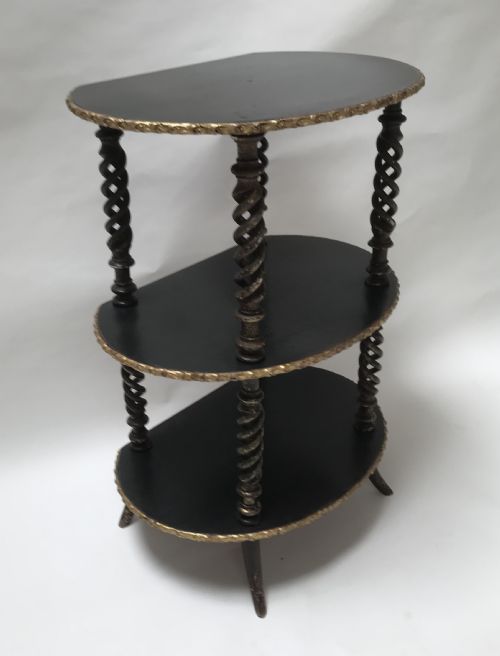


Gilt Wood Etagere
A gilt wood etagere brings tiered display space to a room, offering open shelving wrapped in gold leaf and carved detail.
Gilt Wood Etagere
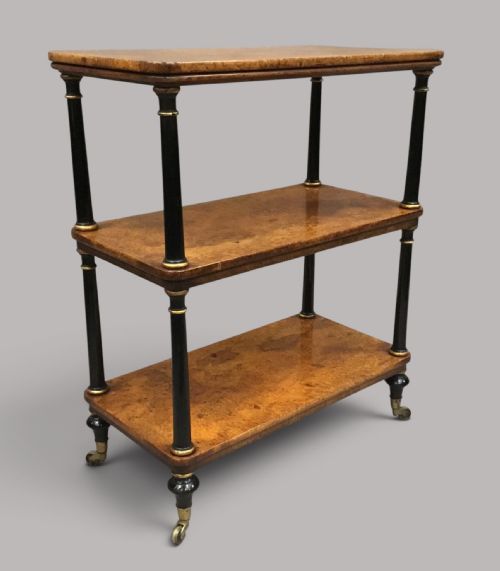
A gilt wood etagere provides tiered shelving designed for displaying ornaments, books, and small objects across multiple levels. These pieces range from compact two-tier side tables to taller floor-standing display shelves.
Most examples found here date from the nineteenth century through the Edwardian period, often reflecting French or Regency design influences. Buyers encounter forms that combine open shelves with mirrored backs, marble tops, or parcel gilt finishes.
The objects serve primarily as decorative focal points in drawing rooms and sitting rooms, lifting the corner of a room with reflective surfaces and slender upright supports. Their construction prioritises visual lightness and accessibility over heavy storage.
How they were made
Craftsmen shaped these tier tables and wall shelves from timber carcasses, applying thin layers of gesso to smooth the surface before laying gold leaf or paint. Ebonised woods and mahogany often form the structural base beneath parcel gilding or applied brass mounts.
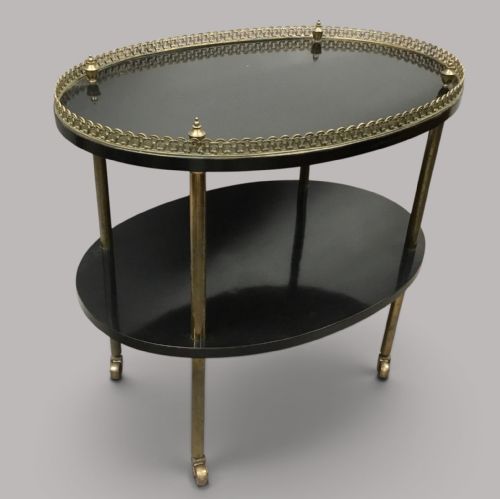
Carved details on gesso and giltwood frames rely on traditional joinery and moulding techniques to achieve crisp floral or rococo motifs. Metal mounts, ormolu accents, and brass galleries secure the edges of upper tiers and support slender uprights.
Gilt Wood Etagere Retail Price Guide 2026
Typical asking prices for gilt wood etagere among the pieces listed under this phrase on Sellingantiques today, from the lower quarter to the upper quarter. They describe what is for sale here now, not the wider market.
Materials recorded across the selection include ebonised wood, gesso, gold leaf, marble, mahogany, and brass.
What varies in quality
The finesse of the carved gesso and the purity of the gold leaf application distinguish finer pieces from simpler decorative items. Crisp definition in the carved foliage and smooth integration of mirrored panels or marble inserts signal superior workshop standards.
Structural integrity in the tier joints and the weight of the underlying timber define the durability of these slender furniture forms. Finer examples maintain rigid upright supports across multiple shelves without looseness in the tiered platforms.
The Gilt Wood Etagere Glossary
- Giltwood
- Wood that has been coated with gold leaf or a gold-coloured substance. This surface treatment reflects light and adds warmth to interior display furniture.
- Gesso
- A plaster-like mixture applied to wood surfaces as a base for paint or gilding. It allows craftsmen to carve intricate relief details before applying gold leaf.
- Parcel Gilt
- Decoration where only certain parts of an object are gilded while the rest remains painted or finished in natural wood. This technique highlights specific carved details against a contrasting background.
- Ormolu
- Gilded bronze used for decorative mounts and furniture hardware. It provides metallic contrast against wood and gilt surfaces.
Gilt Wood Etagere: Frequently Asked Questions
What is an etagere used for?
An etagere serves as an open shelving unit designed for holding decorative objects, small ceramics, and books. The tiered levels allow items to be viewed from multiple angles without cluttering a room.
Historically placed in reception rooms and drawing rooms, these pieces provide elevated display space while maintaining an open, airy footprint.
Are etageres sturdy enough for heavy books?
Most etageres are built for light decorative items, small porcelain figures, and occasional volumes rather than heavy reference libraries. The slender upright supports and tiered platforms prioritise visual elegance over heavy load-bearing capacity.
Distributing weight evenly across the lower shelves helps maintain stability, though wall anchoring may be considered for taller standing units.
How do I tell a Victorian etagere from a later copy?
Nineteenth-century pieces often display traditional timber construction methods, hand-applied gesso, and genuine gold leaf that shows subtle signs of age. Examining the underside of the shelves and the joint construction reveals period woodworking techniques.
Later reproductions frequently use uniform modern adhesives, synthetic gold paints, or machine-cut mouldings that lack the depth and crispness of nineteenth-century carving.