

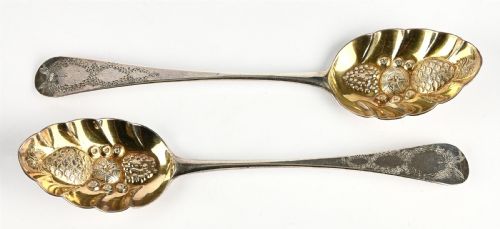


Gilt Sterling Silver Spoons
These gilt sterling silver spoons bring gold-plated lustre to tea tables and dining rooms, offering tactile historical craft for daily use and display.
Gilt Sterling Silver Spoons
Gilt sterling silver spoons encompass a variety of forms designed for dining, tea service, and ceremonial use, spanning Georgian, Victorian, and mid-century periods. The selections here most frequently include berry spoons, caddy spoons, and coffee spoons, alongside matched boxed sets.
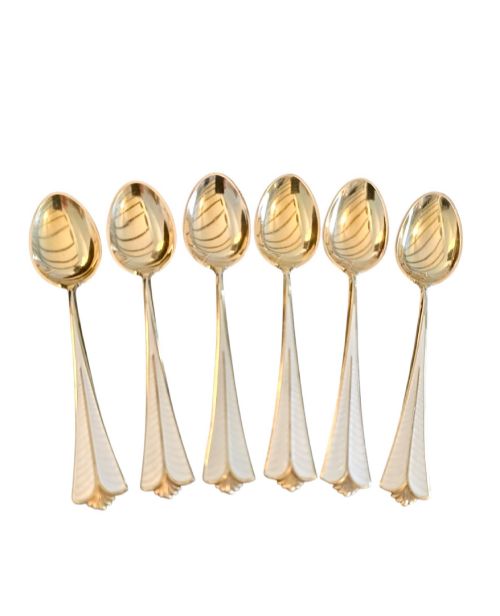
Georgian and Victorian examples dominate the available styles, often appearing as heavily chased berry spoons or delicate shovel-shaped caddy spoons. Makers from later decades, such as David Andersen, introduce vibrant enamel work into smaller coffee and Christmas spoon sets.
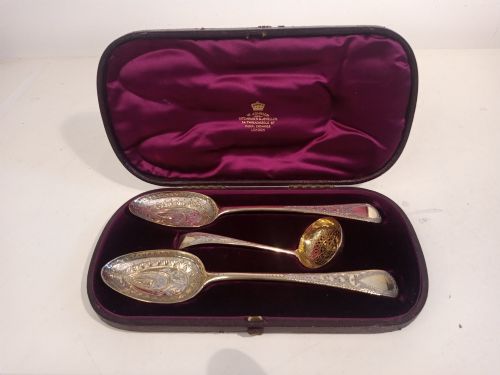
Objects range from individual serving pieces to cased sets accompanied by sugar bowls or salt cellars. The forms reflect specific domestic rituals, from measuring dry tea leaves to serving preserves and berries.
Quality distinctions
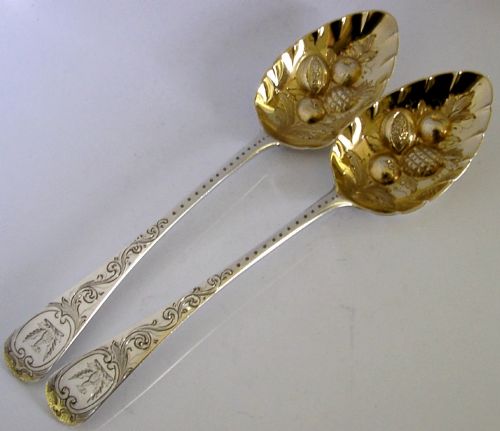
The crispness and depth of the hand-chased decoration separate finer examples from simpler production. Sharp, detailed fruit motifs on berry spoons and clean engraving on handles indicate superior silversmithing.
The preservation of the original gold gilt surface across the sterling silver body dictates overall condition. Even wear and consistent tone across the bowl and stem maintain the visual integrity of the piece.
Deakin & Francis·Peter & Anne Bateman·William Chawner II·David Andersen·Sebastian Crespell
The Gilt Sterling Silver Spoons Glossary
- Silver-gilt
- Sterling silver coated with a thin layer of gold through a chemical or electrochemical process. This technique gives the silver a warm gold appearance while preventing tarnish.
- Berry spoon
- A large serving spoon, typically Georgian or Victorian, decorated with chased or embossed fruit and leaf designs. They were originally used for serving fresh berries.
- Caddy spoon
- A short spoon designed for measuring loose tea leaves from a caddy. These small spoons often feature shovel bowls or shell-shaped designs.
- Sifter spoon
- A perforated spoon used for dusting sugar over fruit, pastry, or desserts. They frequently appear alongside matching sugar bowls in fitted presentation cases.
- Vermeil
- Another term for silver-gilt, denoting quality sterling silver plated with gold. It combines the structural weight of silver with the rich colour of gold.
Gilt Sterling Silver Spoons: Frequently Asked Questions
How do I clean gilt sterling silver spoons?
Clean these pieces gently with warm water and mild soap, drying them immediately with a soft cloth. Avoid abrasive silver dips that can strip the gold gilt layer.
Store them in lined boxes or anti-tarnish cloth to protect the delicate surface from scratches and oxidation over time.
Were these spoons used for eating daily?
Many smaller pieces, such as coffee and caddy spoons, served specific culinary tasks like measuring tea or stirring coffee. Larger berry and serving spoons were reserved for formal dining occasions and festive desserts.
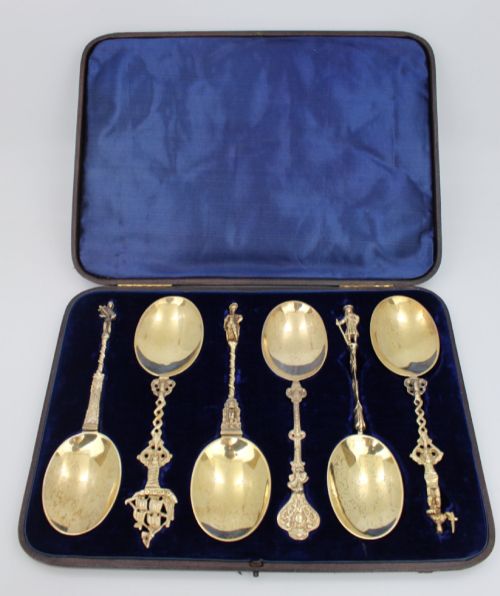
Cased sets were often given as wedding or anniversary gifts, remaining protected in velvet and silk-lined presentation boxes.
How can I tell a Georgian spoon from a Victorian one?
Georgian spoons generally display simpler hand-engraved crests and classical handles dating from the eighteenth and early nineteenth centuries. Victorian examples often feature heavier, more ornate naturalistic decoration and leaf motifs.
Checking the hallmarked stamps on the reverse provides the definitive date and assay office for British pieces.
What is the purpose of the gold plating on silver?
The gold wash protects the reactive sterling silver underneath from tarnishing when in contact with acidic foods like berries. It also adds a decorative two-tone contrast between the white silver bowl and the gold interior.
This technique has been utilised for centuries to elevate the status of fine dining flatware.