





Victorian Silver Fruit Spoons
Victorian silver fruit spoons are ornate serving pieces designed for dessert, combining sterling silver, parcel gilt, and fitted presentation boxes.
Victorian Silver Fruit Spoons
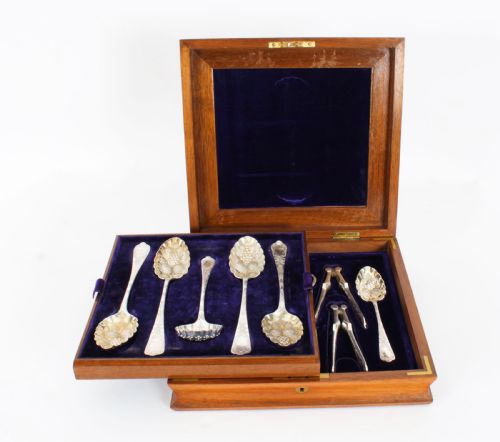
When buyers search for victorian silver fruit spoons, they encounter ornate serving items often accompanied by matching forks, nutcrackers, or grape scissors. These pieces frequently appear inside fitted velvet and silk-lined presentation boxes, designed for formal dining dessert courses.
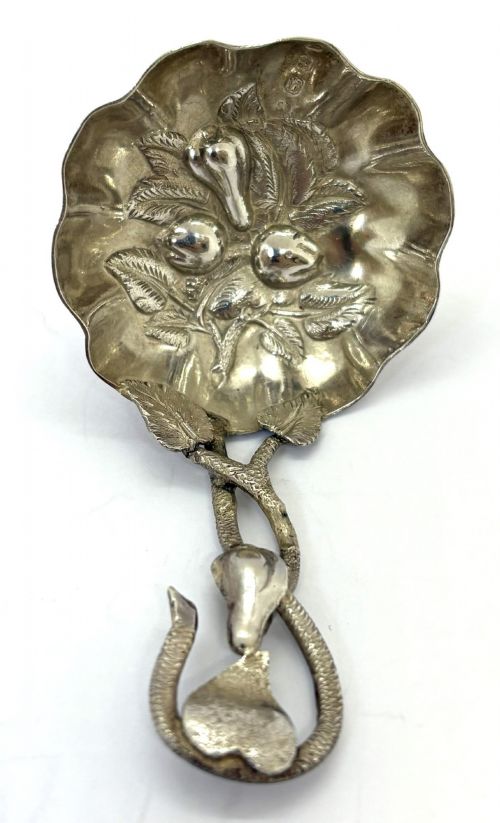
The inventory on this page ranges from single caddy spoons and berry spoons to comprehensive fruit and nut sets. Most examples date from the nineteenth century, featuring engraved handles and parcel gilt bowls that reflect the decorative tastes of the Victorian era.
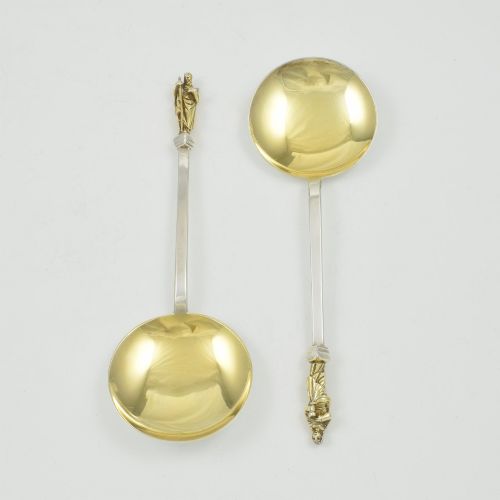
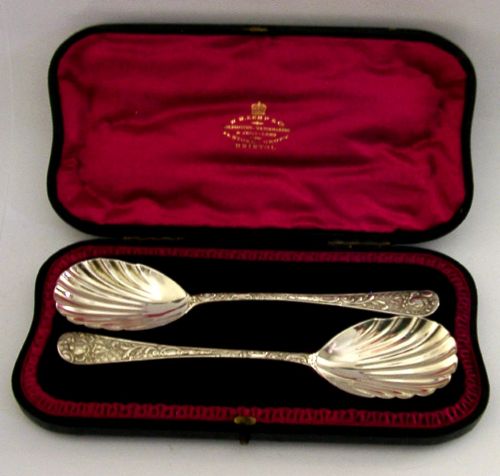
While the core of the selection comprises sterling silver items, silver plate alternatives also emerge alongside occasional eighteenth-century and Edwardian pieces. Buyers meet shell-shaped bowls, apostle figures, and heavily chased floral motifs across these diverse serving forms.
Materials and construction
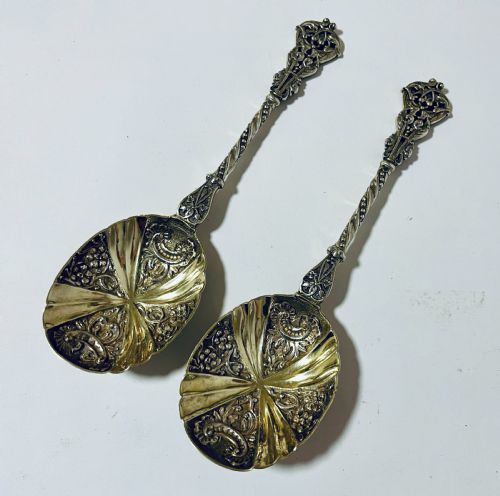
Makers utilised sterling silver and silver plate as the foundational metals for these fruit sets, often applying a layer of gold gilt to the bowl interiors. This parcel gilt technique creates a striking visual contrast between the bright white silver exterior and the rich yellow interior wash.
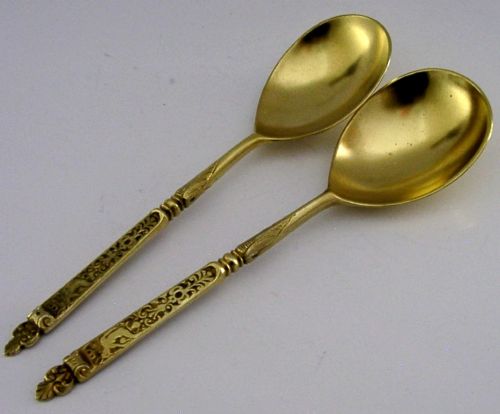
Handles feature intricate hand engraving and embossing, executed with chasing tools to produce deep floral or fruit motifs. Presentation cases incorporate rigid frames covered in satin, velvet, and silk to securely house the spoons and accompanying cutlery.
Victorian Silver Fruit Spoons Retail Price Guide 2026
Typical asking prices for victorian silver fruit spoons among the pieces listed under this phrase on Sellingantiques today, from the lower quarter to the upper quarter. They describe what is for sale here now, not the wider market.
Keep an eye out for the occasional devil serving spoon, adding a delightfully mischievous touch to formal Victorian dessert service.
Assessing quality and craftsmanship
The depth and crispness of the engraving dictate the aesthetic calibre of each spoon, with superior examples displaying sharp, hand-chased fruit and leaf details. Cast elements such as apostle finials or shell terminals show greater definition in higher-tier items.
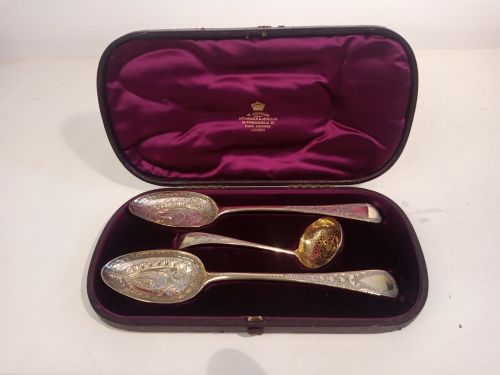
The presence of an original fitted presentation box lined in silk and velvet elevates a set, particularly when the interior fittings remain intact and undamaged. Maker marks stamped into the metal provide a reliable indicator of workshop standard and silver purity.
Martin Hall & Co.·Hukin & Heath
The Victorian Silver Fruit Spoons Glossary
- Berry Spoon
- A large serving spoon with an embossed and engraved bowl decorated with fruit and foliage. These spoons were often retrofitted to earlier pieces or manufactured during the Victorian period for dessert service.
- Caddy Spoon
- A small scoop utilised for measuring dry tea leaves from a caddy into a teapot. Victorian examples frequently appear in silver with decorative shell or leaf bowls.
- Silver Plate
- A base metal core covered with a thin layer of pure silver. This material offered a more accessible option for households during the nineteenth century.
- Sterling Silver
- An alloy of silver containing ninety-two point five percent silver by mass and seven point five percent other metals, usually copper. This standard marks the primary precious metal utilised for quality Victorian flatware.
Victorian Silver Fruit Spoons: Frequently Asked Questions
What are Victorian silver fruit spoons used for?
These spoons were utilised during the dessert course of formal meals for serving soft fruits, berries, and preserves. They often formed part of a larger matched set that included fruit knives, nutcrackers, and grape scissors.
Their decorative bowls and engraved handles made them suitable for presentation at the dining table rather than everyday kitchen use. Today, collectors acquire them for display, festive dining, or as part of a broader antique silver collection.
How do I store silver fruit spoons?
Silver benefits from being stored in dry conditions away from direct sunlight to minimise tarnishing. Many Victorian sets include their original fitted boxes lined with velvet and silk, which provide ideal storage.
If a box is absent, anti-tarnish rolls or lined cutlery drawers help protect the parcel gilt surfaces and delicate hand engravings from scratches.
Are these spoons made of solid silver?
The listings include both sterling silver and silver plate pieces, depending on the specific set and manufacturer. Hallmarks stamped onto the metal indicate sterling standard, while other items bear marks denoting plated wares.
Gold gilt or parcel gilt surfaces appear on both solid silver and silver plate items to enhance the decorative appearance of the bowl.
How do I identify a Victorian fruit spoon?
Victorian fruit spoons typically display heavy embossing, ornate floral chasing, and engraved handles characteristic of nineteenth-century design. Apostle figures, shell-shaped bowls, and parcel gilt finishes frequently appear within this period.
Examining the metal for standard hallmarks or maker stamps helps confirm the date of production and origin alongside stylistic clues.