

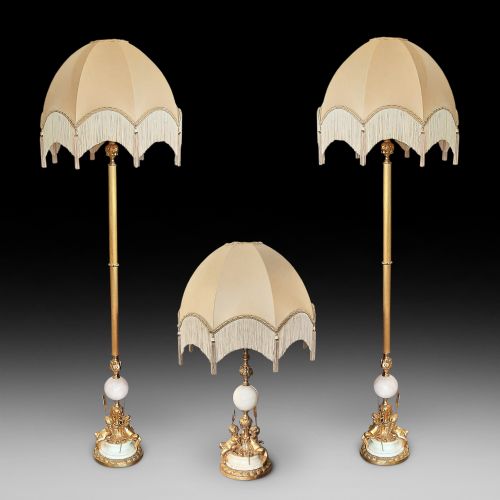
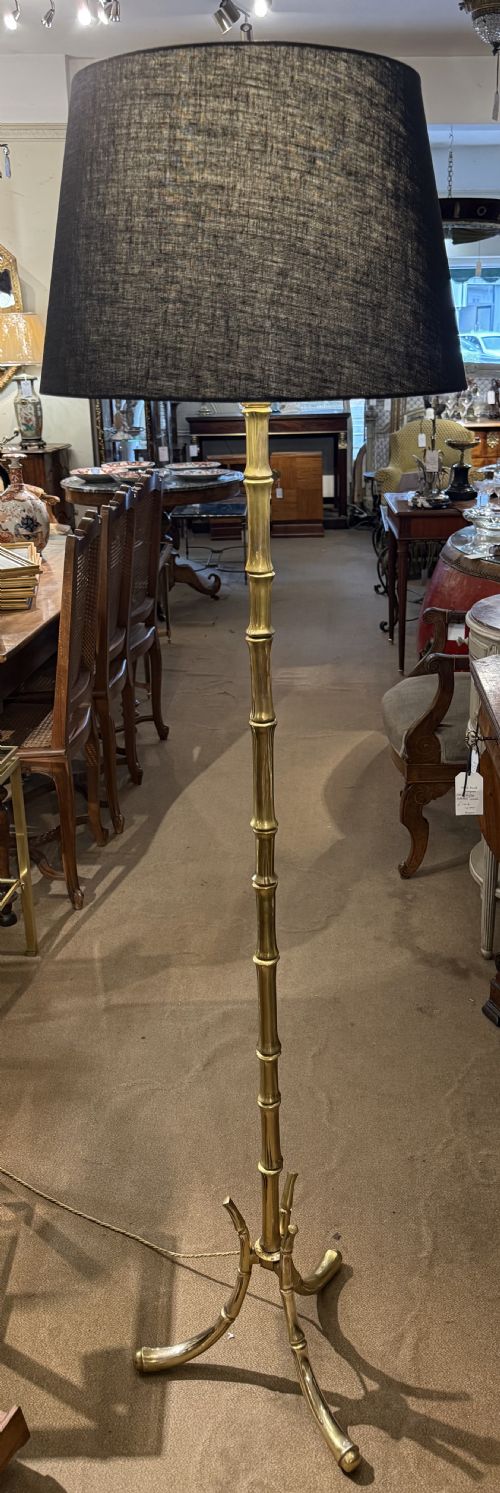
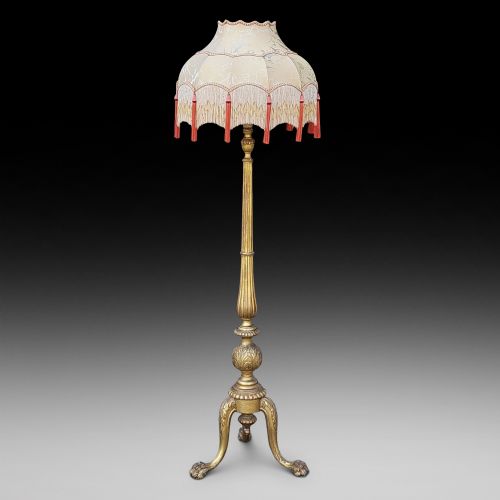
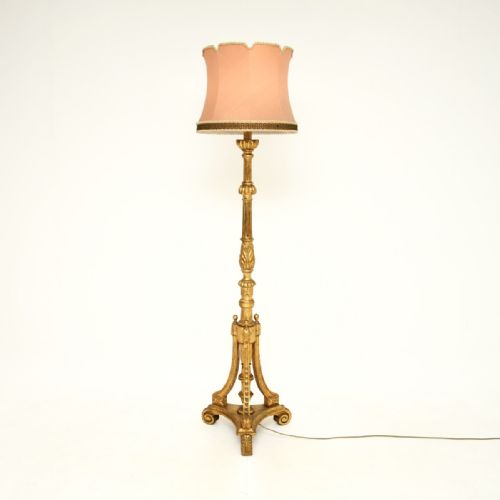


Gilt Standard Lamp Shade
These gilt standard lamp shade options bring warmth and period character to a room, offering the classic illumination every interior needs.
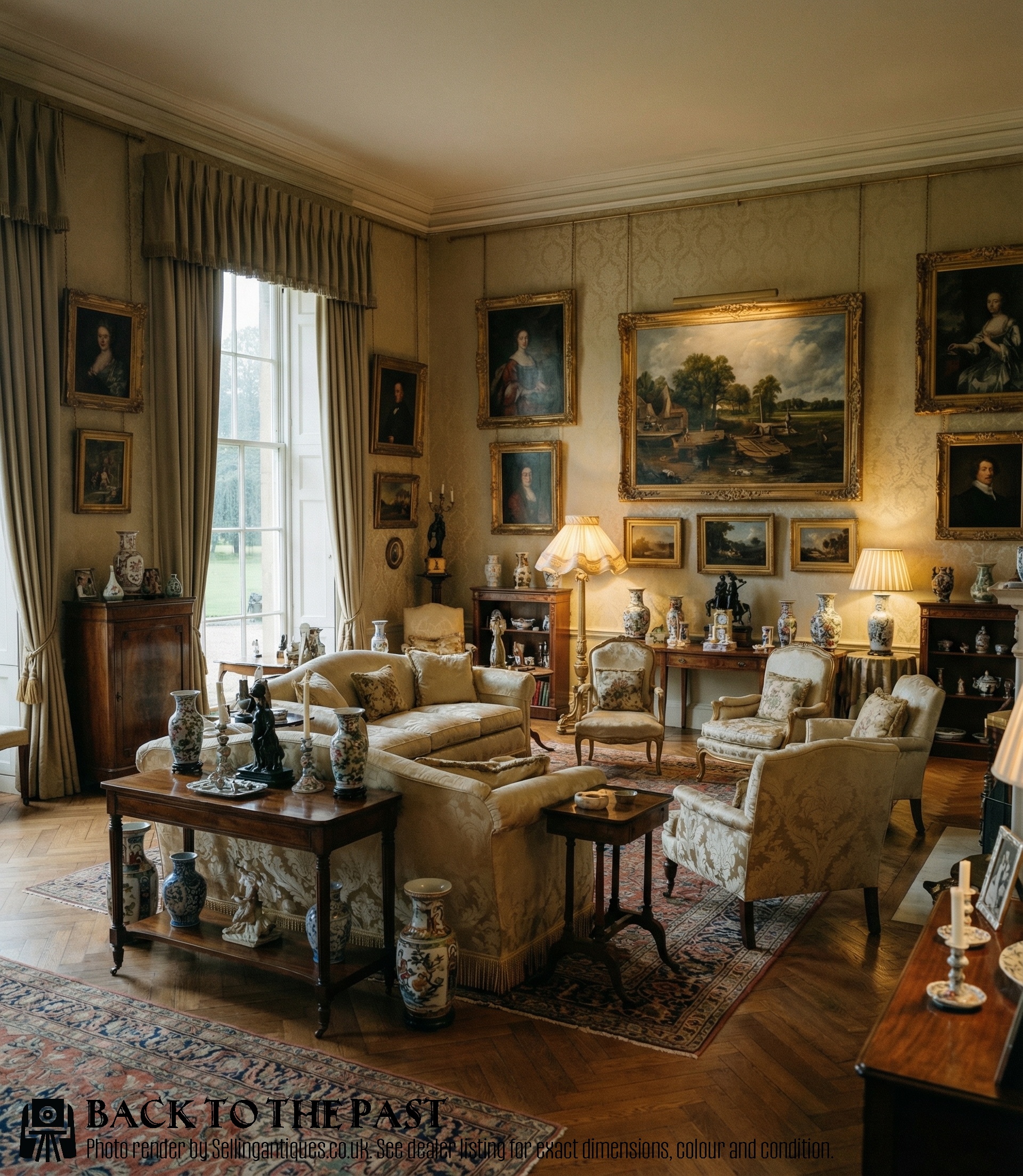
Gilt Standard Lamp Shade
When you search for a gilt standard lamp shade, you look at lighting fixtures designed to elevate interiors with a metallic finish and textile elements. These pieces span from the eighteenth century through the early twentieth century, incorporating floor lamps, table lamps, and standard lamps.
The version most commonly met on this page is the carved giltwood standard lamp, often rooted in French Chateau, Neoclassical, or Louis XVI Revival styles. Makers from various European traditions shaped these tall lamp stands to hold decorative shades in formal rooms.
How they were made
Craftsmen utilised carved wood, gesso, and gilt to build the ornate surfaces characteristic of these stands. Gilding was applied over prepared wooden frames to achieve a luminous metallic sheen.
Fabric and passementerie formed the accompanying shades, while brass, gilt bronze, and ormolu provided structural hardware and decorative mounts. Lacquer also appears on select pieces to finish the wood body.
Gilt Standard Lamp Shade Retail Price Guide 2026
Typical asking prices for gilt standard lamp shade among the pieces listed under this phrase on Sellingantiques today, from the lower quarter to the upper quarter. They describe what is for sale here now, not the wider market.
One early twentieth-century floor lamp even includes a built-in wine tray for evening refreshment.
What varies in quality
The depth and intricacy of the hand-carved ornamentation dictate the standard of the woodwork. Crisp detail in the gesso and the finesse of the original gilding separate finer workshops from simpler production.
Materials like heavy cast ormolu and fine passementerie trim on the shades distinguish high-end examples from standard domestic lighting. The integration of adjustable mechanisms and stable heavy bases also marks superior construction.
Maison Bagues
The Gilt Standard Lamp Shade Glossary
- Giltwood
- Wood that has been coated with gold leaf or a gold-coloured metallic finish. This surface treatment defines the appearance of many period lamp bases.
- Passementerie
- Decorative trims such as tassels, fringes, and braids used on lampshades. These textile details add texture and colour to the upper portion of the lamp.
- Ormolu
- Finely chased and gilt bronze used for decorative mounts and fittings. It appears on French revival pieces from the nineteenth and early twentieth centuries.
- Neoclassical
- A style drawing inspiration from classical antiquity, featuring symmetrical lines and restrained ornamentation. It influences many of the gilt lamp stands found here.
- Gesso
- A plaster-like mixture applied to wood surfaces as a base for gilding. It allows craftsmen to carve sharp relief details before applying gold leaf.
Gilt Standard Lamp Shade: Frequently Asked Questions
What is a standard lamp?
A standard lamp is a tall floor-standing lighting fixture designed to illuminate a room from a corner or beside seating furniture. These pieces feature a sturdy base and a long shaft supporting a decorative shade.
Historically, they provided ambient light in large reception rooms and parlours before overhead electric lighting became standard in domestic interiors.
How do I date a gilt floor lamp?
Dating relies on examining the carving style, materials, and construction techniques used on the wooden base. Neoclassical and Louis XVI revival motifs often point towards late nineteenth or early twentieth-century production.
Earlier eighteenth-century examples display heavier hand-carved timber construction and deeper patination on the gilt surfaces. Archival pieces from the nineteen-hundreds frequently incorporate adjustable metal extending stems.
Where should I place a gilt floor lamp?
These tall lamps suit sitting rooms, studies, and corners where they provide both soft downward light and a decorative vertical accent. Placing them near traditional furniture enhances the period aesthetic of the space.
Ensure the shade height complements surrounding seating so the light source remains comfortable for reading or relaxing.
What styles are common in these lamps?
French Chateau, Italian Florentine, and Swedish Neoclassical designs appear frequently among these listings. Each style brings distinct decorative motifs, from elaborate carved scrolls to simpler symmetrical lines.
Hollywood Regency pieces also emerge, offering a brighter and more theatrical take on traditional gilt lighting forms.