



Gilt Rosewood Table
A gilt rosewood table brings together rich dark timber and shimmering metal mounts to anchor a room with undeniable presence.
Gilt Rosewood Table
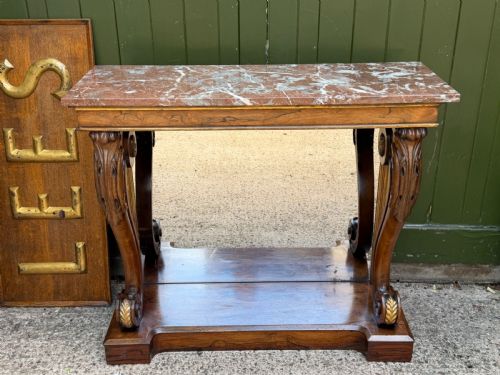
A gilt rosewood table is an architectural statement piece designed for formal reception rooms, combining rich tropical timber with gilded enrichment. When exploring these listings, a buyer encounters a diverse selection ranging from Regency console tables to French revival centre pieces.
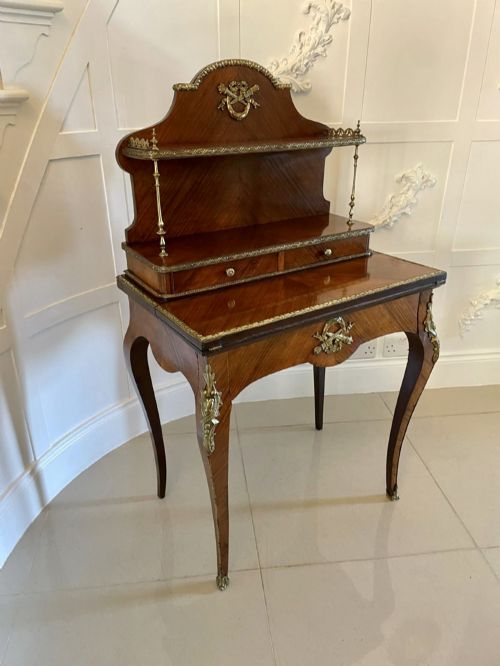
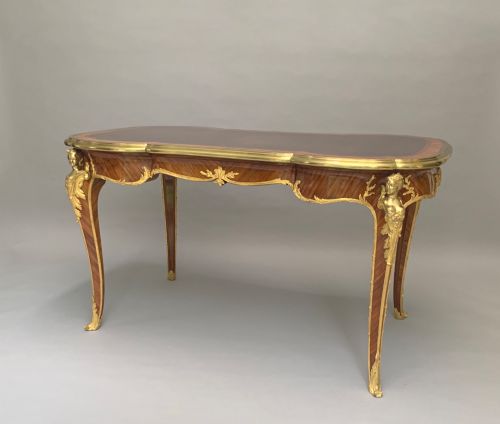
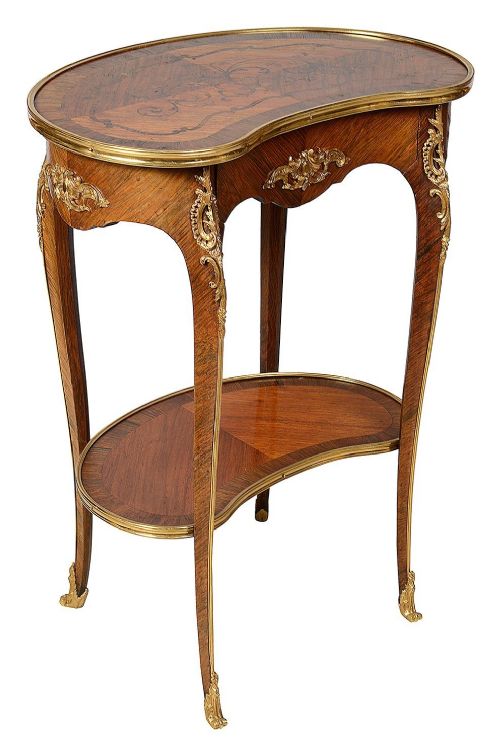
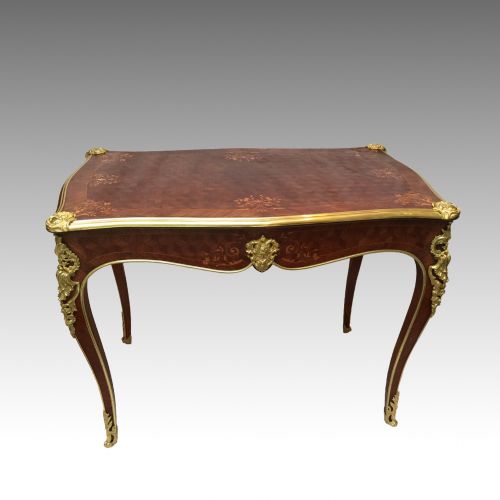
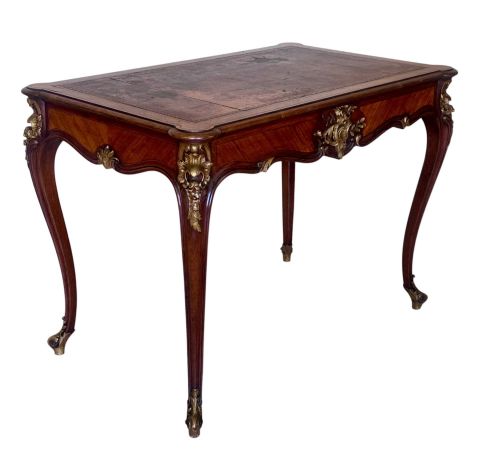
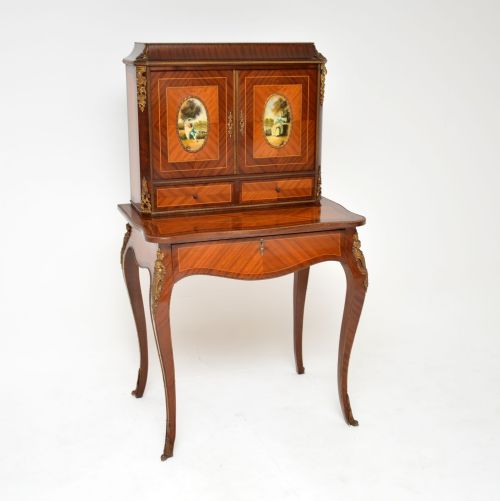
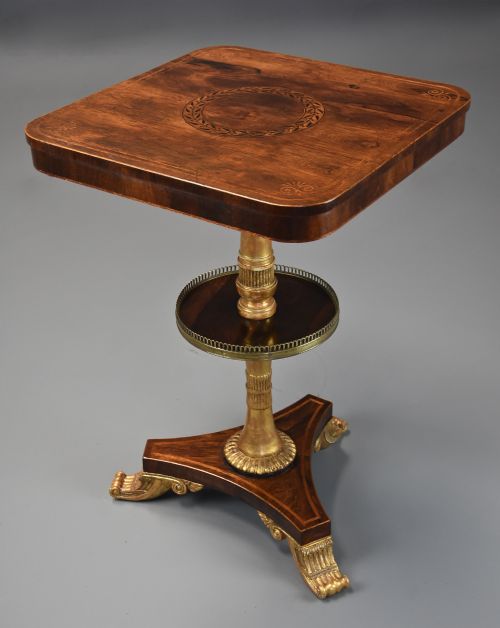
The material combination brings together dense, dark rosewood with gilt bronze, ormolu, or parcel-gilt details that catch the ambient light. Centre tables, sofa tables, and writing desks dominate the selection, often displaying intricate marquetry or parquetry work.
Many examples lean into Louis XV and Louis XVI revivals, while others display the restrained elegance of the Regency period. These surfaces served varied domestic functions, from displaying objets d'art to facilitating correspondence and card games.
How They Were Made
Cabinet makers constructed the core framework using robust secondary timbers before applying finely figured rosewood veneers to the visible surfaces. Marquetry designs incorporated lighter woods like kingwood and tulipwood to form delicate floral or geometric patterns across the top.
Metal ornamentation played a crucial role, utilising cast ormolu and gilt bronze mounts secured meticulously to the corners, apron, and legs. Parcel-gilt highlights were applied directly to carved wooden elements, accentuating the structural lines with a layer of gold leaf.
Listings feature rosewood paired with ormolu, marble, and kingwood across Regency and Victorian periods.
What Varies in Quality
Quality reveals itself in the crispness of the bronze casting and the depth of the hand-chasing on the ormolu mounts. Finer pieces demonstrate superior timber selection, where the grain of the rosewood is matched symmetrically across the expanse of the top.
The precision of the marquetry inlay and the seamless integration of structural joints differentiate workshop tiers. Attribution to documented makers or adherence to established cabinet-making traditions elevates an individual piece within the historical record.
Francois Linke·CH. Jeanselme and Co·Wilkinsons of Ludgate Hill·Marsh and Tatham
The Gilt Rosewood Table Glossary
- Ormolu
- Gilded bronze mounts applied to furniture. This technique involved dipping copper alloys into an amalgam of gold and mercury before heating.
- Marquetry
- Decorative veneer patterns applied to a furniture structure. Artisans cut thin slices of various woods to create pictorial designs.
- Parcel-gilt
- Wood or metal partially covered with gold leaf. This method highlighted specific carved details against a dark background.
- Bureau Plat
- A formal freestanding writing desk. These pieces typically feature a leather-lined top and multiple drawers within the frieze.
- Cartonnier
- A desktop cabinet designed for holding papers and documents. These accessories often matched the aesthetic of the associated writing table.
Gilt Rosewood Table: Frequently Asked Questions
Where should I place a centre table?
A centre table commands attention when positioned prominently in the middle of a spacious reception room or hallway. It allows the piece to be appreciated from all angles while functioning as a display surface for decorative objects.
Ensure there is adequate clearance around the perimeter to maintain natural traffic flow within the interior space. Placing a decorative bronze or porcelain piece on top anchors the visual weight of the furniture.
How do I care for rosewood surfaces?
Maintain rosewood furniture by dusting regularly with a soft, dry cloth to prevent particulate accumulation. Keep the timber away from direct sunlight and heat sources to avoid timber splitting and veneer lifting.
Apply a microcrystalline wax periodically to nourish the grain and protect the polished finish. Avoid using silicone-based polishes that can degrade the historic polish over time.
What distinguishes Regency from Victorian pieces?
Regency tables typically display architectural restraint, clean lines, and classical brass inlays inspired by antiquity. The proportion tends to be linear, featuring sabre legs or columnar supports with parcel-gilt details.
Victorian examples often embrace exuberant revivals of French rococo or baroque styles with heavier carving and elaborate marquetry. Ormolu mounts on Victorian pieces are frequently bolder and more complex in their casting.
Can I use an antique writing desk daily?
Antique writing desks accommodate contemporary writing and laptop use provided the working surface receives adequate protection. Many historic desks feature original leather or velvet inserts that benefit from gentle usage.
Utilise a custom glass top or a blotter pad to shield fragile wood veneers and antique leather from accidental scratches. Regular gentle maintenance preserves the integrity of the writing surface for daily appreciation.