
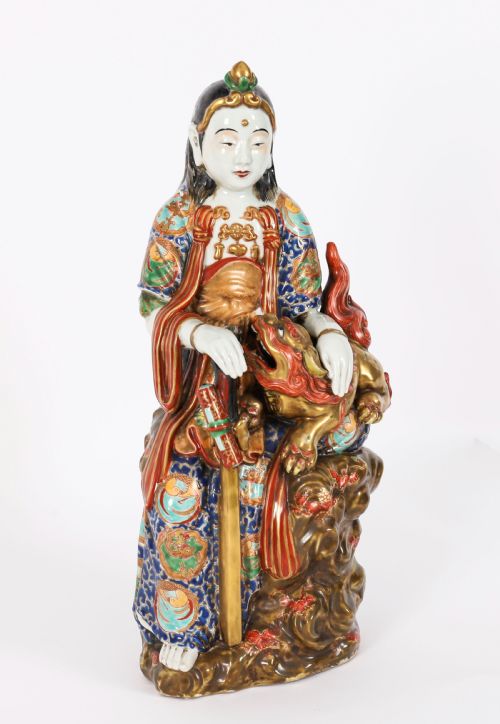


Gilt Porcelain Sculpture
These gilt porcelain sculpture pieces combine ceramic modelling with metallic leaf, bringing figures and decorative forms to any room.
Gilt Porcelain Sculpture
A gilt porcelain sculpture represents moulded ceramic shaped into figurines, busts, groups and decorative objects enriched with metallic decoration. When you search for gilt porcelain sculpture, you encounter figures ranging from eighteenth-century European manufactory pieces to nineteenth-century Japanese okimono and twentieth-century ceramic groups.
The selection includes mythological figures, pastoral groups, animal subjects and portrait busts from periods spanning the mid-eighteenth century to the early twentieth century. European examples frequently feature neoclassical or rococo styling alongside hand-painted polychrome details, while Japanese works display Satsuma and Kutani traditions.
How they were made
Gilding was introduced using gold leaf or liquid gold highlights applied to borders, garments and bases, sometimes complemented by ormolu mounts or patent metallic finishes. The pieces were then refired to bond the metallic surface permanently to the ceramic body.
The object forms span figurines, okimono, portrait busts, centrepieces and decorative animal groups.
What varies in quality
Quality rests upon the crispness of the modelling and the finesse of the hand-painting in the facial expressions and drapery. Superior examples retain intricate details in the fingers, hair and floral additions without blurring from worn moulds.
The application of the gilding distinguishes standard production from exceptional works, with burnished gold leaf catching the light differently than flat metallic paint. The weight of the porcelain body and the subtlety of the glaze also indicate the standing of the original manufactory.
Meissen·Royal Worcester·Derby·Makuzu Kozan II·Ernst Wahliss
The Gilt Porcelain Sculpture Glossary
- Bisque porcelain
- Unglazed white ceramic fired once to create a matte, marble-like texture favoured for portrait busts and neoclassical figures. It absorbs light evenly across the modelled surface.
- Okimono
- Japanese decorative sculpture designed for display on a shelf or tokonoma alcove. These carved or modelled pieces often depict deities, animals or daily scenes.
- Ormolu
- Cast bronze mounted elements finished with a gold-colour mercury amalgam or gold plating. It provides structural support and decorative framing for porcelain bodies.
- Hard-paste porcelain
- A dense ceramic composition of kaolin and petuntse fired at high temperatures. It produces a ringing tone when struck and resists scratching.
- Enamel
- Vitreous coloured glass fused to the ceramic surface during a secondary low-temperature kiln firing. It supplies the vibrant polychrome decoration seen on garments and bases.
Gilt Porcelain Sculpture: Frequently Asked Questions
How do I clean gilt porcelain sculpture?
Dust gently with a soft dry brush to remove particles from crevices and delicate extremities. Avoid abrasive cloths or cleaning solutions that might wear away the metallic leaf.
Keep pieces away from direct sunlight and damp environments to protect both the enamel colours and the gilded highlights over time.
What is the difference between bisque and glazed porcelain?
Bisque porcelain remains unglazed after firing, offering a matte finish resembling carved marble that highlights fine sculptural detail. Glazed porcelain receives a glassy coating before firing, producing a reflective surface.
Both finishes appear across different periods, with bisque frequently chosen for portrait busts and classical figures.
How can I tell an eighteenth-century piece from a nineteenth-century revival?
Eighteenth-century works often display hand-mixed paste variations, lighter weight and distinct underglaze factory marks specific to early European kilns. Nineteenth-century revival pieces tend to feature heavier potting and more uniform chemical composition.
Stylistic proportions and the chemical makeup of the gilding also help differentiate original period manufacturing from later interpretations.
Where should I display these sculptures at home?
Place sculptures on stable surfaces away from high-traffic household areas where accidental knocks might damage projecting fingers, limbs or floral motifs. Glass cabinets provide protection from dust while allowing light to reflect off the gilt highlights.
Ensure shelves are level and capable of supporting the weight, particularly for larger multi-figure groups or animal sculptures.