


Gilt Porcelain Mantel Clock
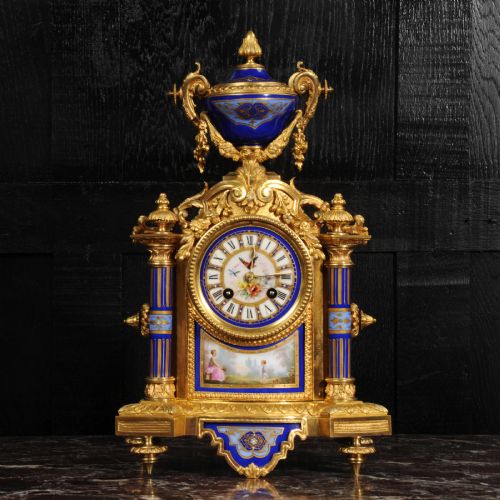
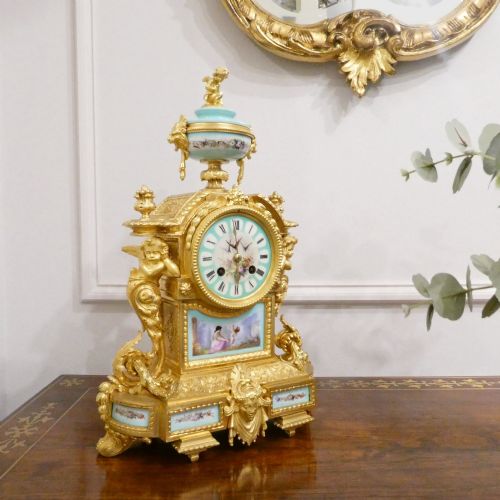
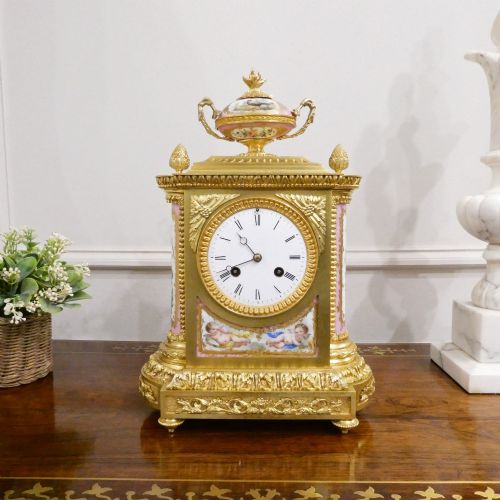
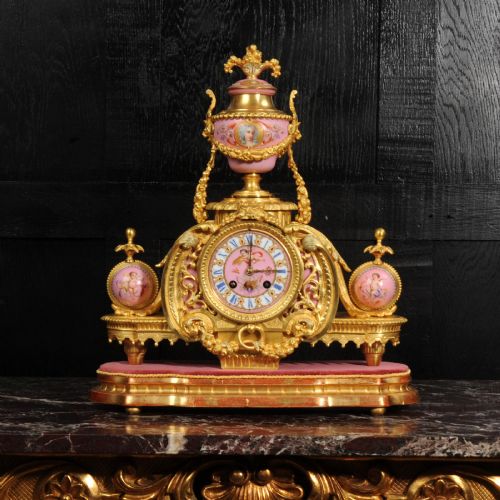
A gilt porcelain mantel clock brings together nineteenth-century horology and hand-painted ceramic panels to anchor a room.

Gilt Porcelain Mantel Clock
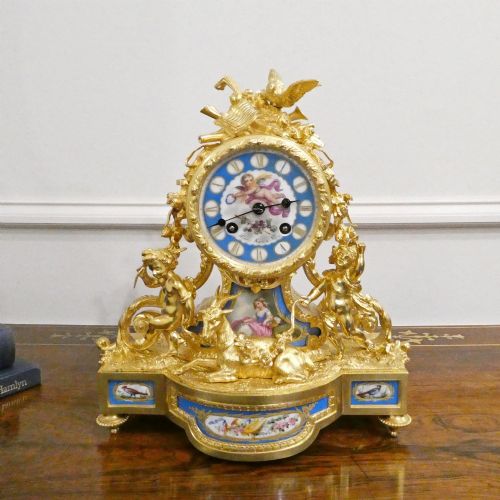
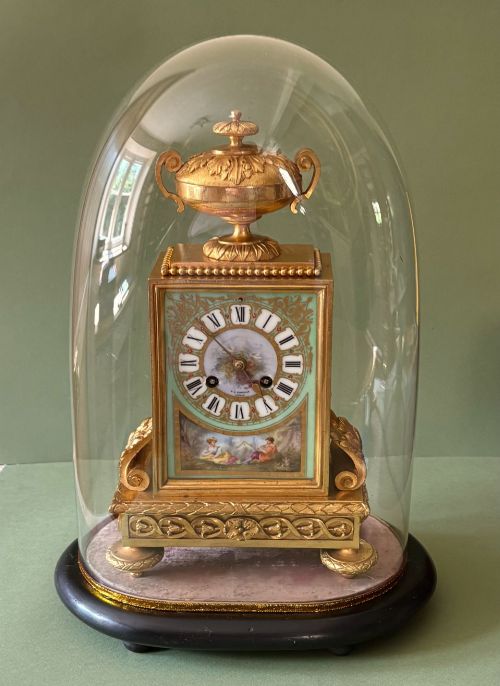
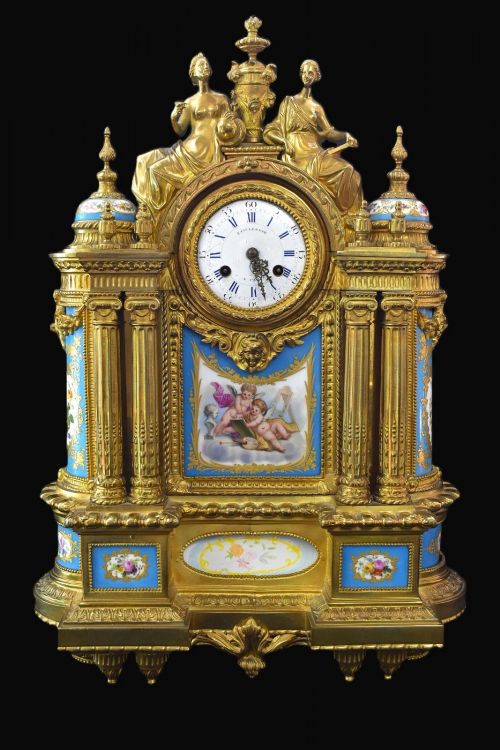
A gilt porcelain mantel clock unites a metal housing with hand-painted ceramic panels and dials, reflecting the tastes of the nineteenth century. These objects appear frequently in French Rococo Revival, Louis XVI style, and Napoleon III designs, often accompanied by matching garniture sets or glass domes.
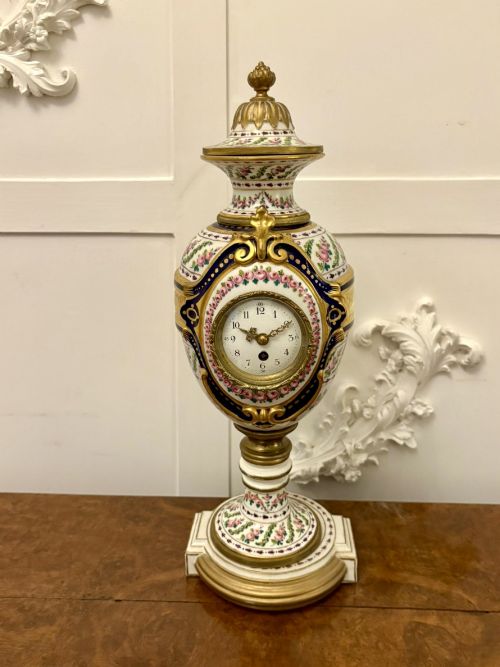
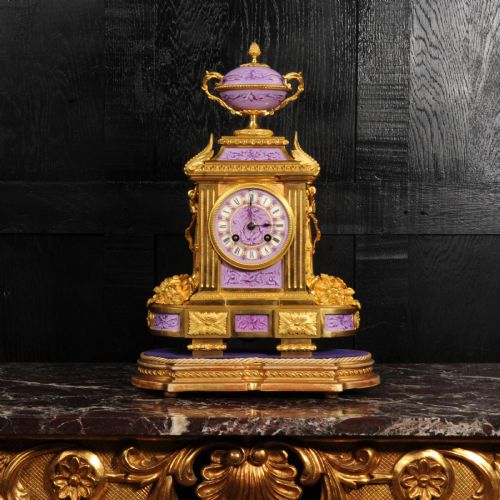
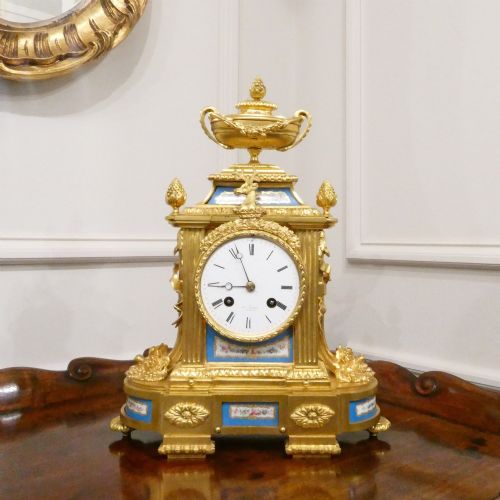
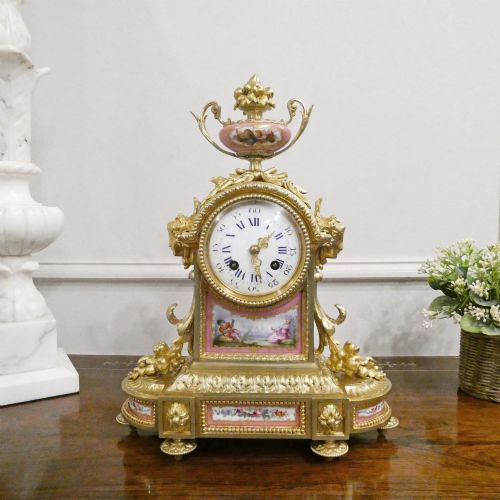
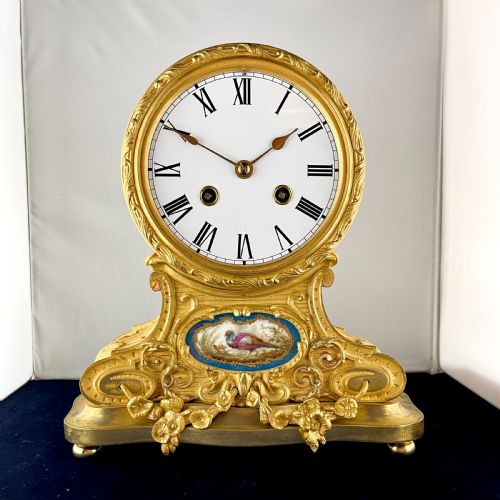
The standard form seen on this page combines cast ormolu or gilt bronze frames with porcelain elements attributed to factories like Sèvres. Makers incorporated painted figures, putti, birds, and floral motifs directly onto the clock dials and surrounding plaques.
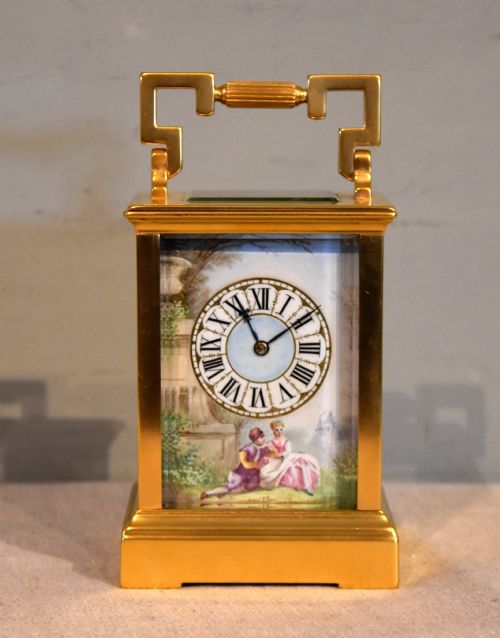
Most examples originate from nineteenth-century France, spanning periods from 1850 through to 1900, with Victorian British iterations also represented. Buyers encounter single mantel clocks alongside larger three-piece sets and carriage timepieces featuring enamel panels.
Construction and materials
Craftsmen shaped the structural frames using cast bronze, brass, or metal before applying a surface of gilt, ormolu, or 1800s gilding techniques. This metallic body housed mechanical movements produced by horologists and makers such as Japy Frères, Achille Brocot, and Henry Marc.
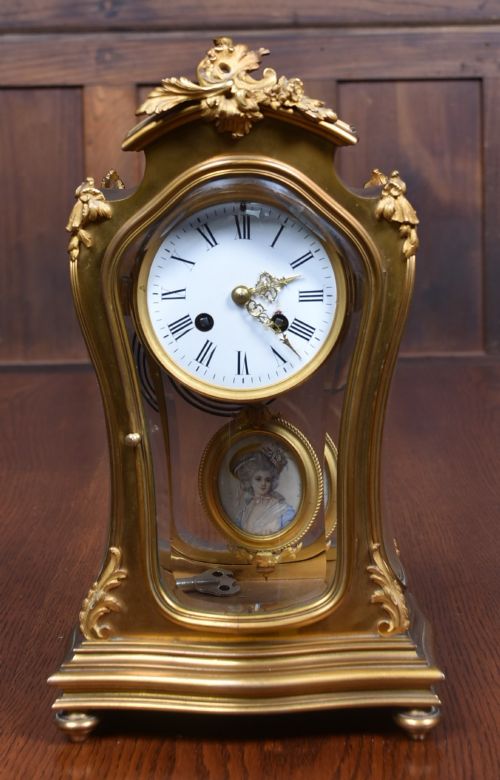
Porcelain components, including dial faces and decorative panels, received hand-painted details and glazing before integration into the metal chassis. Glass elements, such as protective domes and carriage clock panels, were fitted to enclose the delicate dials and movement parts.
Materials recorded across the inventory include porcelain, gilt bronze, enamel, ormolu, glass, brass, gilt brass, and gilt metal.
Assessing quality
Quality rests on the crispness of the bronze or ormolu casting and the fine detail within the hand-painted porcelain panels. Clocks featuring named horologists or established movement makers demonstrate higher standards of mechanical execution.
The presence of complete garniture sets, original glass domes, and signed miniature paintings elevates the integrity of the piece. Preservation of the original gilding and fully restored movements indicate superior historical survival.
Japy Freres·Achille Brocot·Henry Marc·Jean-Baptiste Delettrez·PH Mourey·Etienne Lenoir·Drocourt·Le Roy et Fils·Vincenti
The Gilt Porcelain Mantel Clock Glossary
- Ormolu
- A gilded bronze finish applied to decorative metalwork using an amalgam of mercury and gold, common in nineteenth-century French clock cases. This technique creates a rich, metallic lustre that defines the Louis XVI style.
- Garniture
- A set of matching decorative objects, typically a central clock flanked by two urns or candelabras. These ensembles were designed to sit together on a mantelpiece.
- Drumhead clock
- A timepiece featuring a circular clock case shaped like a drum, mounted on a base. This specific form often incorporates porcelain panels.
- Carriage clock
- A small, portable spring-driven timepiece designed for travel, enclosed in glass panels with a carrying handle. 19th-century examples frequently feature enamel dials.
- Putti
- Depictions of plump, winged infant figures, often resembling cherubs, painted onto porcelain panels or cast in gilt bronze. They are characteristic of Rococo Revival ornamentation.
Gilt Porcelain Mantel Clock: Frequently Asked Questions
How do I wind a vintage gilt porcelain mantel clock?
Most mechanical clocks of this period require a key inserted into the winding arbors on the dial face, turning gently until resistance is felt.
Care must be taken not to overwind the mainspring, as nineteenth-century springs can snap if forced beyond their limit.
What is a clock garniture?
A clock garniture is a matching set consisting of a central mantel clock accompanied by two matching side pieces, such as urns or vases.
These sets were manufactured as unified decorative schemes to display across a fireplace mantel.
How can I identify a Louis XVI style clock?
Louis XVI style clocks typically display classical architectural motifs, symmetrical urn shapes, and restrained ornamentation compared to earlier Rococo designs.
They often incorporate gilt bronze mounts alongside hand-painted Sèvres porcelain panels.
Are these clocks suitable for daily use?
While fully restored movements can keep accurate time, nineteenth-century mechanisms benefit from gentle handling and professional servicing every few years.
Placing them on a stable, level mantelpiece away from direct heat sources ensures the mechanical parts run smoothly.