


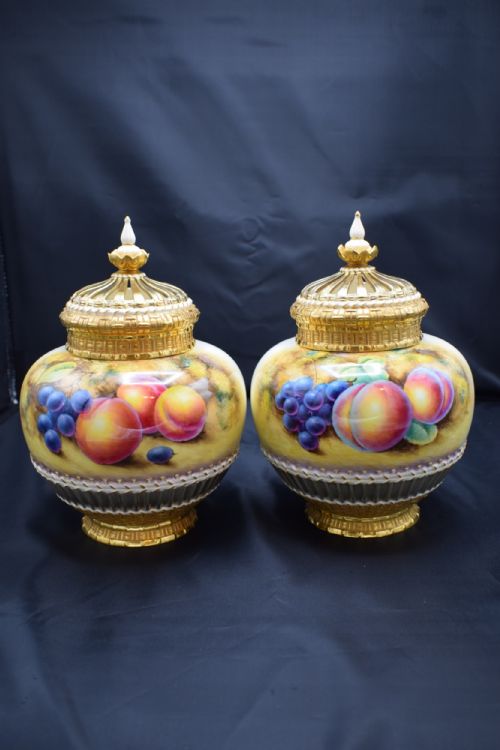


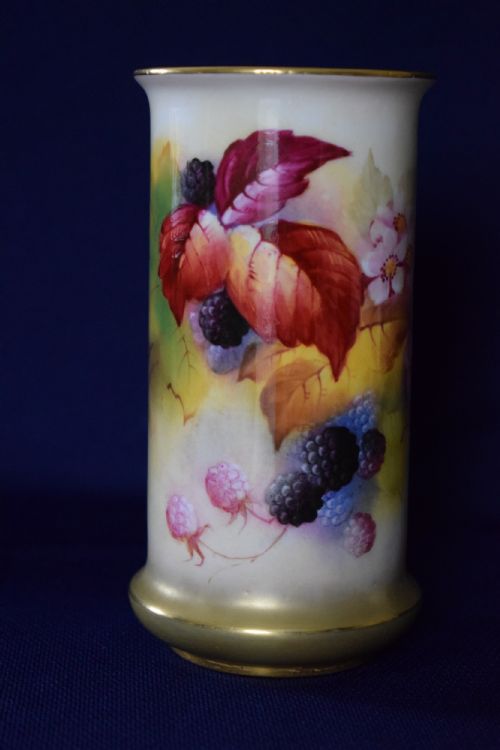


Gilt Porcelain Fruit Vase
These gilt porcelain fruit vase examples bring hand-painted botanical displays into the room through traditional English porcelain.
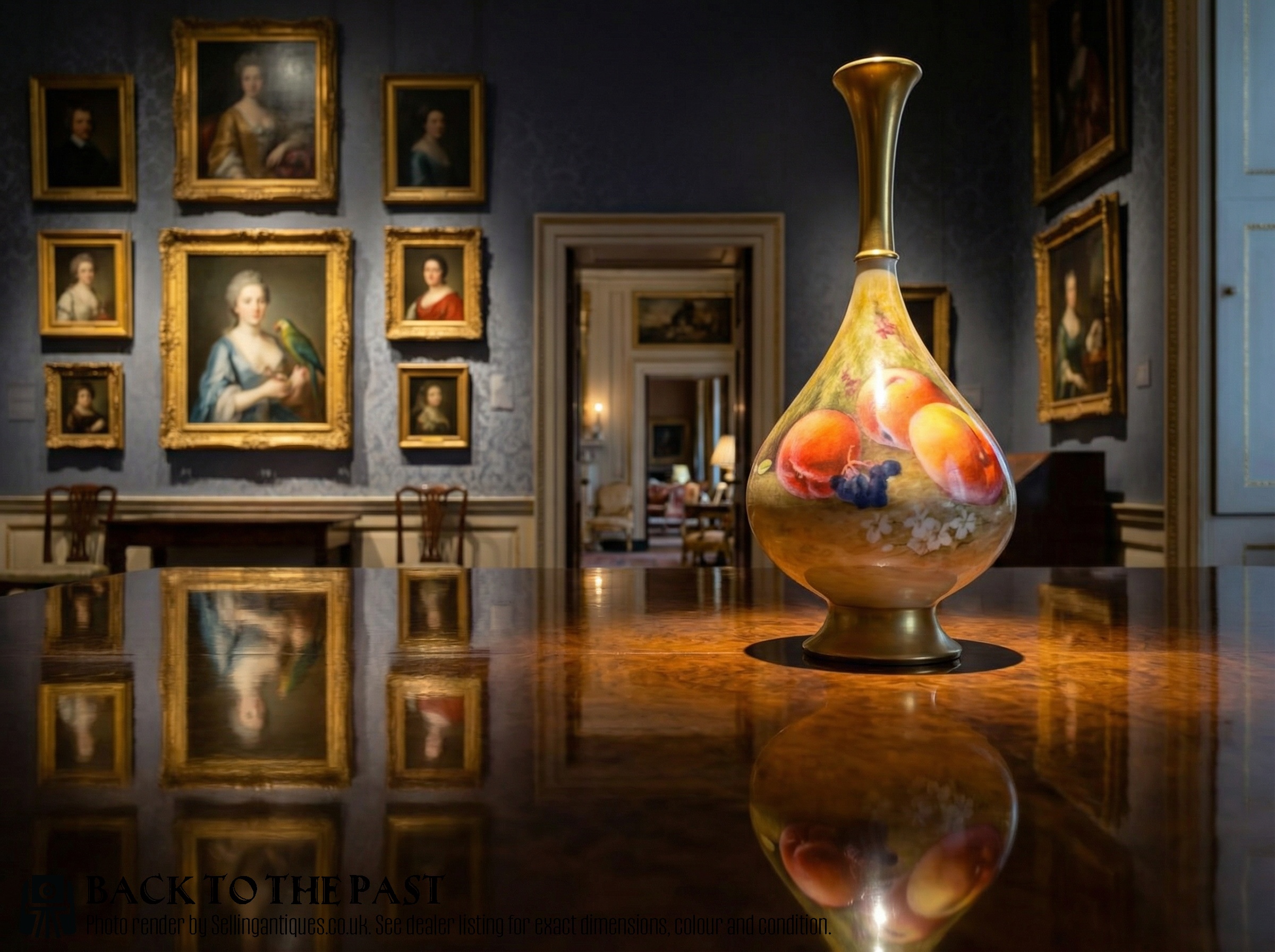
Gilt Porcelain Fruit Vase
A gilt porcelain fruit vase displays delicate hand-painted orchard studies framed by rich gilding. These pieces appear across Victorian, Edwardian and mid twentieth century periods, taking the form of spill vases, covered urns and pot pourri vessels.
Collectors encounter traditional English porcelain decorated with naturalistic fruit studies. The forms range from simple single spill vases to elaborate covered pot pourri vessels with twin handles.
How they were made
Potters shaped fine porcelain and bone china before applying intricate enamel painting by hand. Skilled artists painted detailed fruit compositions directly onto the ceramic body.
Gilding and gold leaf were applied to rims, handles and bases to accentuate the painted panels. Firing fixed the enamels and gold securely to the glazed porcelain surface.
Artists sometimes painted stray caterpillars among the fruit to test if observant buyers were paying attention.
What varies in quality
The refinement of the hand-painted fruit studies defines the upper tier of these vessels. Detailed brushwork by named artists carries greater artistic merit than standard factory decoration.
The application of gold leaf and the crispness of the porcelain moulding determine overall visual distinction. Subtlety in the enamel shading separates exceptional examples from simpler decorative wares.
Royal Worcester·William Hawkins·John Smith·Ricketts·K Blake·Kitty Blake·Richard Seabright·Freeman
The Gilt Porcelain Fruit Vase Glossary
- Pot Pourri Vase
- A ceramic vessel featuring a pierced cover designed to diffuse scented dried plant materials. These often include internal liners and decorative handles.
- Spill Vase
- A tall slender container traditionally used to hold wax spills for lighting fires or candles. They sit on mantelpieces and feature hand-painted decoration.
- Bone China
- A type of porcelain incorporating bone ash for enhanced translucency and strength. It provides a smooth white ground for detailed enamel painting.
- Gilding
- The application of gold leaf or gold paint to ceramic surfaces. This technique highlights rims, handles and structural details.
- Enamel
- Vitreous coloured glass fused to porcelain during firing. Artists use these paints to render vibrant fruit studies.
Gilt Porcelain Fruit Vase: Frequently Asked Questions
What is a gilt porcelain fruit vase?
A gilt porcelain fruit vase is a decorative ceramic vessel adorned with hand-painted orchard fruits and gold leaf ornamentation. These items originate predominantly from English traditional porcelain manufactories.
They serve as decorative mantelpiece ornaments or table centerpieces, showcasing detailed artistic skill through naturalistic depictions of peaches, apples and grapes.
How do I identify the period?
Identifying the period involves examining the style of the painted fruit, the form of the vase and any visible signature or factory mark. Victorian and Edwardian examples often display heavier gilding and traditional floral or fruit motifs.
Mid twentieth century pieces from the nineteen fifties and sixties maintain similar hand-painted traditions but exhibit slightly different porcelain bodies and glaze finishes.
Were these vases meant for flowers?
Some variations like spill vases were designed to hold taper spills, while standard vases accommodated floral arrangements. Pot pourri variants were specifically made to hold scented botanical mixtures rather than water.
Using them for fresh flowers requires caution to protect the internal glaze and delicate exterior enamel painting from moisture damage.
Why are some signed by artists?
Many fine English porcelain pieces were painted by specialist ceramic artists who signed their work on the body or base. Signatures indicate individual artistry rather than standard factory production.
Collector interest often centres on pieces bearing the signatures of known painters due to their exceptional artistic execution and provenance.