



Gilt Porcelain Desk Clock
A gilt porcelain desk clock brings nineteenth-century French elegance and precision timekeeping into a room through decorative metalwork and hand-painted ceramic panels.
Gilt Porcelain Desk Clock
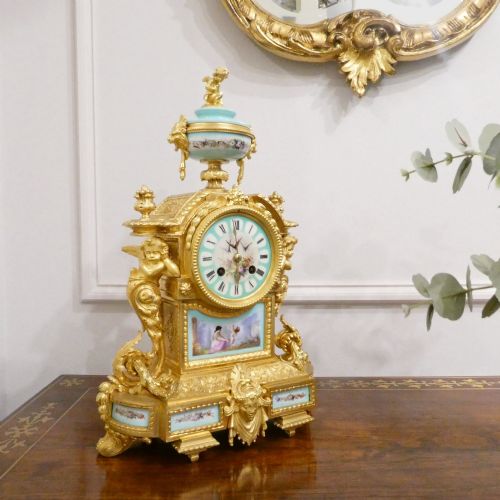
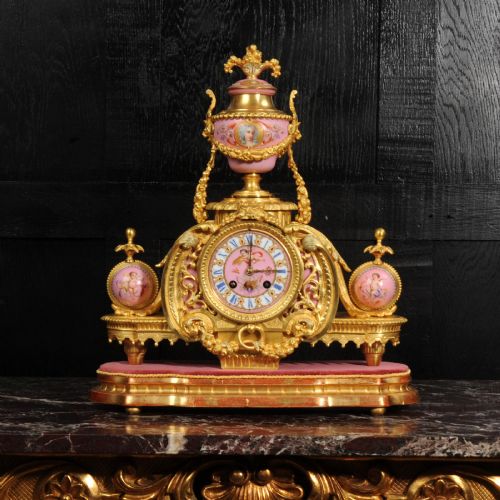
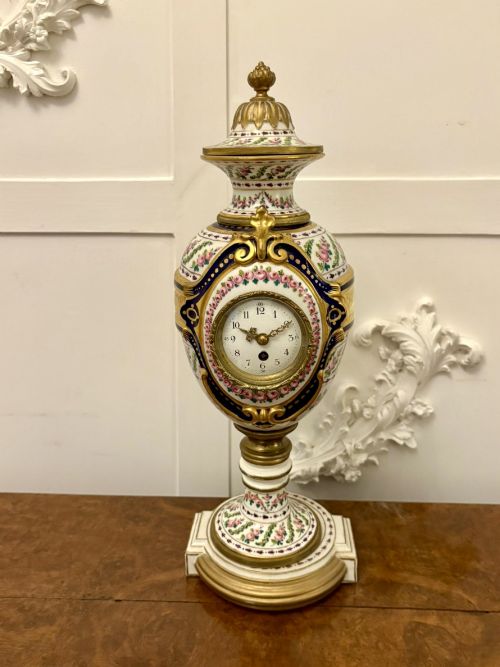
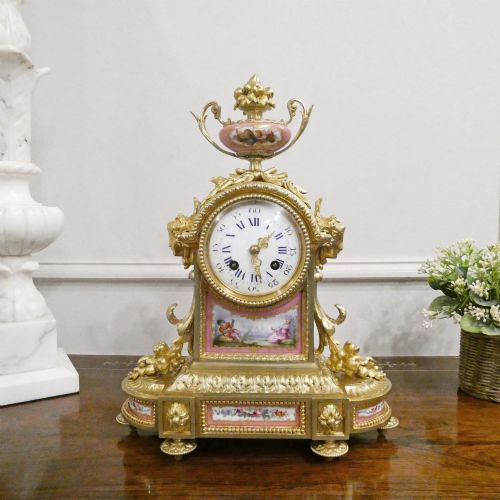
A gilt porcelain desk clock is a nineteenth-century timepiece, predominantly French in origin, combining ornate metal mounts with ceramic elements. These objects include mantel clocks, boudoir pieces, and urn-shaped designs produced during the Victorian era and earlier decades of the nineteenth century.
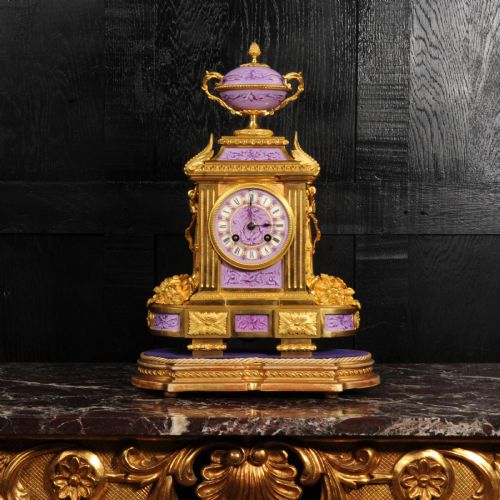
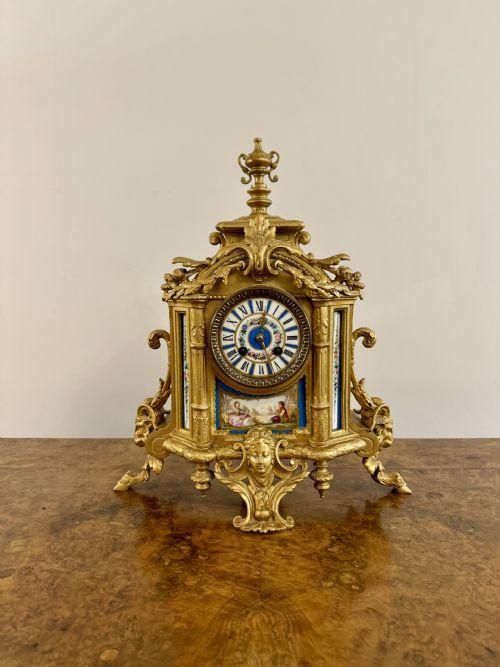
The version most commonly met on this page is the French nineteenth-century mantel clock, often featuring ormolu or gilt bronze housings mounted with painted porcelain panels. Makers working within French Rococo Revival, Louis XVI Style, and neoclassical traditions shaped these decorative timepieces.
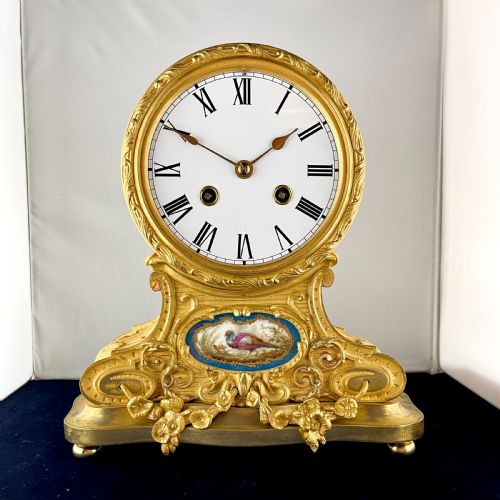
Buyers encounter forms ranging from drumhead clocks and crystal regulators to lyre clocks and elaborate urn shapes. Many examples incorporate hand-painted ceramic plaques depicting floral scenes or figures alongside classical architectural motifs.
How they were made
Makers constructed these timepieces by combining cast bronze, brass, or gilt metal frames with ceramic components. Artisans applied mercurial gilding or electroplating to create the characteristic ormolu surface finish on the metal mounts.
Porcelain panels and dials received hand-painted decoration, frequently featuring cobalt blue grounds and polychrome pastoral scenes. Glass domes and enamel dials further completed the construction of these elaborate nineteenth-century objects.
Tiny porcelain putti occasionally lean against clock dials as though helping to push the hands forward.
What varies in quality
The distinction between standard production and superior work rests on the crispness of the bronze casting and the artistry of the hand-painted porcelain. Finer examples display deeply chased gilt metal mounts alongside finely detailed ceramic plaques rather than generic transfers.
Movement quality separates workshop standards, with signed mechanical movements by notable makers demonstrating superior durability compared to unmarked alternatives. The integration between the ceramic body and the metal chassis also indicates the original ambition of the piece.
Achille Brocot·Japy Freres·P.H Mourey
The Gilt Porcelain Desk Clock Glossary
- Ormolu
- Gilded bronze produced by applying a mercury and gold amalgam to a bronze casting before heating. This technique creates a durable golden finish characteristic of nineteenth-century French metalwork.
- Sèvres
- A famous French porcelain manufactory known for soft-paste and hard-paste ceramic luxury goods. Many nineteenth-century clocks feature panels painted in the distinctive style associated with this institution.
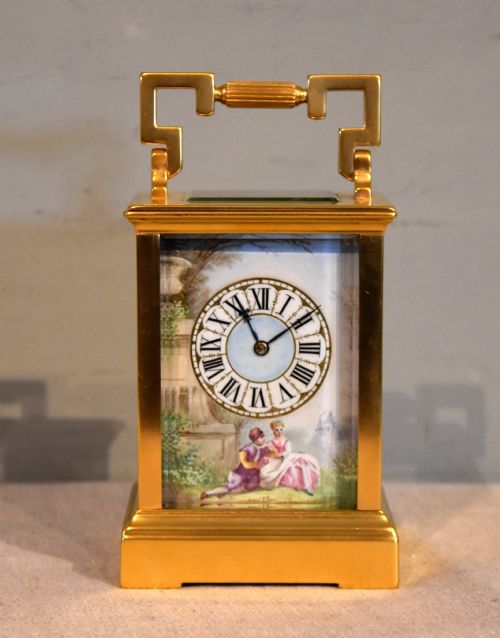
- Crystal Regulator
- A mantel clock featuring glass panels on all four sides that reveal the internal mechanical movement. These pieces gained popularity during the later decades of the nineteenth century.
- Drumhead Clock
- A timepiece featuring a circular clock case mounted atop a decorative plinth or base. The shape resembles a traditional drum resting on its side.
Gilt Porcelain Desk Clock: Frequently Asked Questions
How do I wind a nineteenth-century desk clock?
Most mechanical desk clocks from this period use a key to wind the spring barrels through holes on the enamel dial. Care must be taken not to over-wind the mechanism.
Consulting a professional clockmaker for initial setup ensures the movement operates correctly without damaging internal components.
Were these clocks made outside France?
While the majority of gilt porcelain clocks originate from French workshops adhering to Rococo or Louis XVI styles, regional variations also exist. Examples from Vienna demonstrate similar material combinations.
French pieces nonetheless dominate the available selection from the nineteenth century.
How should I clean the gilt metal mounts?
Dusting with a soft, dry brush remains the safest method for maintaining ormolu and gilt bronze surfaces. Moisture and abrasive cleaners strip the delicate historical gilding.
Porcelain panels can be gently wiped with a lint-free cloth dampened slightly with water.
Do these clocks keep accurate time?
Many nineteenth-century mechanical movements function reliably after receiving professional servicing and cleaning. Pendulum regulation allows for fine adjustments to the daily timekeeping.
Fully restored examples generally run well for domestic use.