




Gilt Pilaster Overmantel Mirror
A gilt pilaster overmantel mirror brings architectural presence and reflected light to a room, framing the chimney breast with classical proportions.
Gilt Pilaster Overmantel Mirror
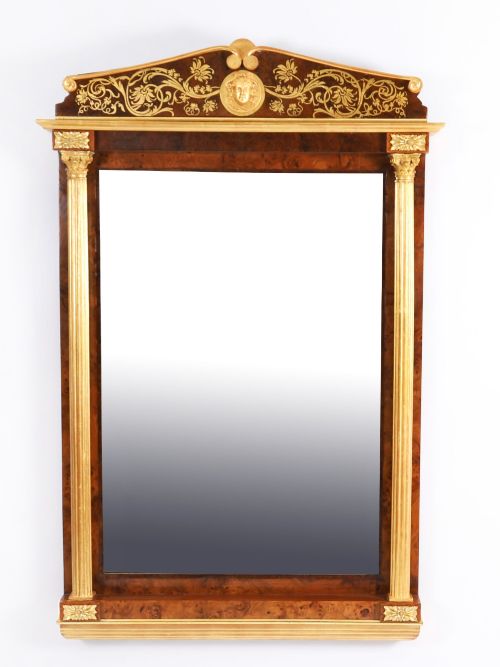
A gilt pilaster overmantel mirror is a substantial wall glass designed to sit above a fireplace, defined by flanking upright architectural columns or pilasters. When you browse for a gilt pilaster overmantel mirror, you encounter pieces primarily from the nineteenth century, including Regency, Neoclassical, and Victorian periods.
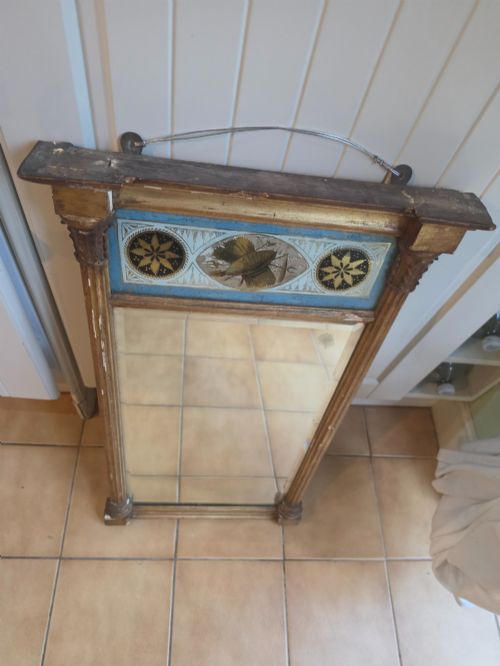
The forms on this page range from grand giltwood and gesso examples to smaller pier glasses and hall mirrors. Many incorporate decorative details such as verre eglomise panels, faux marble paint finishes, and carved wood elements that reflect the taste of their era.
How they were made
These mirrors are constructed using traditional timber carcases such as softwood and mahogany, which provide a stable base for decorative surface work. Craftsmen applied layers of gesso onto the wood before gilding the surface with gold leaf to achieve a brilliant metallic sheen.
Moulded composition ornament was frequently used to create crisp neoclassical details along the frame and pilasters. Specialised techniques like verre eglomise introduced reverse-painted glass panels, adding layered visual interest above the main mirror plate.
Gilt Pilaster Overmantel Mirror Retail Price Guide 2026
Typical asking prices for gilt pilaster overmantel mirror among the pieces listed under this phrase on Sellingantiques today, from the lower quarter to the upper quarter. They describe what is for sale here now, not the wider market.
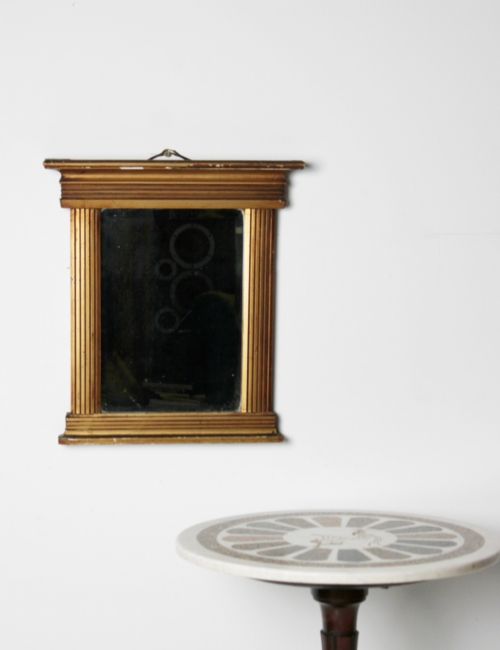
A nimble nineteenth-century hall mirror proves that even narrow corridors deserved a touch of grand architectural theatre.
What varies in quality
Quality in these mirrors lies in the crispness of the architectural carving and the depth of the gilding applied over the gesso ground. Finer examples display well-proportioned pilasters and harmonious integration of decorative panels like verre eglomise, whereas simpler pieces rely on basic painted surfaces.
The integrity of the original wood carcase and the preservation of the antique mirror glass also distinguish superior pieces. Subtle details in the neoclassical ornament separate standard production mirrors from works of higher craftsmanship.
The Gilt Pilaster Overmantel Mirror Glossary
- Pilaster
- A rectangular column that projects slightly from a wall or frame, used here to flank the mirror plate. This architectural feature defines the character of the piece.
- Verre eglomise
- A cold decoration technique involving painting on glass with gold or silver leaf. It produces a rich, reflective panel often seen at the top of Regency pier glasses.
- Gesso
- A plaster-like mixture applied to wood frames to create a smooth surface for gilding. Its thickness allows for intricate moulding and carving.
- Pier glass
- A tall, narrow mirror designed to hang on the wall between windows. These share stylistic traits with overmantel mirrors.
- Neoclassical
- A style inspired by classical antiquity featuring balanced proportions and restrained ornament. It dominates the design vocabulary of these nineteenth-century pieces.
Gilt Pilaster Overmantel Mirror: Frequently Asked Questions
Where should a gilt pilaster overmantel mirror hang?
These mirrors traditionally sit directly on the mantelpiece above a fireplace, anchoring the chimney breast and drawing the eye upward.
They also function effectively on principal walls in reception rooms where their architectural frames can reflect natural light across the space.
How do I identify a Regency period mirror?
Regency mirrors typically display classical motifs, reeded pilasters, and clean architectural lines that reflect early nineteenth-century taste.
Look for specific decorative elements like verre eglomise panels and giltwood finishes which are characteristic of this era.
What is the difference between a pier mirror and an overmantel mirror?
Pier mirrors are generally taller and narrower, designed specifically for the wall space between two windows.
Overmantel mirrors are proportioned to fit horizontally along the wider span of a fireplace mantel.