

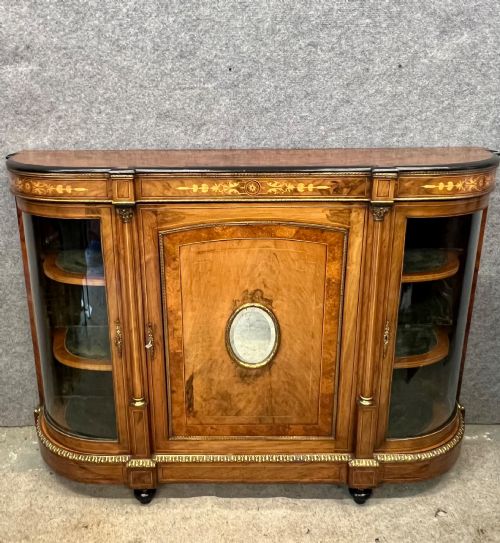
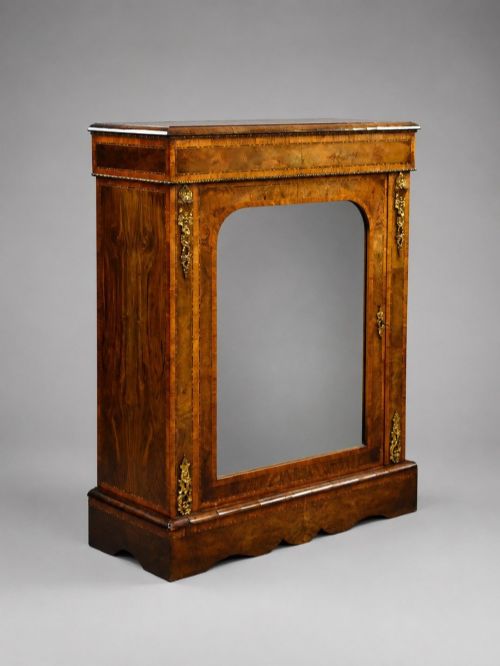


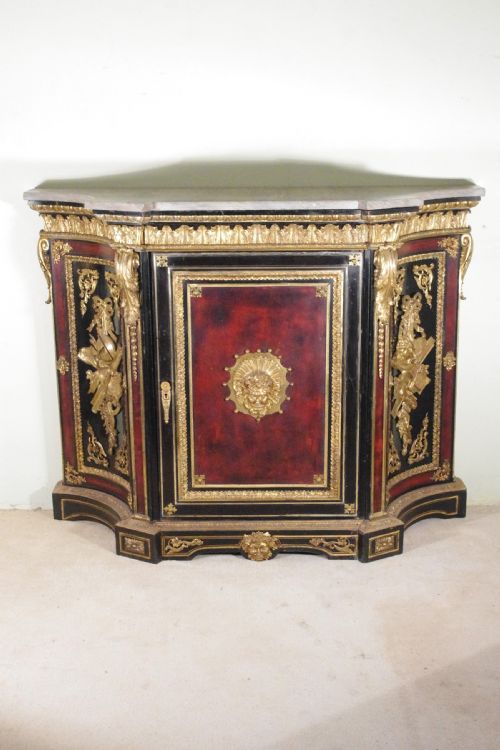
Gilt Mounted Pier Cabinet
A gilt mounted pier cabinet brings nineteenth-century presence to a room, offering display space and rich metalwork in a compact footprint.
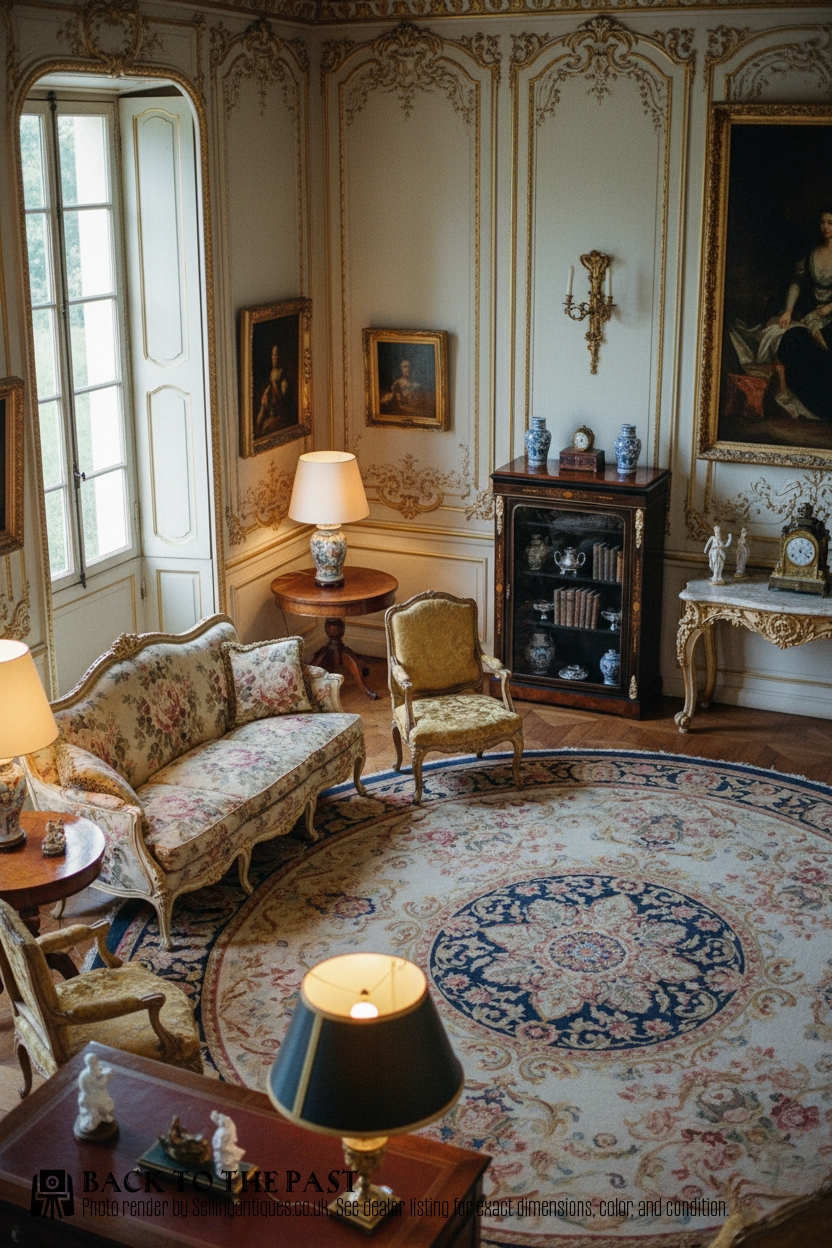
Gilt Mounted Pier Cabinet
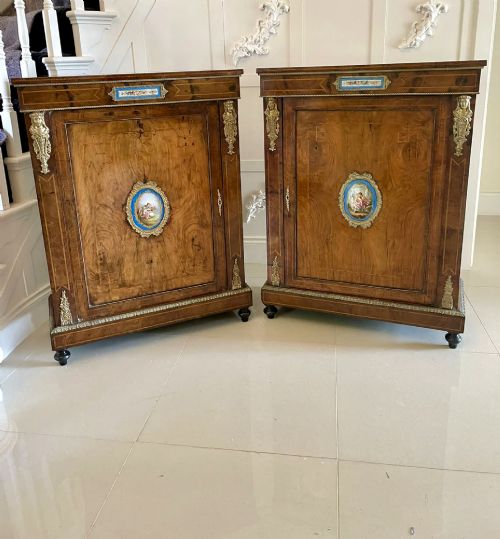
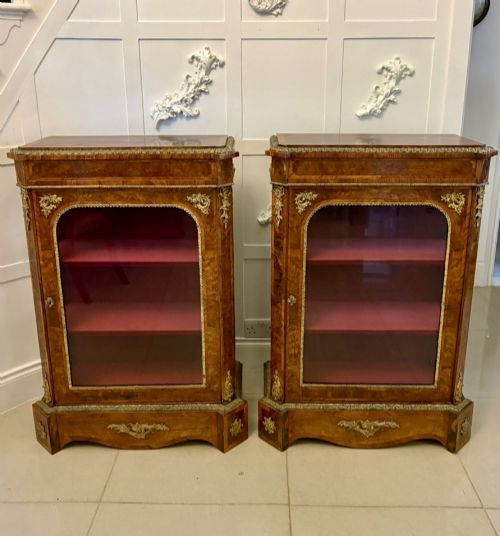
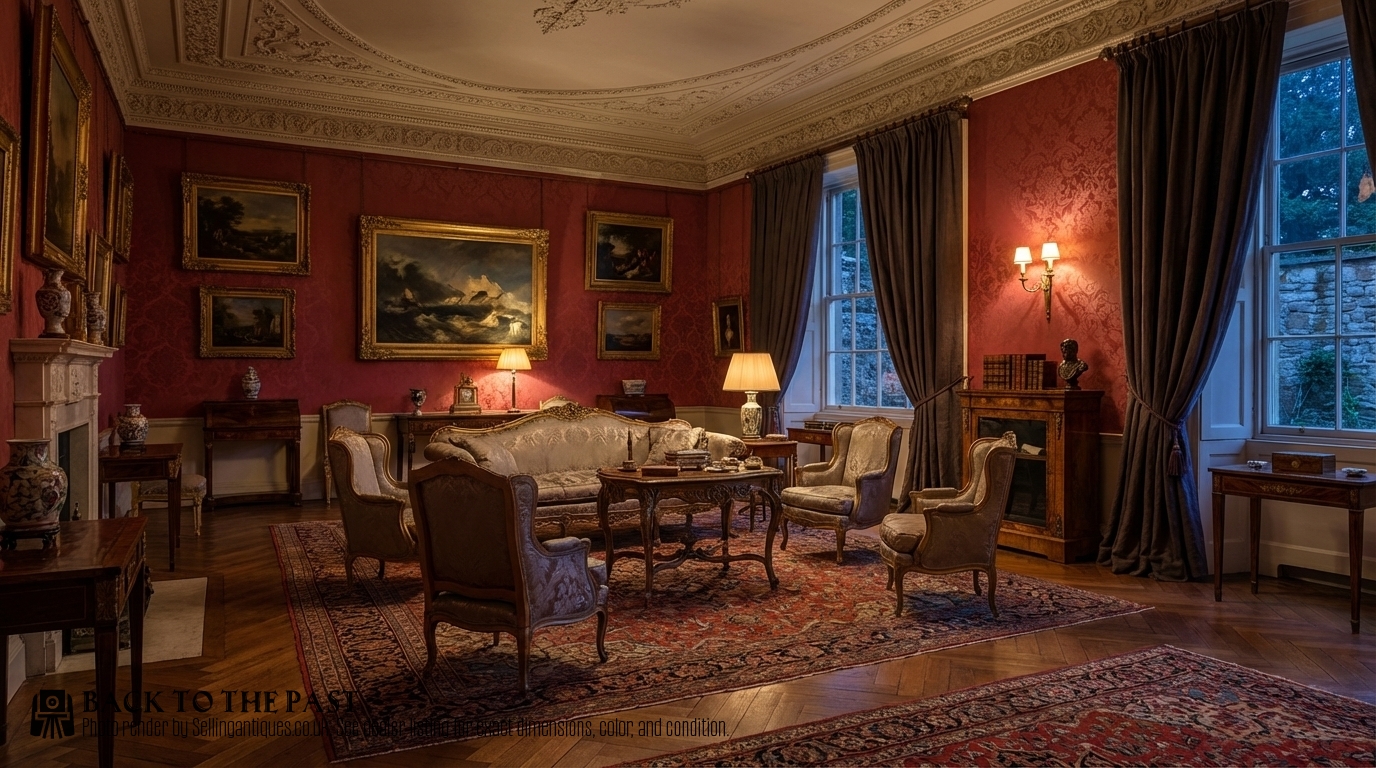
A gilt mounted pier cabinet is a low display or side piece designed originally to stand against the narrow wall space between windows. The pieces gathered here belong predominantly to the nineteenth century, spanning Victorian Britain and French revival periods.
Most examples rely on rich timbers such as burr walnut, ebonised wood, and satinwood, frequently paired with glazed doors to showcase contents. Alongside standard single-door pier cabinets, the selection includes matched pairs and related side cabinets incorporating marquetry and fine plaques.
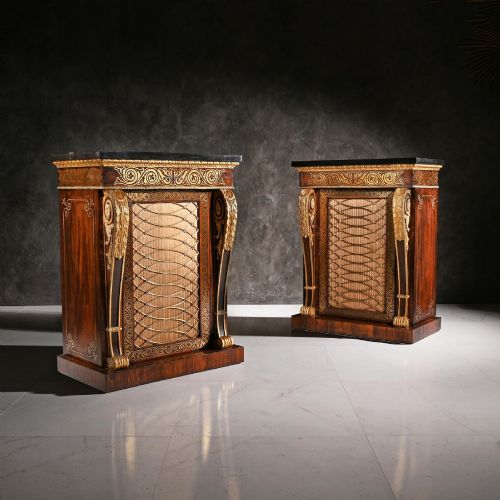
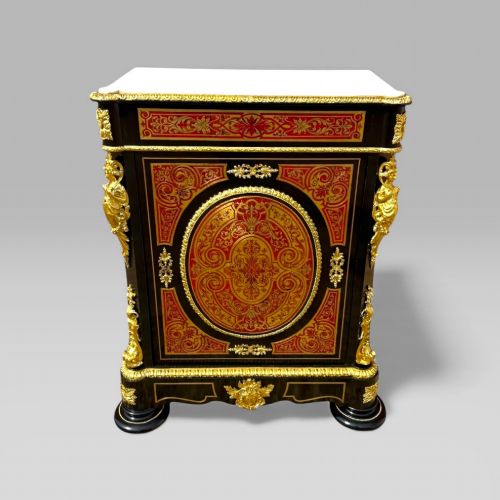
Makers drew heavily on French taste, producing Louis XVI revival and Napoleon III designs alongside robust British Victorian cabinetry. These forms range from modest single cabinets to monumental pairs featuring pietra dura or elaborate brass inlay.
Materials and construction
Cabinetmakers constructed carcass frames from native and exotic timbers, selecting burr walnut, kingwood, and amboyna for their striking grain patterns. Ebonised finishes were frequently applied to mimic costly ebony, providing a dark contrast to bright metal mounts.
Gilt-metal and ormolu mounts define the decorative vocabulary, cast and applied to frame panels, corners, and plinths. Many pieces incorporate additional luxury materials, including marble tops, tortoiseshell boulle work, porcelain plaques, and intricate marquetry inlays.
Gilt Mounted Pier Cabinet Retail Price Guide 2026
Typical asking prices for gilt mounted pier cabinet among the pieces listed under this phrase on Sellingantiques today, from the lower quarter to the upper quarter. They describe what is for sale here now, not the wider market.
Ormolu mounts and glass display doors appear consistently across the inventory, alongside marble tops and detailed marquetry inlays.
Distinctions in quality
Quality rests on the selection of timber veneers and the precision of the marquetry or brass inlay work. Superior cabinets display meticulous hand-chased ormolu mounts that integrate seamlessly with the timber carcass, rather than heavier, unrefined castings.
The integration of specialist decorative elements, such as genuine Sevres porcelain plaques, pietra dura panels, or heavy marble tops, elevates the stature of a piece. The crispness of carved details and the balance of proportions distinguish standard production from exceptional examples.
Louis Constantin Le Gaigneur
The Gilt Mounted Pier Cabinet Glossary
- Ormolu
- Gilded bronze or brass mounts applied as decorative ornaments to furniture. This technique was widely utilised during the nineteenth century to highlight architectural lines.
- Marquetry
- Inlaid wood designs forming decorative patterns or pictures on the furniture surface. Craftsmen used contrasting veneers to create detailed floral or geometric motifs.
- Boulle
- A method of marquetry using brass and tortoiseshell inlaid together in elaborate scrolling patterns. It originated in seventeenth-century France and saw a significant revival in the nineteenth century.
- Pietra dura
- Inlaid work using cut and fitted polished coloured stones to create images. This technique appears on high-status nineteenth-century cabinet panels.
- Pier cabinet
- A narrow cabinet specifically built to fit the wall space between windows. These pieces combine display shelving with decorative timber and metal mounts.
Gilt Mounted Pier Cabinet: Frequently Asked Questions
What is a pier cabinet?
A pier cabinet is a narrow display piece traditionally designed to stand against the wall space, or pier, between two windows.
These cabinets typically feature glass doors and shelves for displaying porcelain or small objects while occupying minimal floor space.
How do I date a pier cabinet?
Dating relies on examining the timber veneers, mounting techniques, and stylistic revivals present in the construction.
Most examples date from the nineteenth century, showing Victorian or French Napoleon III and Louis XVI revival characteristics.
Where should I place this cabinet?
These cabinets suit narrow wall spaces, hallways, or living rooms where a compact yet decorative storage piece is required.
The glazed doors and reflective gilt mounts help brighten darker corners and showcase collection items effectively.
What materials are common in these cabinets?
Common materials include walnut, ebonised wood, and satinwood, frequently decorated with ormolu mounts and marquetry.
Many examples also incorporate marble tops, porcelain plaques, or brass inlay work.