




Gilt Mounted Clock
When you search for a gilt mounted clock, you are looking at substantial decorative timepieces enriched with polished metal ornamentation.
Gilt Mounted Clock
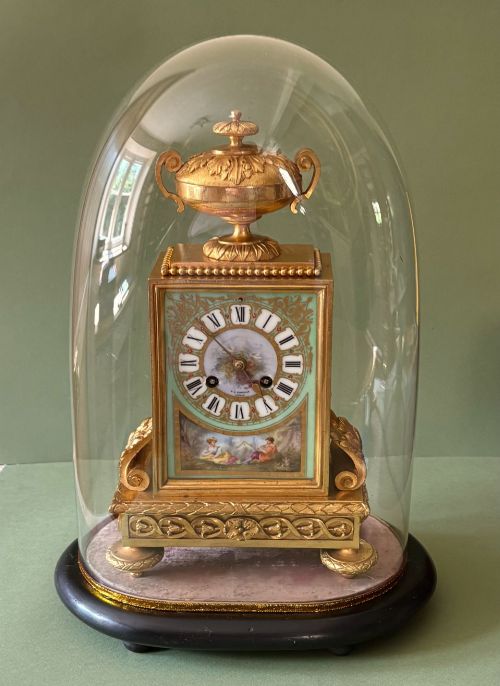
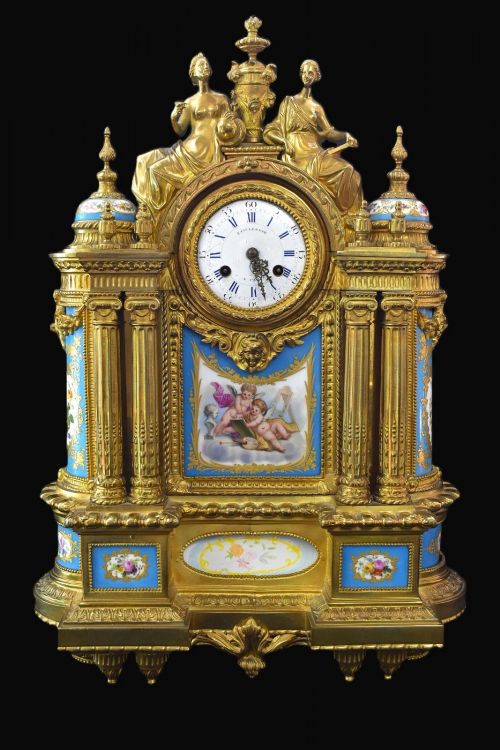
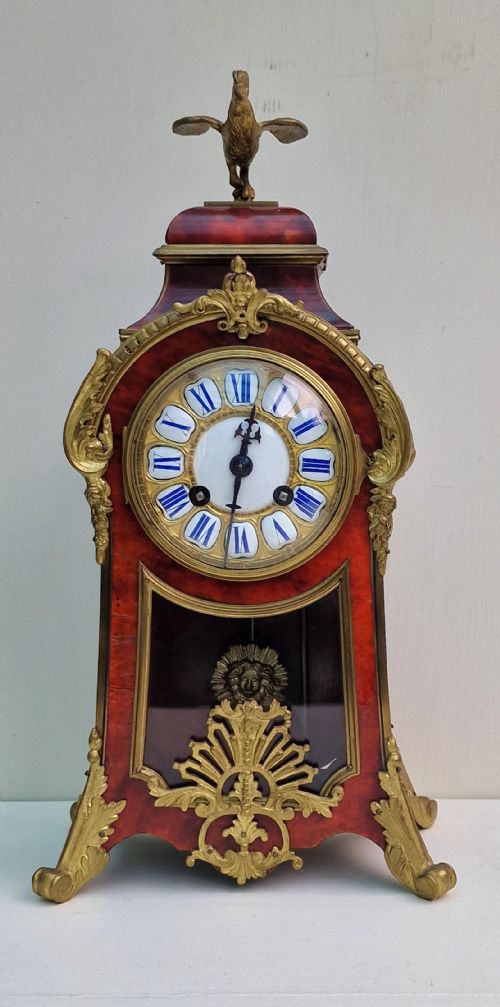
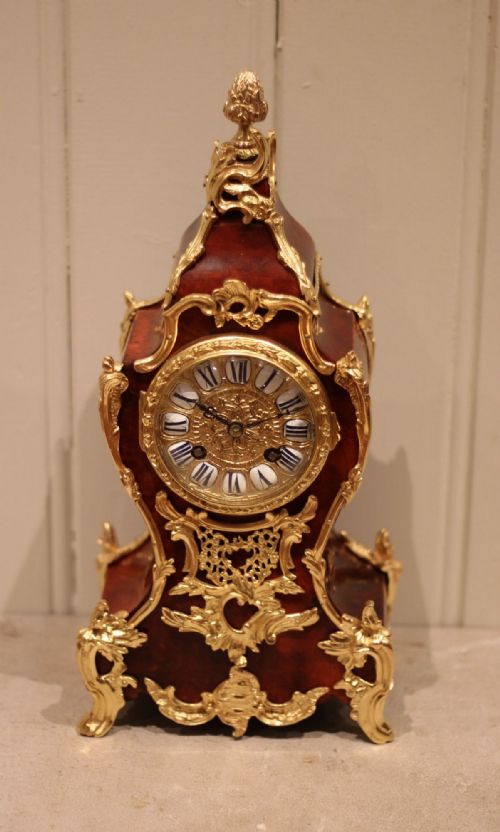
A gilt mounted clock combines timekeeping with elaborate sculptural casing, drawing from French and British traditions. The pieces on this page span the eighteenth, nineteenth and early twentieth centuries, featuring mantel clocks, bracket clocks and portico designs.
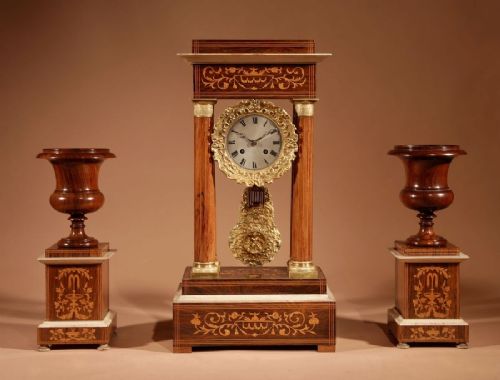
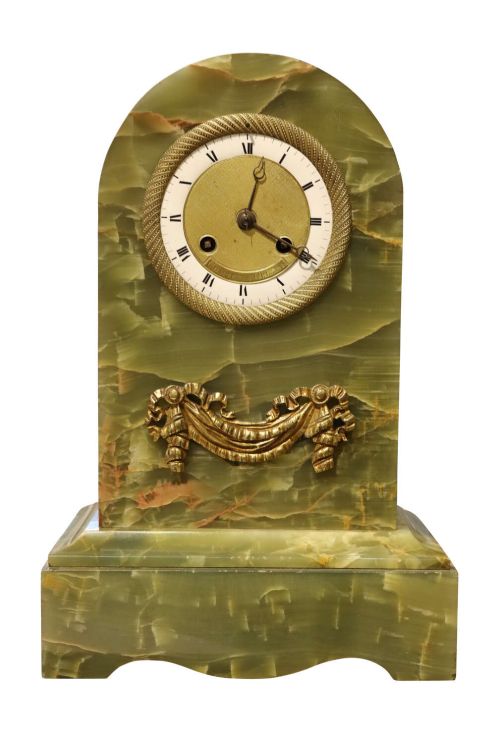
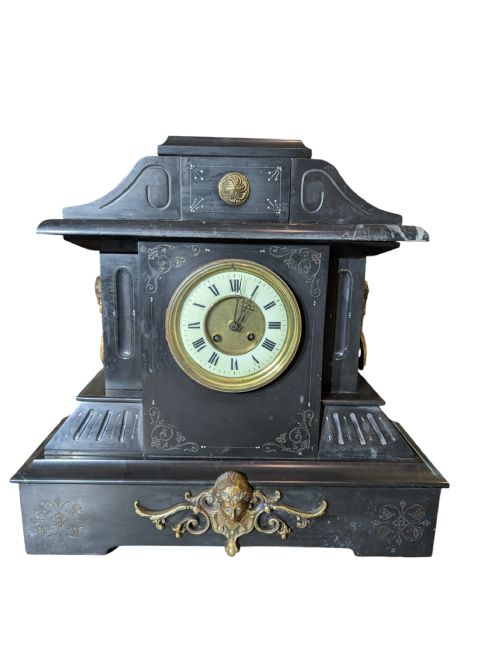
Mantel clocks dominate the selection, frequently accompanied by garnitures or matching side ornaments. Buyers encounter robust architectural marble cases alongside ornate wooden bodies finished in ebonised wood, mahogany, walnut and tortoiseshell.
Stylistic revivals heavily influence the selection, with French Rococo, Louis XVI, Louis XIV and Empire designs appearing alongside Victorian interpretations. These objects served as centrepieces for formal rooms, combining mechanical precision with decorative display.
Materials and construction
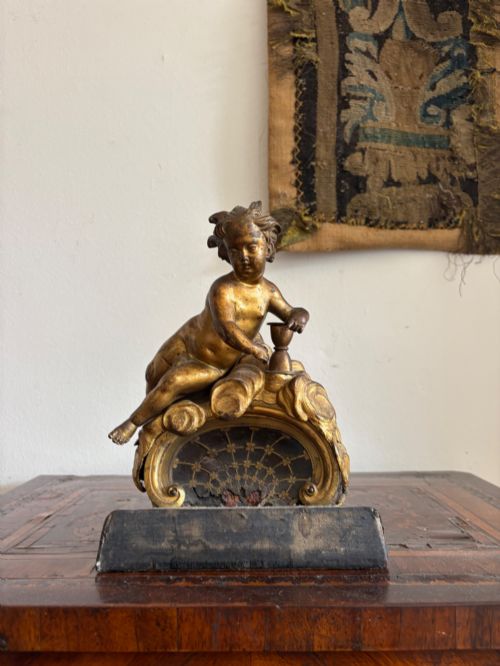
Cases combine structural foundations of marble, slate, exotic timbers or tortoiseshell with applied metal elements. Mounts, bezels and finials are cast in brass, bronze or ormolu, then gilded to achieve a bright, durable metallic lustre.
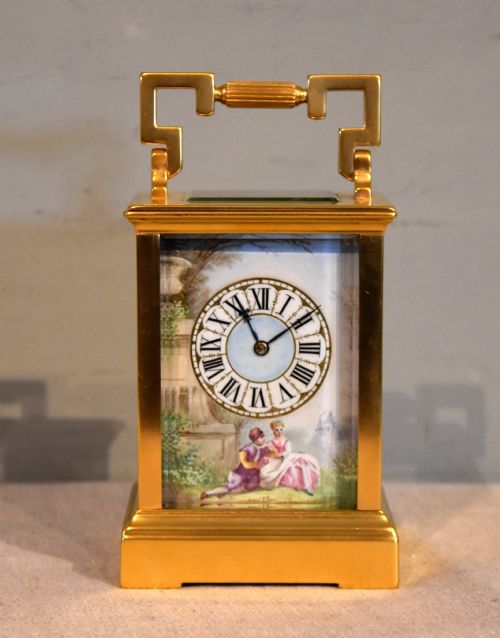
Dials frequently incorporate enamel chapters and hand-painted porcelain panels, including Sevres-style porcelain and cloisonne enamel. Movements range from standard eight-day mechanisms to fusee movements and chiming systems.
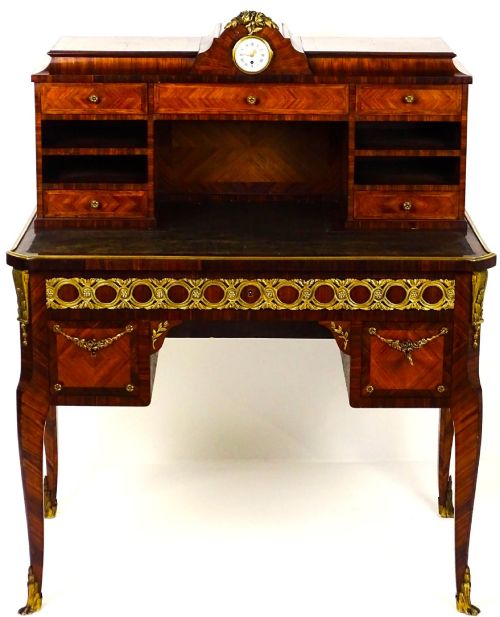
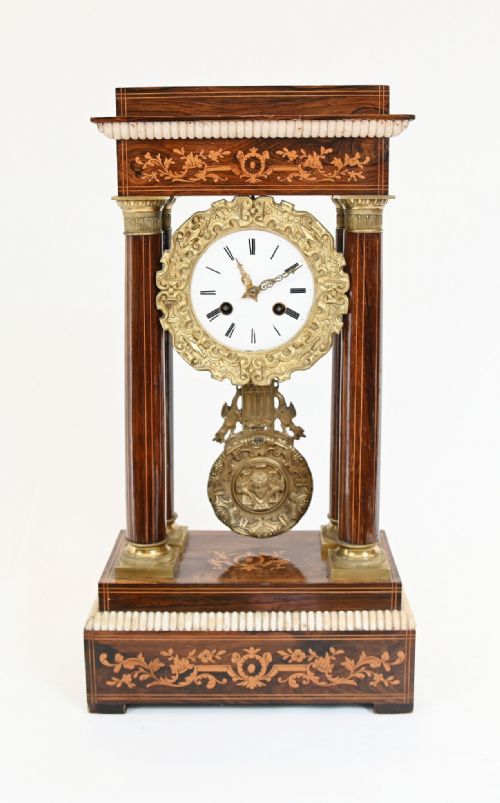
Cabinetmakers utilised marquetry, boulle work with tortoiseshell and brass inlay, and lacquered finishes to construct the wooden bodies. Metal mounts were secured using pins and screws, integrating structural support with detailed ornamentation.
One particularly imaginative nineteenth-century clock pairs a gilt ormolu windmill with porcelain figures of Harlequin and Columbine.
Distinctions in quality
The standard of a gilt mounted clock rests upon the crispness of the bronze or ormolu casting and the depth of the subsequent gilding. Finer mounts display sharp chasing and hand-finished detail rather than smooth, factory-poured uniformity.
The integration of the case materials dictates overall merit, seen in how precisely veneers align, how securely porcelain panels fit, and the weight and density of the marble or wood. Clockmakers who produced the internal movements, such as Lenzkirch or Brocot, often elevated the stature of the piece.
Completeness alters the standing of a clock, particularly in sets that retain their original garnitures, matching brackets, or pendulums. Retaining original dial components, glass panels and signed backplates separates standard production from superior examples.
Charles a Orleans·Paul Sormani·Etienne Lenoir·Louis Goret·Lenzkirch·Payne and Co·Achille Brocot·James Smith·A D Mougin
The Gilt Mounted Clock Glossary
- Ormolu
- Gilded bronze produced by applying a mercury-gilding technique to cast bronze. This process creates a rich, lasting metallic surface frequently seen on nineteenth-century French cases.
- Boulle work
- Marquetry technique utilising tortoiseshell and brass inlay developed in France. It decorates the surfaces of elaborate bracket and mantel clocks.
- Portico clock
- A architectural clock style supported by columns resembling a classical temple facade. They often feature pendulum movements suspended centrally within the structure.
- Garniture
- A set consisting of a central clock flanked by matching decorative objects such as vases or candelabra. These sets were designed to match symmetrical mantelpiece displays.
- Fusee
- A conical pulley connected to the mainspring by a cord or chain. It equalises the driving force of the spring as it winds down, improving timekeeping accuracy.
- Chiming movement
- A mechanical clock mechanism capable of sounding quarters, halves or hours on bells or gongs. Systems such as ting-tang chiming mark the passage of time audibly.
Gilt Mounted Clock: Frequently Asked Questions
How do I wind a mechanical mantel clock?
Use the appropriate winding key on the dedicated arbours located on the dial face. Turn gently until resistance is felt, avoiding overwinding the mainspring.
Ensure you match the correct key size to prevent damaging the square winding posts. Most mechanical movements require winding once every eight days.
What is the difference between a mantel clock and a bracket clock?
Mantel clocks sit directly on flat fireplace ledges or furniture surfaces using stable stone or wooden bases. Their designs prioritise front-facing decorative symmetry.
Bracket clocks originated as portable timepieces placed on wall brackets, typically featuring arched wooden hoods and carrying handles. Many bracket clocks in this selection retain their matching wall hanging supports.
How should I clean ormolu mounts?
Dust the metal surfaces gently using a soft, dry artist's brush or microfiber cloth. Avoid commercial metal polishes, which strip the thin layer of historical gilding.
Keep moisture away from the dial and internal movement. Professional conservation is recommended for tarnished or neglected metalwork.
Why does my antique clock run fast or slow?
Mechanical clocks are sensitive to temperature changes, surface levelness, and the wear of internal metal components. Small adjustments to the pendulum regulation nut can correct the timing.
Clock movements require periodic professional cleaning and lubrication to remove old oils. If regulation does not resolve timing errors, internal servicing is typically necessary.