

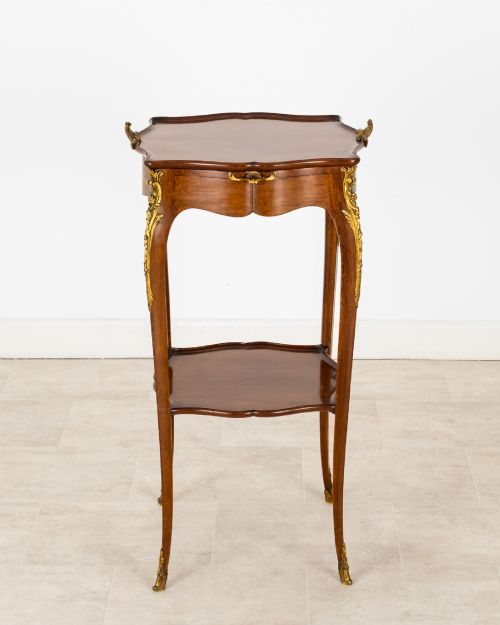


Gilt Mounted Accent Table
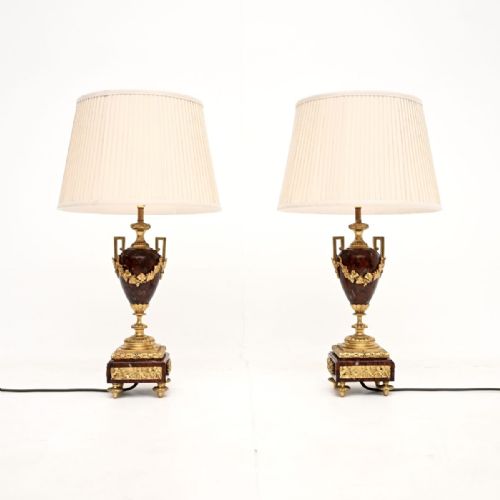
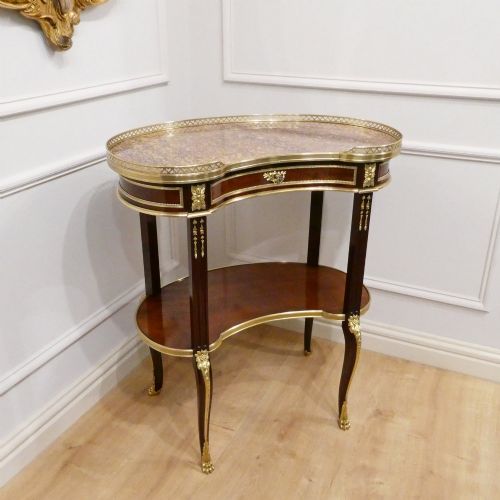
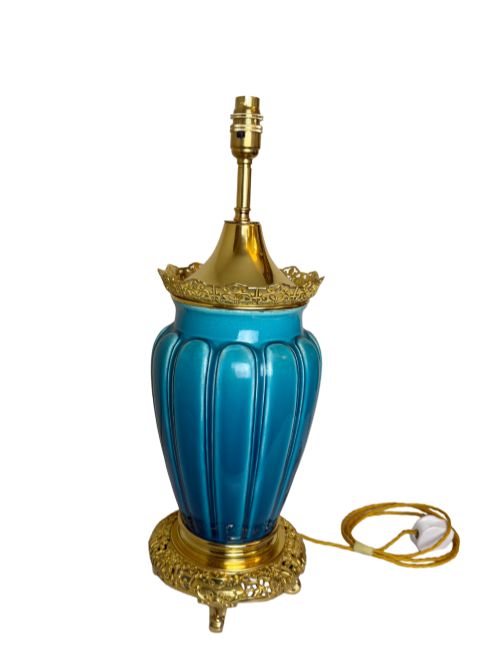
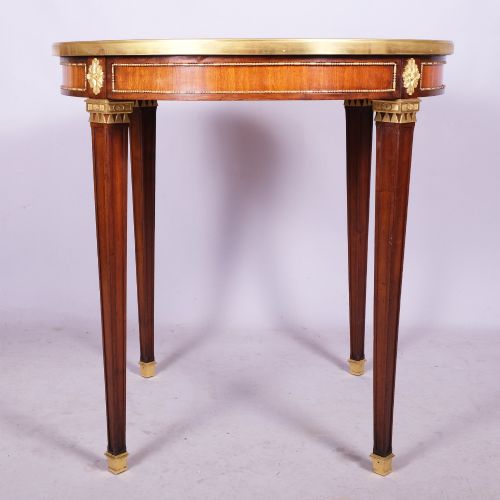
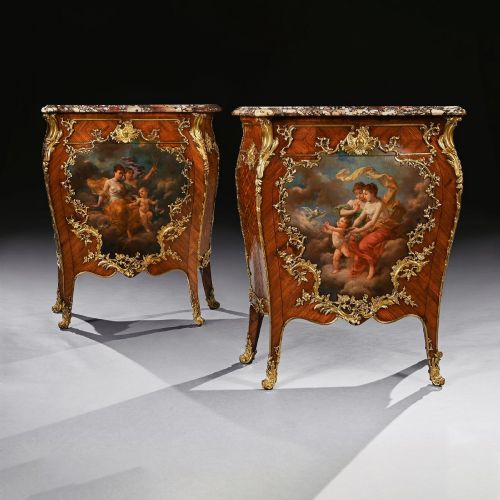
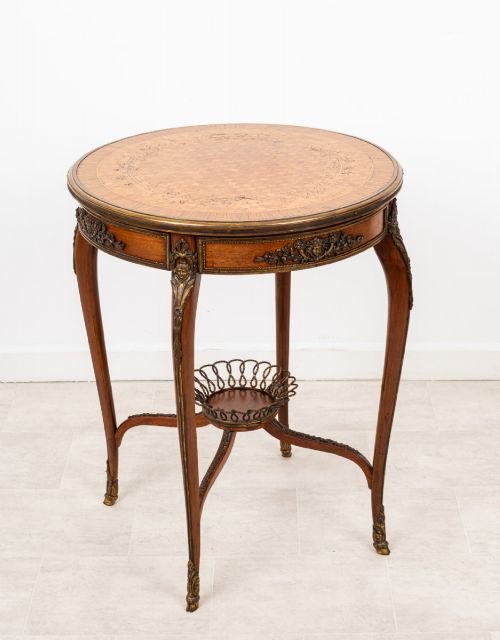
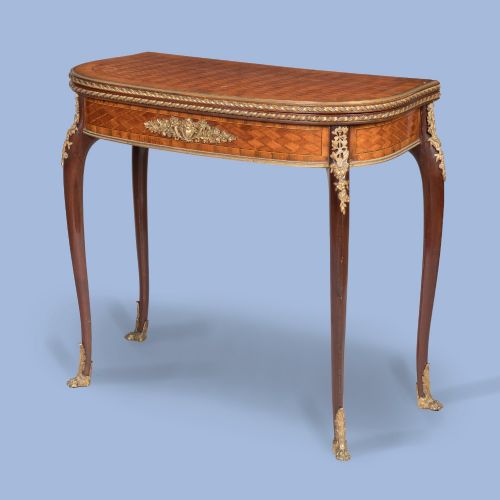
These gilt mounted accent table pieces bring French revival elegance and rich ormolu mounts directly into a room.

Gilt Mounted Accent Table
A gilt mounted accent table serves as a decorative and functional surface, drawing heavily from French nineteenth-century design vocabulary. The selection here leans towards forms like side tables, occasional tables, and centre tables produced during the Victorian and later periods.
Makers and workshops of the nineteenth century frequently turned to Louis XV and Louis XVI revivals, producing pieces that combine rich timber veneers with metallic mounts. These tables often feature inset marble tops, intricate marquetry, or parquetry patterns.
Alongside standard tables, the selection includes related forms such as card tables, small commodes, and gueridons. Each piece demonstrates the enduring appeal of gilt-bronze, brass, and ormolu ornamentation applied to fine cabinetmaking.
How they were made
Cabinetmakers constructed these tables using a carcase of mahogany, walnut, kingwood, or rosewood, often applying detailed marquetry or geometric parquetry patterns across the surfaces. Vernis Martin finishes and black lacquer also appear on select pieces.
Mounts cast in ormolu, gilt bronze, or gilt brass are meticulously chased and secured to the corners, legs, and aprons of the furniture. Inset marble slabs and porcelain plaques frequently complete the upper surfaces of the tables.
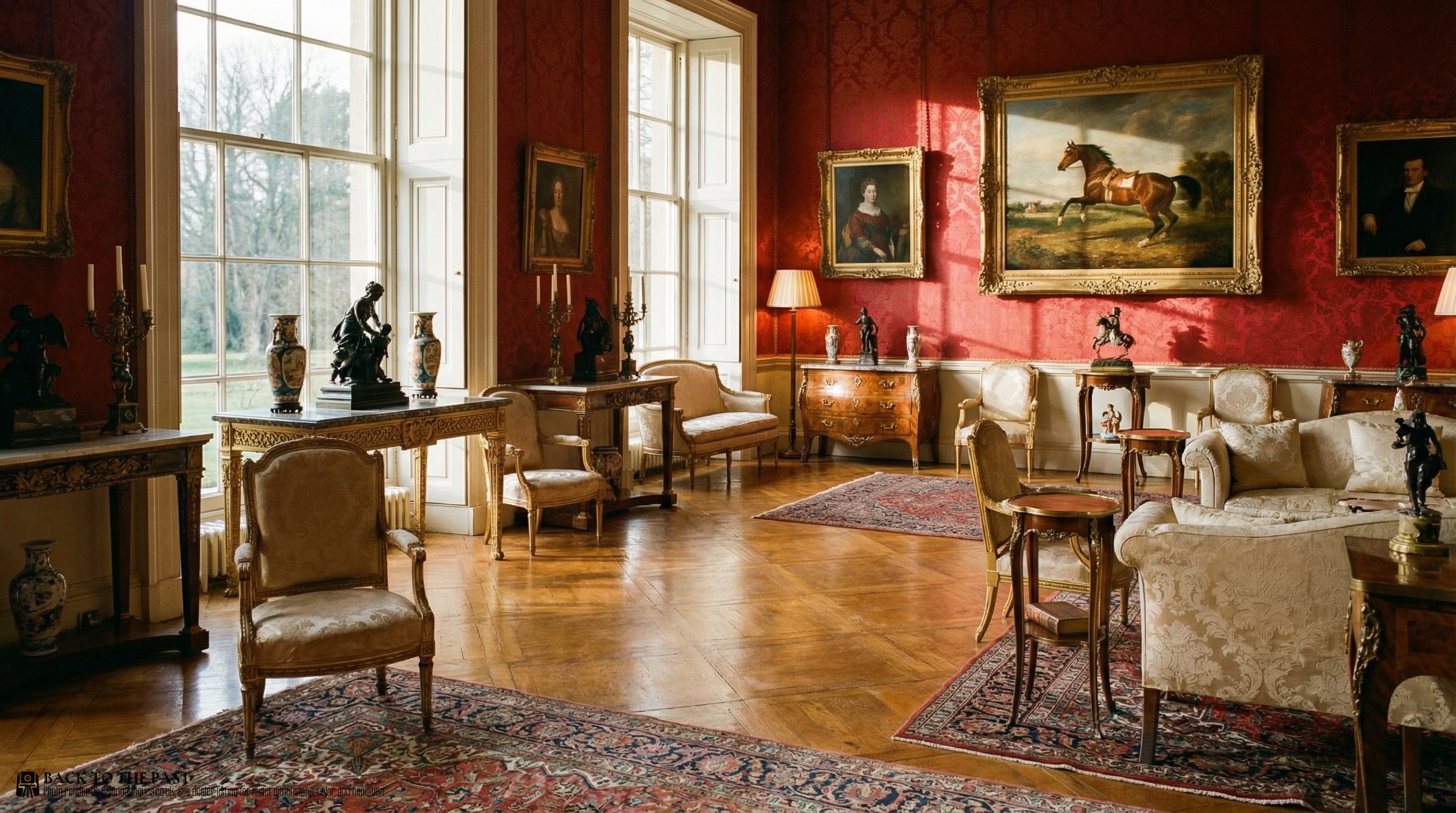
Several tables stand firmly on tiny bronze hoof feet, ready to prance across the rug the moment nobody is watching.
What varies in quality
The precision and depth of the ormolu chasing define the upper tier of these pieces, separating standard production from workshop masterpieces. Crisp casting lines and heavier gilding indicate superior craftsmanship.
The complexity of the timber work also dictates quality, with multi-wood marquetry and well-matched parquetry patterns showing greater artisan skill. Signed pieces or those attributed to notable makers carry distinct distinction.
Maison Millet·Joseph-Emmanuel Zwiener·François Linke·Gillows
The Gilt Mounted Accent Table Glossary
- Ormolu
- A gilded bronze or brass mount applied to furniture and decorative objects. The technique involves a mercury amalgam to bond gold to the base metal.
- Kingwood
- A dense, richly figured Brazilian timber prized for its contrasting dark violet and brown tones. It frequently forms the surface veneer on nineteenth-century French tables.
- Marquetry
- The art of applying decorative pieces of veneer to a structure to form intricate pictorial or geometric designs. Craftsmen use various dyed woods to achieve tonal depth.
- Gueridon
- A small, circular occasional table supported by a central column or multiple legs. Originating in the seventeenth century, the form saw a major revival during the nineteenth century.
- Parquetry
- A geometric mosaic of wood pieces used for surface decoration on floors and furniture. It provides a structured contrast to the flowing lines of floral marquetry.
Gilt Mounted Accent Table: Frequently Asked Questions
What is a gilt mounted accent table?
A gilt mounted accent table is a decorative small table ornamented with cast metal mounts plated in gold or brass. These pieces originate predominantly from nineteenth-century French revival movements.
They function as side tables, lamp tables, or centrepieces in a room, combining fine timbers with reflective metallic highlights.
Where should I place an occasional table?
An occasional table works well beside a seating area to hold lamps, decorative objects, or books. Their compact size allows them to fit easily into corners or beside larger pieces of upholstery.
Ensure the marble or wood top remains clear of moisture to protect the antique finish.
What is the difference between ormolu and gilt brass?
Ormolu specifically denotes gilded bronze created through a mercury amalgamation process, yielding a deep and lasting golden hue. Gilt brass uses a similar surface gilding technique over a different base metal alloy.
Both provide the bright metallic contrast characteristic of nineteenth-century decorative furniture.