
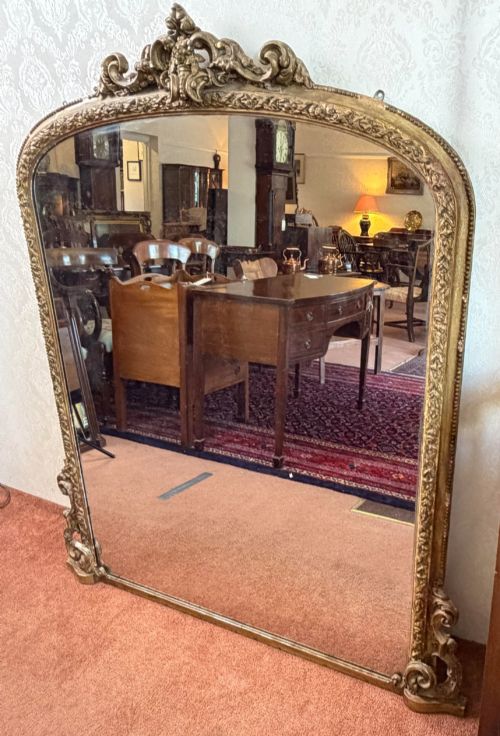
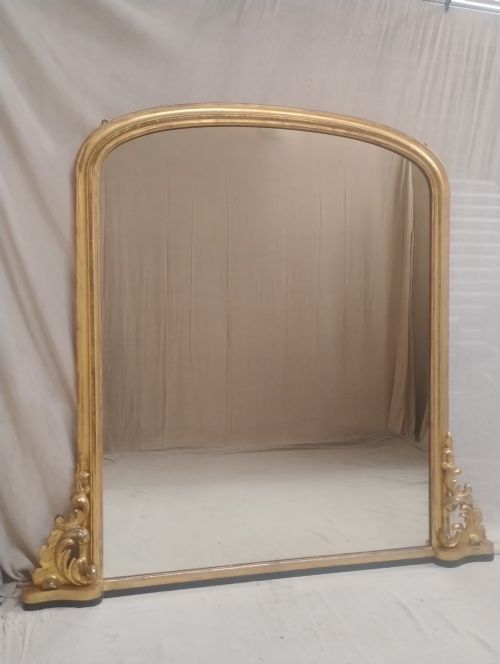
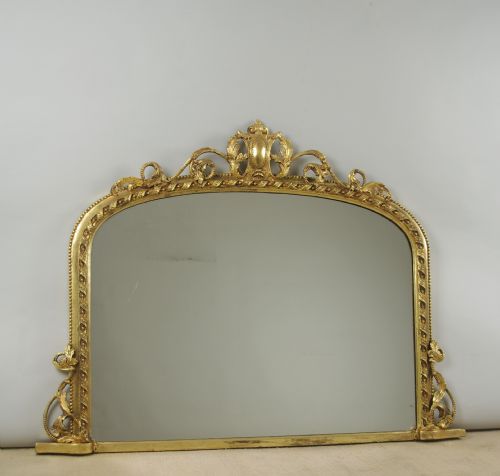
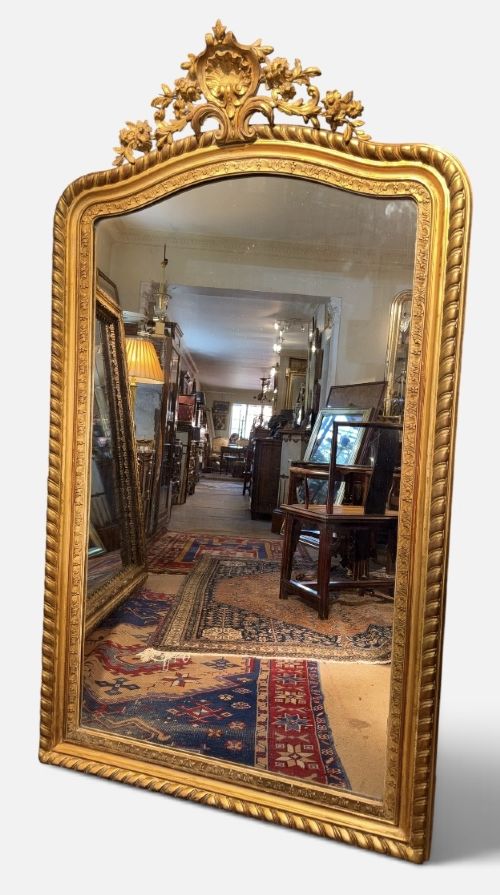


Gilt Mantelpiece Mirror
A gilt mantelpiece mirror sits above the hearth, catching the light and opening up the room.
Gilt Mantelpiece Mirror
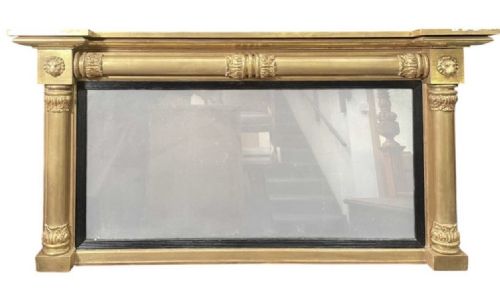
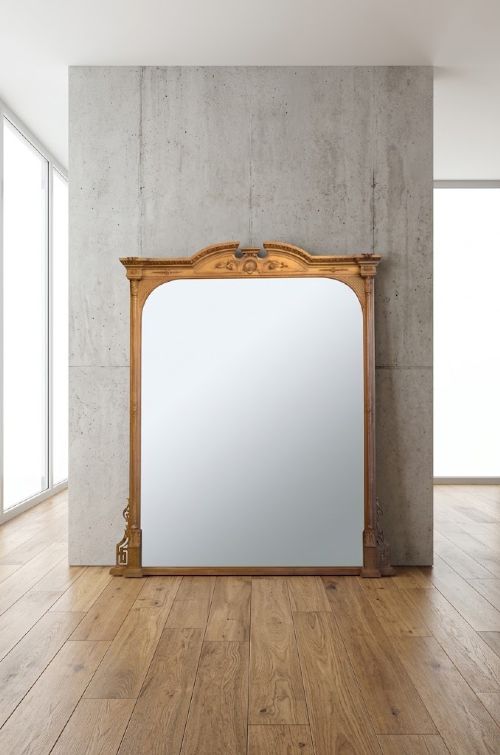
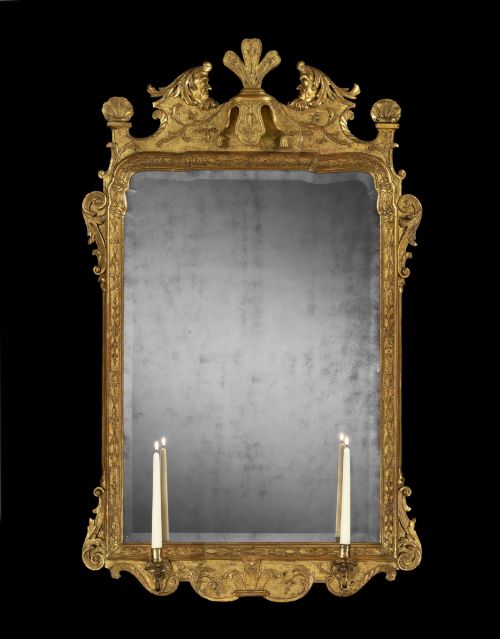
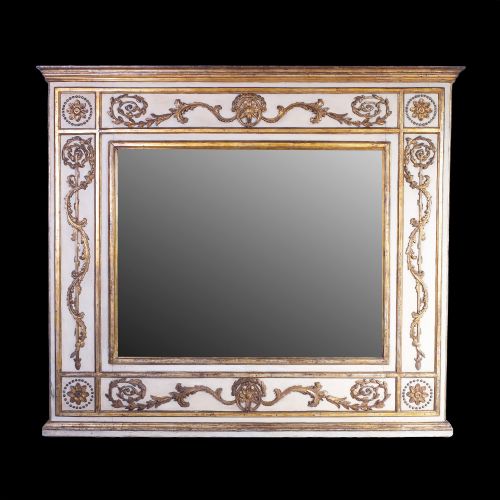
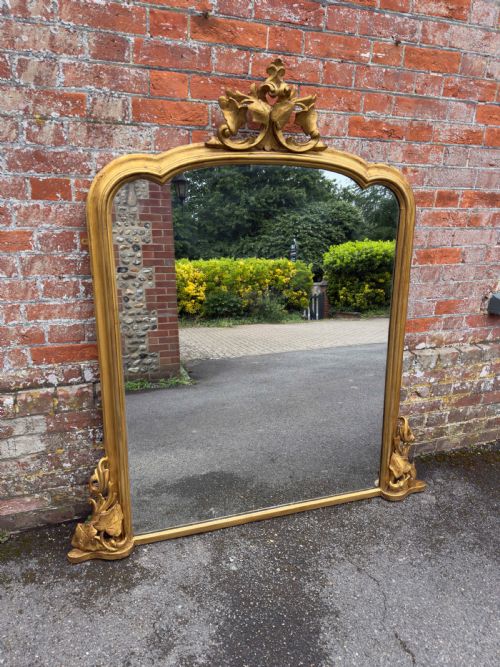
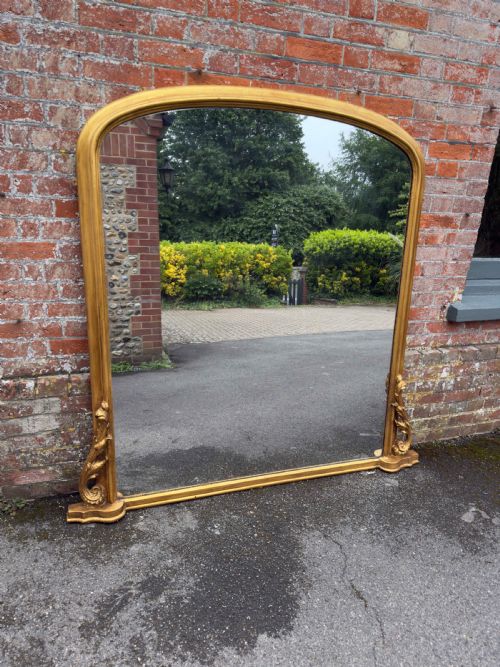
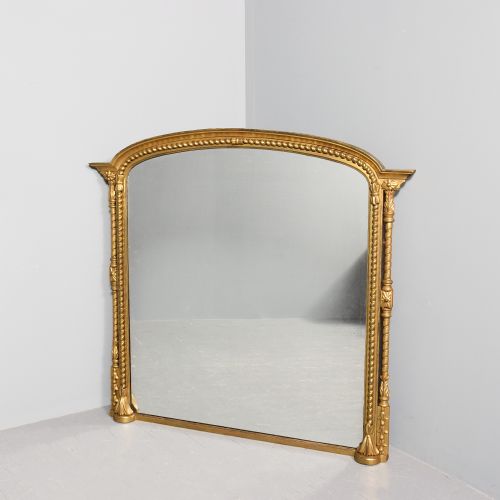
When you search for a gilt mantelpiece mirror, you encounter large horizontal frames designed to hang directly above a fireplace. The selection here leans heavily towards nineteenth-century examples, spanning Victorian and Regency eras.
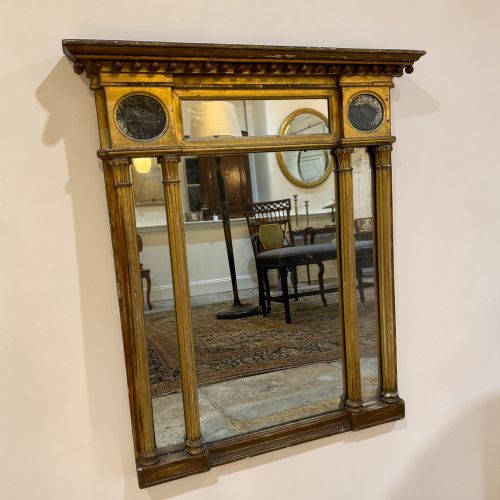
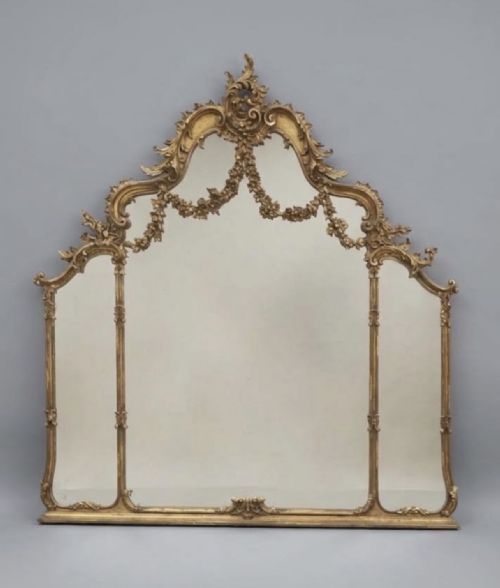
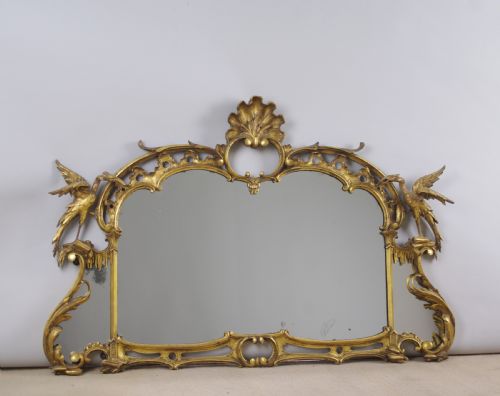
Overmantel mirrors dominate the forms available, often featuring arched, shaped or compartmentalised glass plates. French and English interpretations appear frequently, showing styles from simple rectangular shapes to elaborate Rococo and Chinese Chippendale designs.
How they were made
Carved wood provides the structural base for many frames, built from timber that supports applied layers of gesso and composition ornaments. Artisans shaped these decorative mouldings before applying gold leaf or paint.
Glass plates rest within the frames, sometimes divided into multiple sections such as triple plate or compartmental formats typical of the Regency period.
What varies in quality
The depth and crispness of the carved wood and gesso ornamentation dictate the visual strength of the frame. Superior examples display sharply defined motifs and smooth gilding rather than flattened or obscured details.
The integrity of the mirror plate and the sophistication of its compartmental or arched division separate standard production from exceptional craftsmanship.
The Gilt Mantelpiece Mirror Glossary
- Gesso
- A plaster-like mixture applied to wood frames to create a smooth surface for gilding. It allows intricate relief ornamentation to be moulded onto the timber base.
- Giltwood
- Timber that has been coated with gold leaf. This material gives the frames their characteristic metallic sheen.
- Overmantel
- A large mirror specifically proportioned to hang above a mantelpiece. These pieces often incorporate arched tops or multiple glass plates.
- Composition
- A moulded material made from whiting, oil, resin and glue, pressed into decorative shapes for picture and mirror frames. It offers an efficient alternative to hand-carved wood.
- Triple plate
- A mirror frame containing three distinct glass sections within a single structure. This arrangement was favoured during the Regency period.
Gilt Mantelpiece Mirror: Frequently Asked Questions
Where should I hang an overmantel mirror?
These mirrors traditionally anchor the space directly above a fireplace, resting on the mantel shelf or hung securely to the wall. Their horizontal proportions reflect light across the room from this central position.
Ensure the wall fixings safely support the weight of the timber and glass construction, particularly with larger nineteenth-century examples.
How do I identify a Regency mirror?
Regency pieces often display compartmental or tryptic glass plates divided into sections. The frames incorporate neoclassical motifs and clean architectural lines characteristic of the early nineteenth century.
Subtle details such as reeded moulding or giltwood carved elements help separate this period from later Victorian revivals.
What is the difference between gesso and wood frames?
Many frames combine a carved wooden foundation with an outer layer of gesso or composition to carry intricate ornamentation. Pure carved wood provides the underlying structural strength for the mirror.
Gesso accepts the gold leaf finish and allows for detailed surface decoration that would prove time-consuming to carve directly into hard timber.
Are French mirrors different from English ones?
French examples in the collection often utilise cartouche or shaped rectangular forms originating from the nineteenth century. They display distinct regional design choices compared to English counterparts.
Both traditions rely on similar gilding and mirror plate techniques while expressing different aesthetic movements like Rococo or Louis Philippe.