
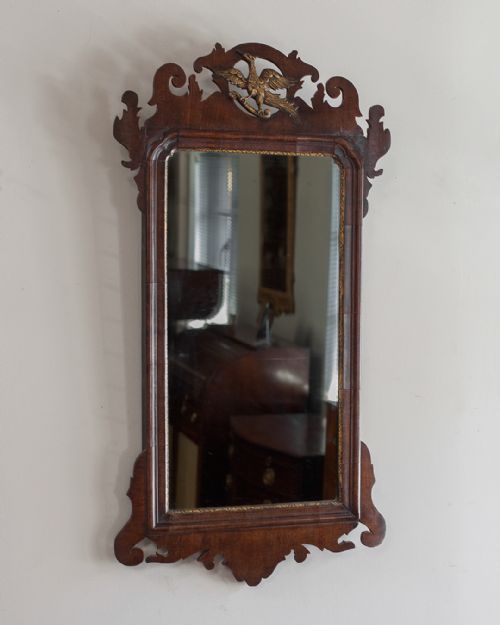
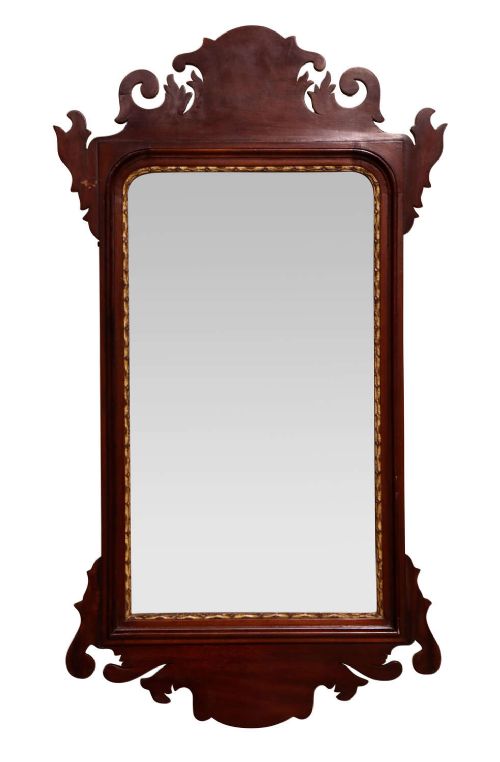
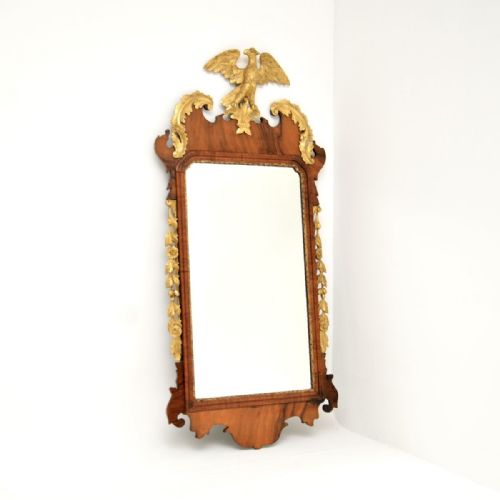
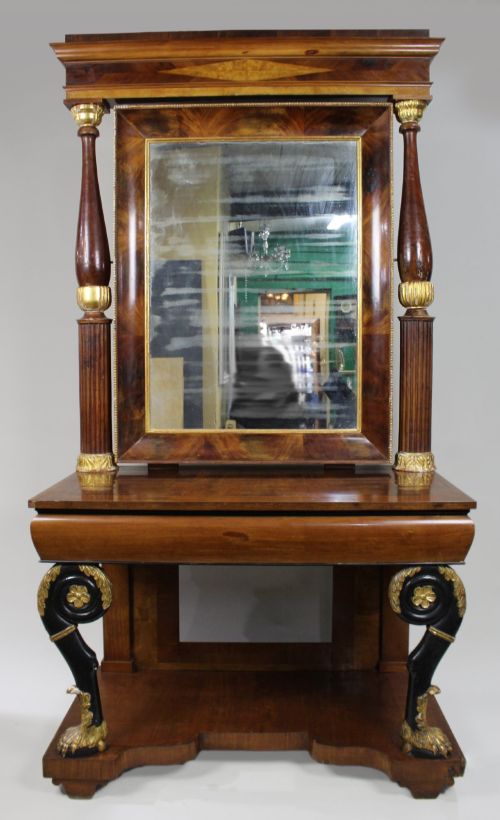
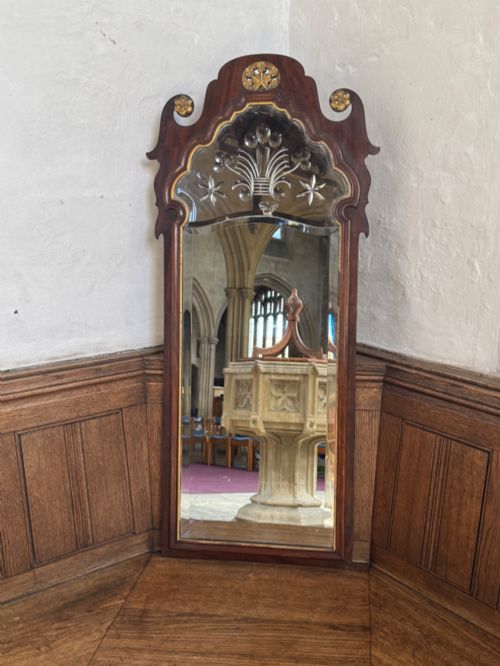

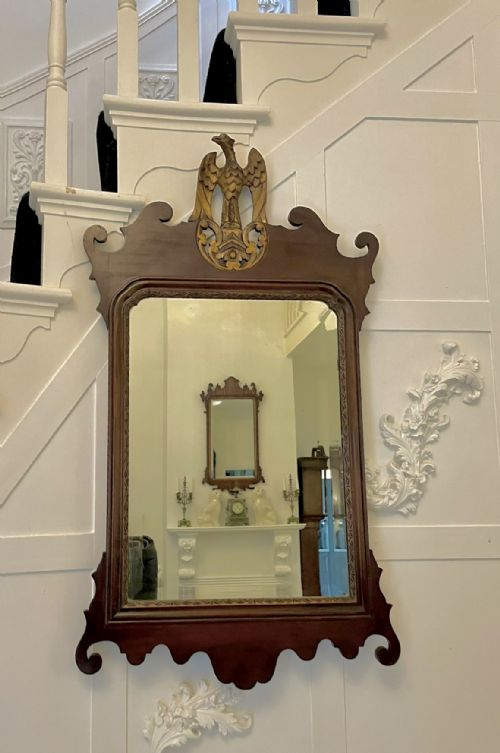


Gilt Mahogany Pier Mirror
A gilt mahogany pier mirror brings the warm timber tones and gleaming gilded highlights of eighteenth and nineteenth century rooms into modern spaces.
Gilt Mahogany Pier Mirror
A gilt mahogany pier mirror is a tall wall glass designed to hang between windows on a structural wall pier, often paired with a console table or pier cabinet beneath it.
The pieces on this page span the eighteenth century through the Edwardian era, encompassing Georgian Chippendale, Regency, and French Empire styles alongside later revivals.
Most examples combine rich mahogany frames with parcel gilt details, fretwork silhouettes, and occasionally carved motifs such as birds or scrolling crests.
How they were made
Cabinetmakers constructed the primary frames using solid mahogany, applying gesso to designated areas before laying down gold leaf for the parcel gilt sections.
Fretwork and pierced silhouettes were hand-sawn using fine patterns, while earlier plates relied on mirror glass with bevelled edges or reverse-cut details.
Listings span the eighteenth to the twentieth centuries, featuring mahogany, gesso, giltwood, and mirror glass across Georgian, Regency, and Empire styles.
What varies in quality
Quality rests in the crispness of the hand-carved fretwork and the depth of the parcel gilding against the polished mahogany grain.
The integrity of the original glass plate and the retention of early surface patination distinguish superior examples from later revivals.
William Kent
The Gilt Mahogany Pier Mirror Glossary
- Parcel Gilt
- Partially gilded, where gold leaf is applied only to specific carved highlights, mouldings, or motifs on a mahogany or walnut ground.
- Pier Glass
- A large mirror specifically proportioned to hang on the narrow pier of wall space situated between two windows.
- Fretwork
- Openwork ornamentation cut from thin timber boards using a fine saw, commonly seen in eighteenth-century and revival frames.
- Gesso
- A traditional plaster mixture applied to wooden frames as a smooth base for subsequent gilding with gold leaf.
- Ho-Ho Bird
- A mythical Chinese phoenix motif frequently incorporated into the carved crests and fretwork of mid-eighteenth-century mirrors.
Gilt Mahogany Pier Mirror: Frequently Asked Questions
Where should I hang a pier mirror?
Historically, a pier mirror hung on the narrow wall space between two windows to reflect natural light deeper into the room. Today, they work effectively above console tables, side cabinets, or in hallways.
Ensure the wall construction can support the weight, particularly for larger mahogany and gilded frames.
How do I distinguish eighteenth-century originals from revivals?
Examine the timber construction, the characteristics of the glass plate, and the method of gilding. Eighteenth-century frames often show hand-cut joinery and subtle tool marks.
Revival pieces from the Victorian and Edwardian periods utilise machine-sawn timber and show different ageing patterns on the gesso.
What is parcel gilding?
Parcel gilding is a decorative technique where gold leaf is applied selectively to carved details, mouldings, or crests rather than covering the entire piece. This leaves the polished mahogany grain visible across the main frame.
The contrast between the dark timber and the bright gold leaf defines the aesthetic of these mirrors.
What maintenance do these mirrors need?
Keep the timber clean with a soft dry cloth and avoid modern chemical sprays that can damage the French polish or wax finish. Protect antique mirror plates from excessive moisture.
Take care not to disturb fragile gesso and gold leaf areas during routine dusting.