



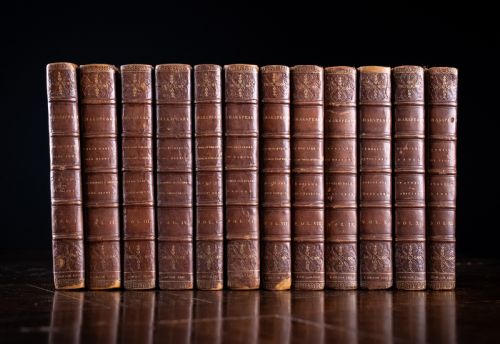
Gilt Leather Bound Books
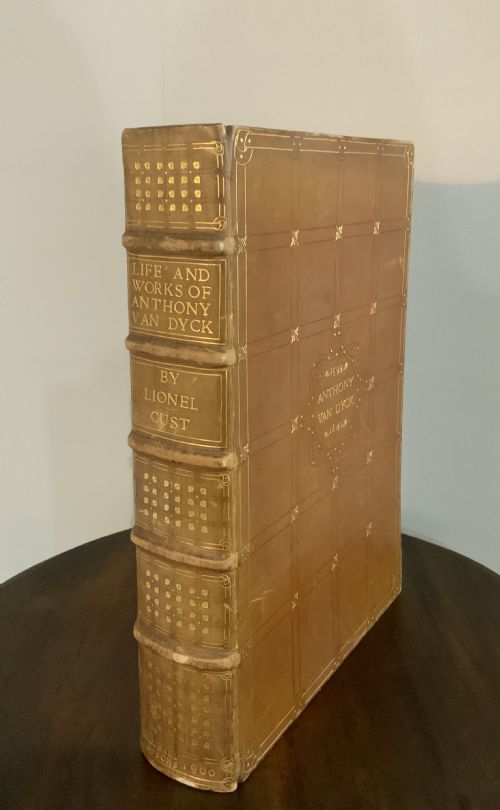
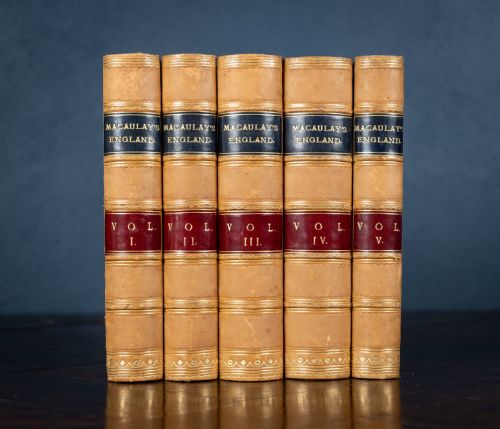
Gilt leather bound books bring together centuries of literature, history and fine binding to grace a library shelf.
Gilt Leather Bound Books
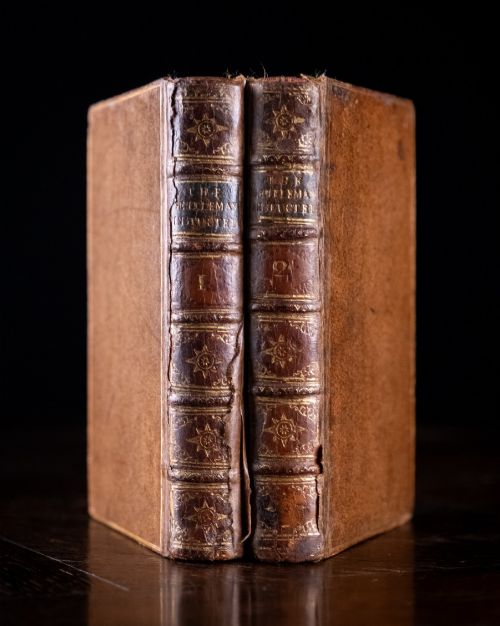
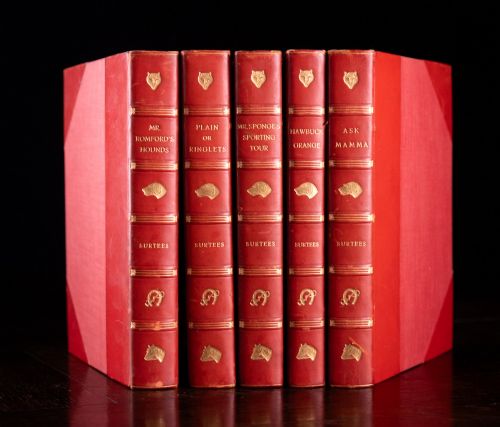
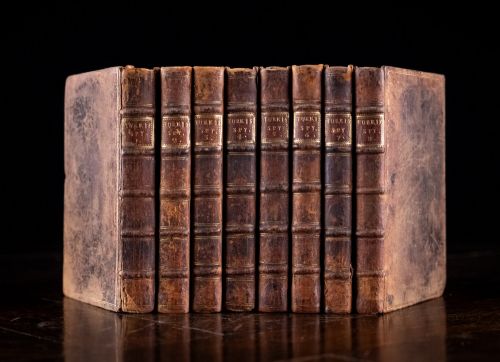
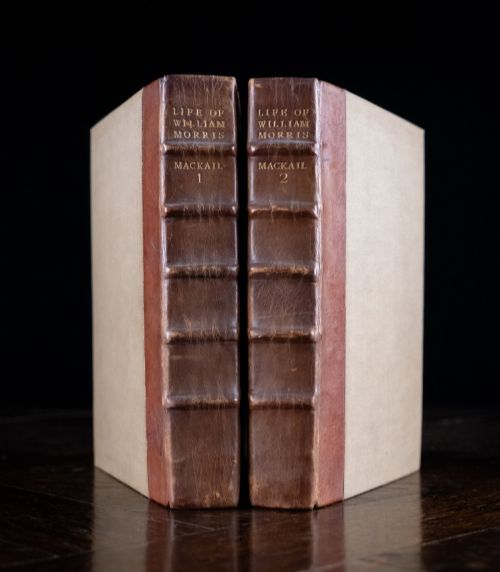
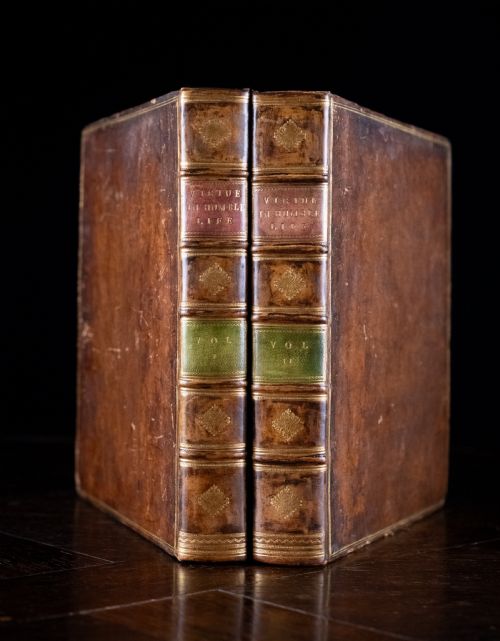
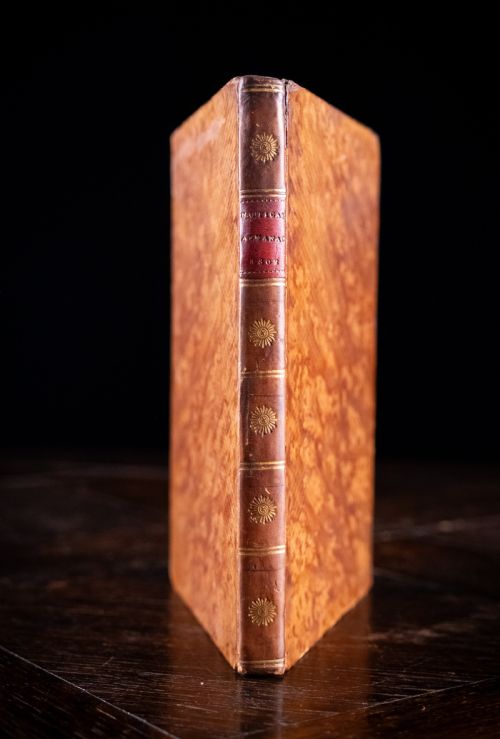
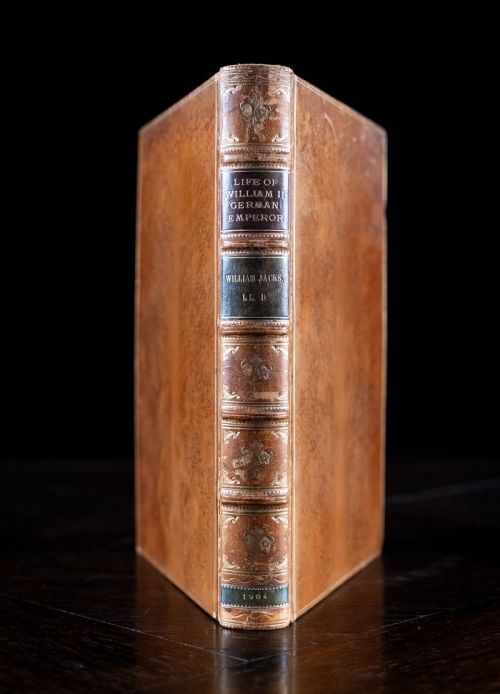
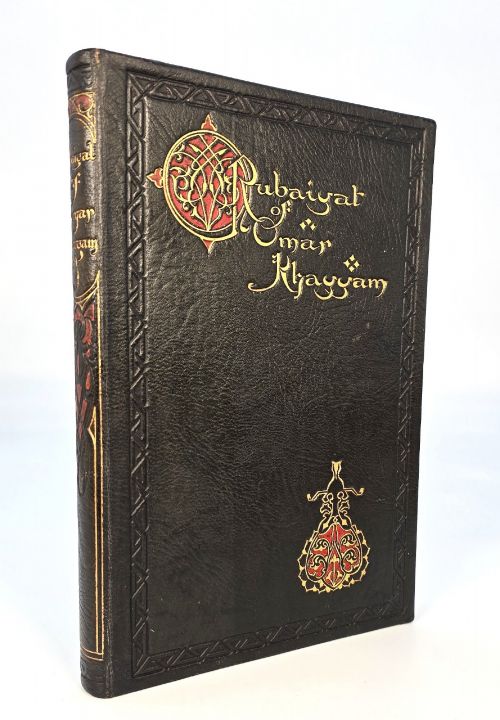
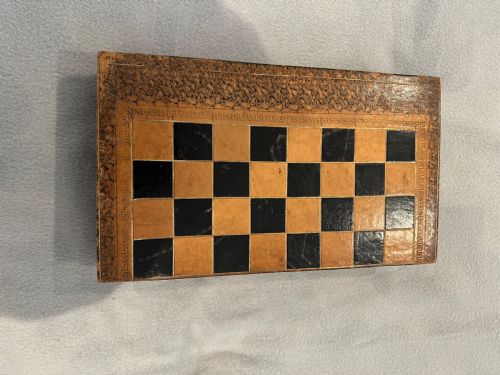
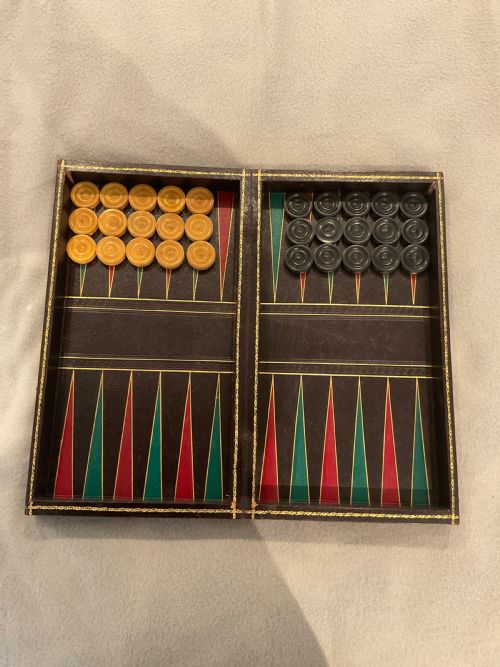
When searching for gilt leather bound books, buyers encounter a diverse selection of antiquarian volumes, collected sets and specialised reference works dating from the eighteenth century through to the early twentieth century. These items encompass multi-volume histories, poetry, sporting novels and classical plays, alongside decorative objects such as faux book games boards and book lamps.
The selection on this page ranges from single antique volumes and miniature Bibles to extensive multi-volume sets like the Waverley Novels or complete Shakespeare collections. Buyers frequently choose these pieces to add warmth, character and historical depth to domestic interiors and personal libraries.
How They Were Made
Binders constructed these volumes using traditional materials such as paper, calfskin leather, vellum and wood, reinforced with sturdy thread and pasteboard where appropriate. The bookblocks were sewn section by section before being encased in supple leather skins or parchment vellum.
Decoration relied heavily on genuine gold leaf pressed into the leather using heated brass tools and hand-carved finishing rolls, a technique known as gilt tooling. This meticulous process created the brilliant metallic lettering and ornamental motifs that endure across the centuries.
Gilt Leather Bound Books Retail Price Guide 2026
Typical asking prices for gilt leather bound books among the pieces listed under this phrase on Sellingantiques today, from the lower quarter to the upper quarter. They describe what is for sale here now, not the wider market.
Listings span multiple centuries, incorporating eighteenth-century theological works, nineteenth-century poetry sets and early twentieth-century atlases.
What Varies In Quality
The standard of a volume is determined by the crispness and depth of the gold leaf tooling, the quality of the leather dressing and the uniformity of the binding across multi-volume sets. Volumes that retain their original matched bindings display a visual harmony that later assembled sets often lack.
Integrity of the internal text block, including the clarity of early typography and the preservation of plates, maps or illustrations, heavily influences the overall character of the piece. Superior craftsmanship in the original forwarding and finishing ensures the book retains its structural coherence over generations of handling.
Jean Dassier·Gustave Dore
The Gilt Leather Bound Books Glossary
- Calfskin
- A fine, smooth leather derived from the skin of a calf, frequently used for high-grade bookbindings due to its receptive surface for tooling. It takes a polish very well and forms the smooth exterior of many traditional library sets.
- Vellum
- A fine parchment prepared from the skin of a calf, kid or lamb, valued for its durability and smooth, creamy appearance. It provides a sturdy and distinctive alternative to leather bindings.
- Gilt tooled
- A decoration technique where gold leaf is impressed into leather or cloth using heated metallic tools. This creates the shining lettering and ornate borders characteristic of antique volumes.
- Thumb Bible
- A miniature book produced in a very small format, often containing compressed religious texts or scripture for devotional travel. These tiny volumes required specialist binding techniques to remain legible and robust.
Gilt Leather Bound Books: Frequently Asked Questions
How are multi-volume book sets usually displayed?
Multi-volume sets look best arranged in strict chronological or numerical order on sturdy bookshelves, allowing the uniform spines and gilt lettering to create a cohesive visual anchor in a room.
Spacing the volumes evenly avoids putting undue pressure on the leather joints when removing a book from a tightly packed shelf.
What is the difference between calfskin and vellum bindings?
Calfskin is a supple, tanned animal leather that offers a soft texture and a polished finish well-suited to intricate gold tooling.
Vellum is an untanned or parchment-dressed skin that is stiffer, smoother and naturally cream-coloured, providing exceptional durability and a clean aesthetic.
Can antique leather books be safely read?
Most antique books can be read gently, provided they are supported properly at the spine and opened without forcing the hinges beyond their natural resting angle.
Avoiding excessive light exposure and maintaining stable room humidity will help protect the aged paper and leather from becoming brittle.
How can I identify the period of a leather book?
Dating typically relies on printed publication dates on the title page, combined with the typography style, paper texture and the specific fashion of the gilt tooling on the spine.
Comparative analysis of the binding materials and endpapers also helps narrow down whether a volume belongs to the Georgian, Victorian or Edwardian era.