
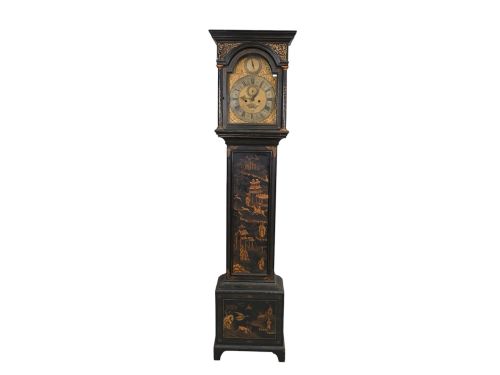


Gilt Lacquer Case
A gilt lacquer case brings rich chinoiserie decoration and gilded detail into a room, spanning grand horological pieces and smaller tabletop boxes.
Gilt Lacquer Case
When you search for a gilt lacquer case, you encounter an array of items ranging from tall longcase and grandfather clocks to diminutive keepsake boxes and display cabinets. These pieces span periods from the early eighteenth century through to the Edwardian era and the 1930s, reflecting enduring taste for ornamented surfaces.
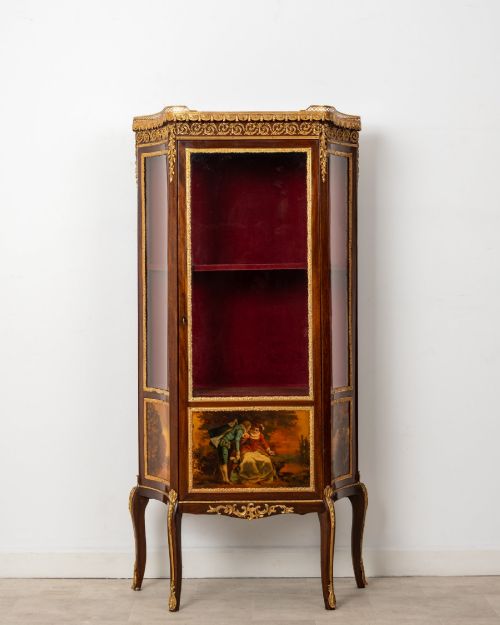
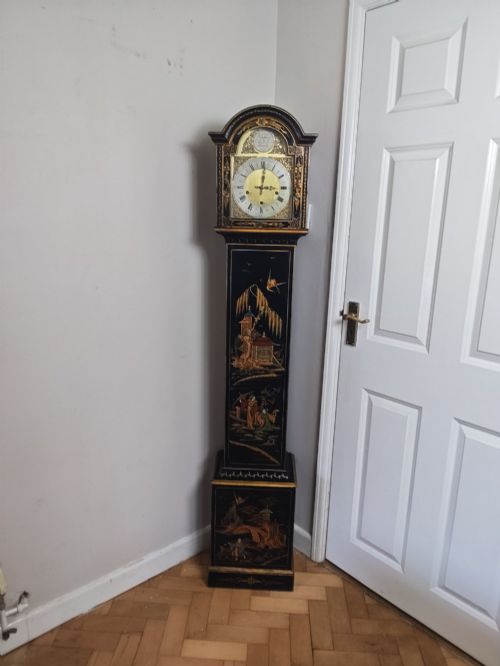
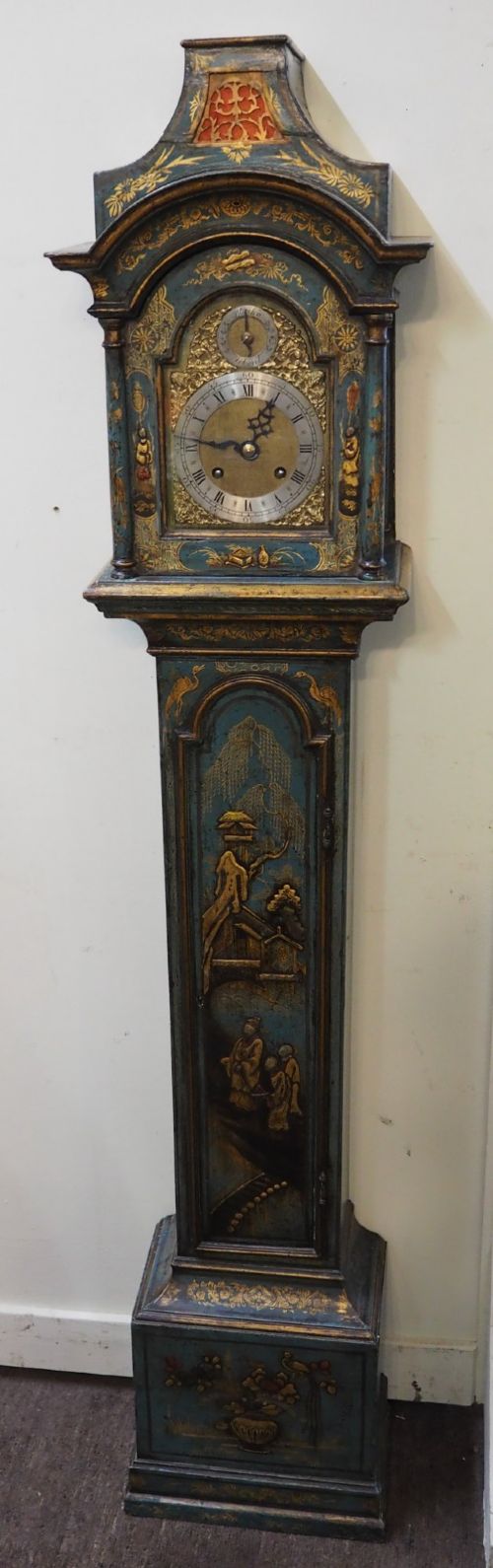
The most common forms on this page are longcase clocks decorated in the chinoiserie taste, alongside occasional French vitrines and small storage boxes. They originate from workshops across Britain, France, Italy, and Japan, utilising traditional decorative motifs upon wooden carcases.
How they were made
These pieces rely on timber carcases - often oak, mahogany, or ebonised wood - prepared with multiple layers of lacquer to achieve a smooth ground. Artisans then applied gold leaf and gilt decoration, frequently incorporating painted chinoiserie scenes featuring figures, pavilions, and landscapes.
Finer examples integrate gilt bronze mounts, glass panels, or hand-painted ceramic plaques to accent the lacquered surfaces. The methods demand patient building of the lacquered ground before the final gilding and decorative detailing take place.
Materials documented across these items include brass, glass, ebonised wood, gold leaf, and traditional lacquered wood.
What varies in quality
Quality rests upon the crispness of the gilt decoration and the depth of the lacquer work across the case. Superior pieces display finely detailed hand-painted chinoiserie scenes with coherent perspective and well-preserved gold leaf, rather than flat or purely mechanical ornamentation.
The choice of underlying timber and the integration of auxiliary materials like gilt bronze mounts or brass hardware also separate standard items from exceptional ones. A well-balanced composition where the lacquering complements the structural proportions dictates the upper tier of the range.
William Kipling London
The Gilt Lacquer Case Glossary
- Chinoiserie
- European decorative style inspired by Chinese artistic traditions, featuring imaginary landscapes, figures, and pagodas.
- Japanning
- European imitation of East Asian lacquerwork, built up with layers of varnish and decorated with gold leaf or paint.
- Vernis Martin
- Eighteenth-century French imitation of Japanese lacquer, named after the Martin brothers and often seen on vitrines.
- Longcase clock
- Tall pendulum clock housed in a wooden case standing directly on the floor, commonly called a grandfather clock.
- Ebonised wood
- Timber treated to resemble ebony, providing a dark, uniform surface that contrasts with gilt details.
Gilt Lacquer Case: Frequently Asked Questions
Where were these clocks made?
Most longcase clocks originate from British workshops, while related display cabinets and vitrines often hail from France or Italy.
Some smaller keepsake boxes reflect Japanese Meiji period craftsmanship or European interpretations thereof.
How do I care for lacquer surfaces?
Keep these pieces away from direct sunlight and fluctuating humidity to prevent the lacquer from cracking or lifting.
Dust gently with a dry, soft cloth and avoid chemical polishes that can damage the delicate gold leaf and varnish.
What is the difference between a grandfather and grandmother clock?
Grandmother clocks are simply smaller, more compact versions of the traditional longcase clock, typically produced in the twentieth century.
They offer the same mechanical and decorative qualities on a reduced scale suited for smaller domestic spaces.