

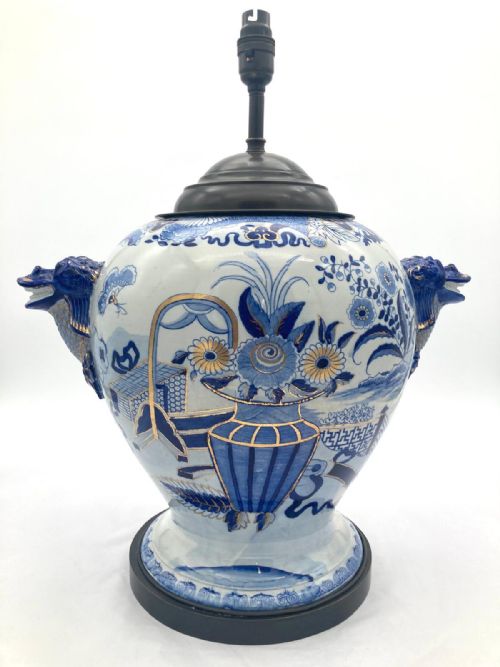
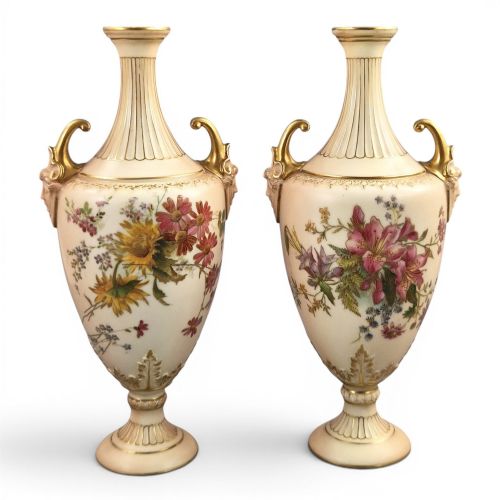
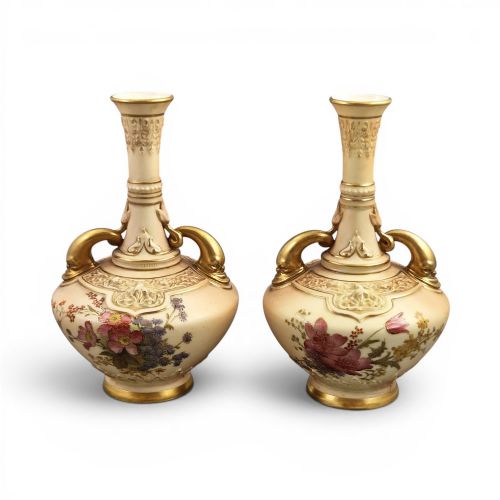


Gilt Handle Urn Vase
A gilt handle urn vase brings classical proportion and metallic brilliance to a room, drawing the eye instantly.
Gilt Handle Urn Vase
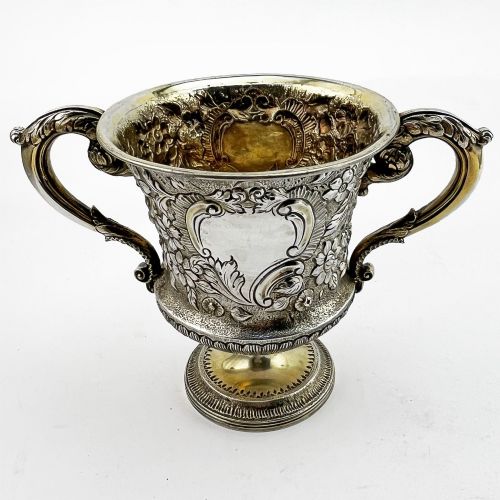
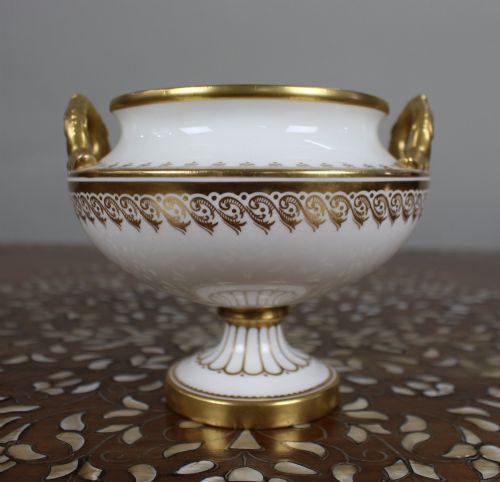
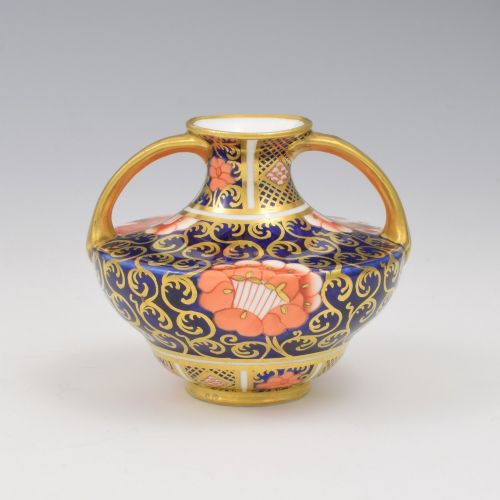
A gilt handle urn vase takes its cue from classical antiquity, shaped with a pedestal base, a bulbous or amphora body, and prominent handles finished in gold leaf or metallic gilt. You will find these pieces spanning the nineteenth and early twentieth centuries, drawing on Victorian, Edwardian, and Regency aesthetic traditions.
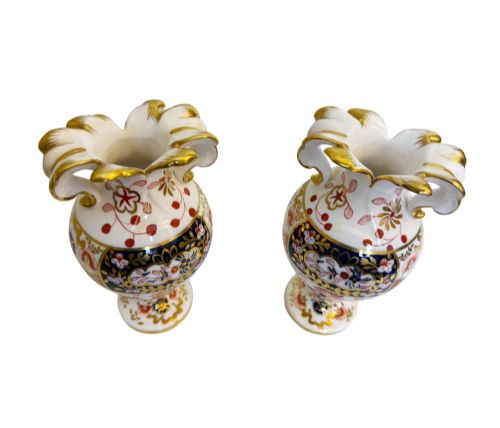
Most examples you meet here date from the Victorian and Edwardian eras, produced by factories like Royal Worcester, Spode, and Coalport alongside continental and Meiji period makers. They serve as formal decorative focal points for a mantelpiece, side table, or cabinet.
How they were made
Potters shaped these vessels using hard-paste porcelain, earthenware, or ironstone, throwing or moulding the body before applying hand-painted or transfer-printed botanical, figurative, and landscape scenes. Metal versions combine cast bronze with applied gilt and enamel or champleve inlay.
Gilding was applied by hand using gold leaf or powdered gold suspended in medium, then fired and burnished to create contrast against painted reserves or plain body colours. Handles were cast or modelled separately and securely luted or fixed to the main body before final firing.
Named artists include Walter Powell, William Hawkins, and Christopher Dresser.
What varies in quality
Quality rests in the precision of the hand-painting and the crispness of the gilt work on the handles and rims. Master artists signed their botanical or avian panels, and the depth of the palette distinguishes cabinet pieces from standard production wares.
The weight and balance of the handles relative to the urn body dictate the overall harmony of the piece. Superior examples retain full burnishing on the gold without rubbing, and maintain factory clarity in their moulded details.
Royal Worcester·Spode·Coalport·Hicks and Meigh·Chamberlain Worcester·Royal Crown Derby·Royal Doulton·Kinkozan·Mason’s·Adams·Samson, Paris·Minton
The Gilt Handle Urn Vase Glossary
- Campana
- A bell-shaped vessel with a flaring rim and a footed base, heavily utilised in classical and Regency design. This shape provides the structural template for many twin-handled urns.
- Champleve
- An enamelling technique where troughs or cells are hollowed out in the metal surface and filled with vitreous enamel before firing. It frequently appears on nineteenth-century French bronze mounts and vases.
- Ironstone
- A heavy, durable type of earthenware patented in England as a sturdier alternative to porcelain. It takes enamel and gilt decoration exceptionally well.
- Satsuma
- A type of Japanese earthenware with a crackle-glaze ivory body, typically decorated with intricate polychrome and gilt designs. These pieces often feature specialised handles such as bamboo or elephant motifs.
Gilt Handle Urn Vase: Frequently Asked Questions
What is a gilt handle urn vase used for?
These vessels were designed primarily as ornamental centrepieces for grand nineteenth-century interiors, drawing attention through their classical silhouettes and metallic highlights. They sat upon mantelpieces, sideboards, or pedestals as focal points for a room.
Today, they function in much the same way, adding height, colour, and historic character to a display. Some larger examples were historically adapted as lamp bases, a practice also seen in period conversions.
How do I identify the period of an urn vase?
Dating relies on a combination of factory backstamps, paste characteristics, and the prevailing artistic style of the decoration. Victorian pieces often lean towards heavy gilding and floral reserves, while Edwardian examples frequently showcase blush ivory grounds or fine avian painting.
Examining the wear on the base and the formulation of the ceramic body helps narrow the decade of production. Stylistic markers like Aesthetic Movement motifs or Meiji signatures provide precise chronological anchors.
Are gilt handle urn vases fragile?
Like most antique ceramics and glass, these pieces require careful handling, particularly around protruding handles and slender rims. The applied gold leaf or gilt can wear down over time if subjected to abrasive cleaning.
Displaying them away from high-traffic edges ensures the delicate handles and painted surfaces remain secure. Dusting gently with a soft brush is sufficient for routine maintenance.
What is the difference between porcelain and ironstone urns?
Porcelain is a vitrified, finer ceramic that often transmits light through thin walls and provides a smooth canvas for detailed miniature painting. It tends to feel lighter and more translucent.
Ironstone is a dense, opaque earthenware developed for durability, offering a heavier feel and sturdy body. Both accept gilt handles and decoration, but porcelain usually denotes a more formal cabinet status.