
Gilt Hall Table Marble Top
A gilt hall table marble top brings immediate architectural weight and reflective brilliance to an entrance space.
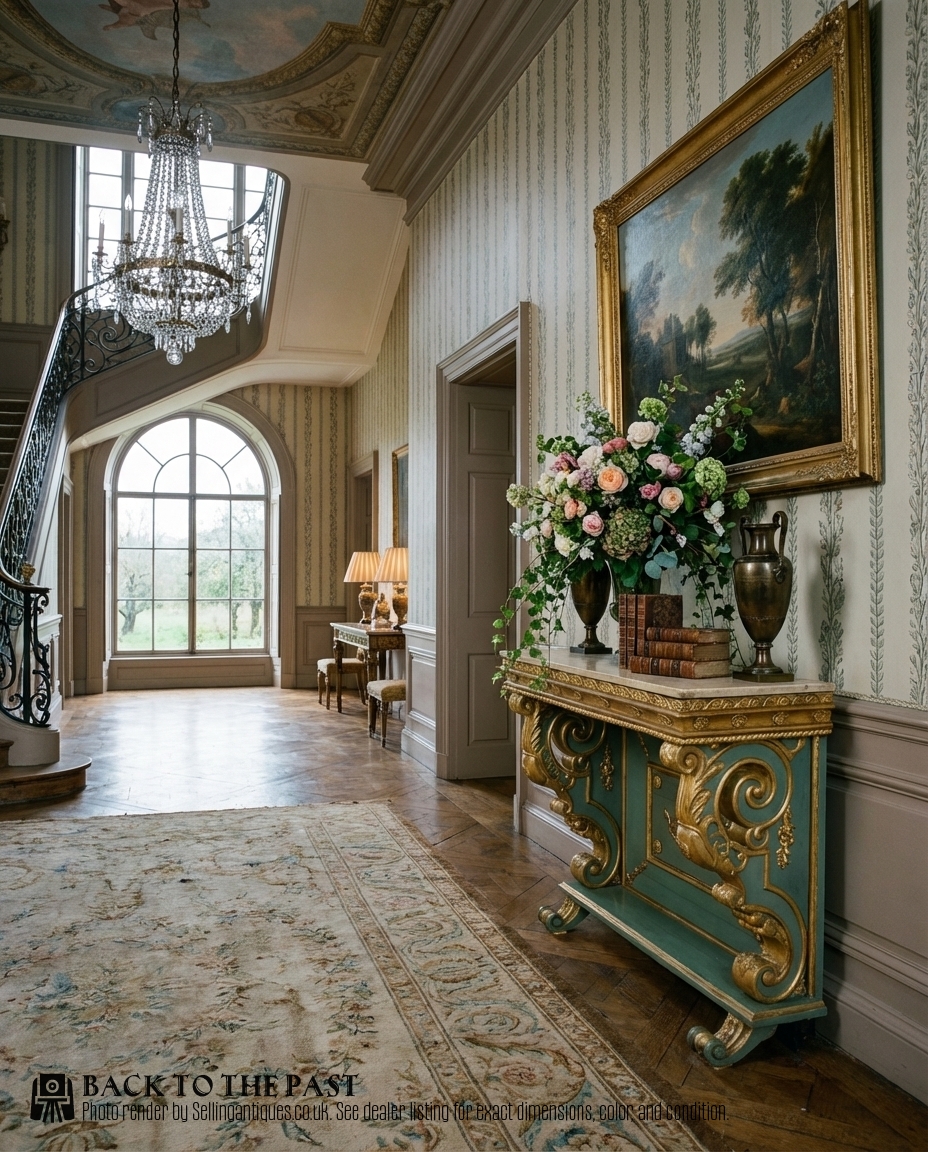
Gilt Hall Table Marble Top
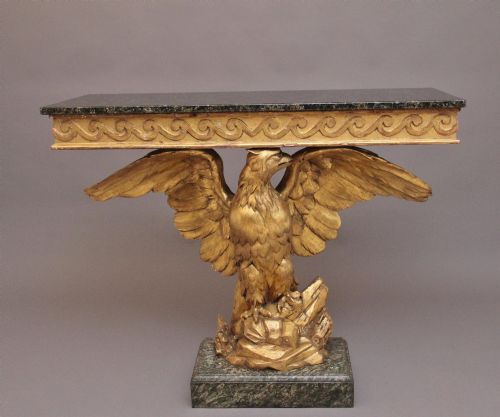
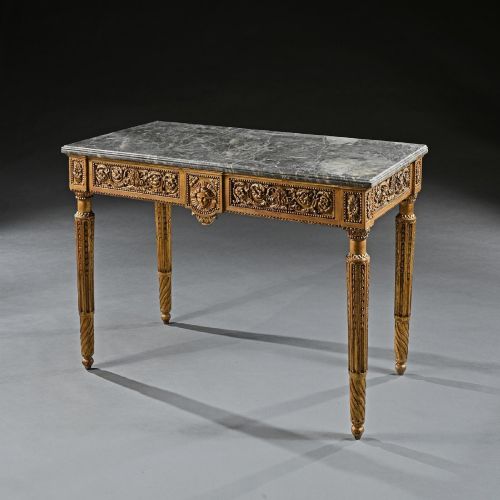
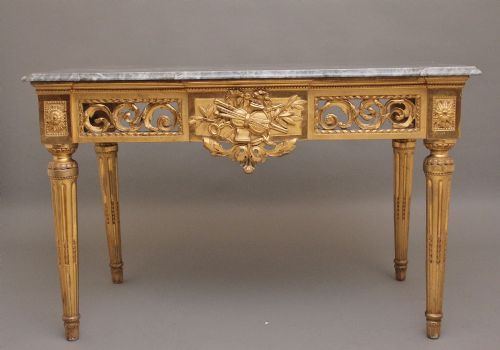
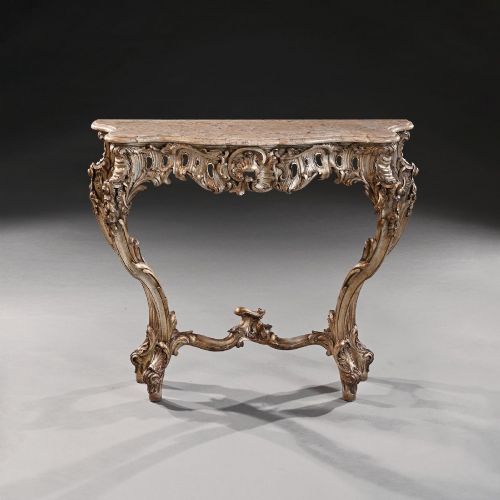
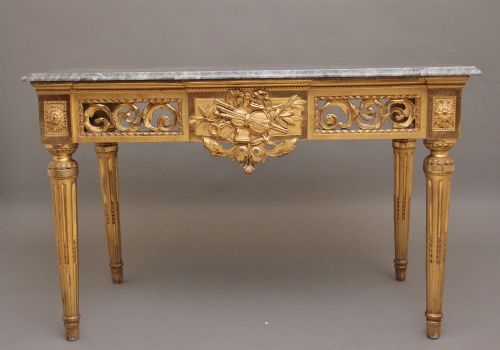
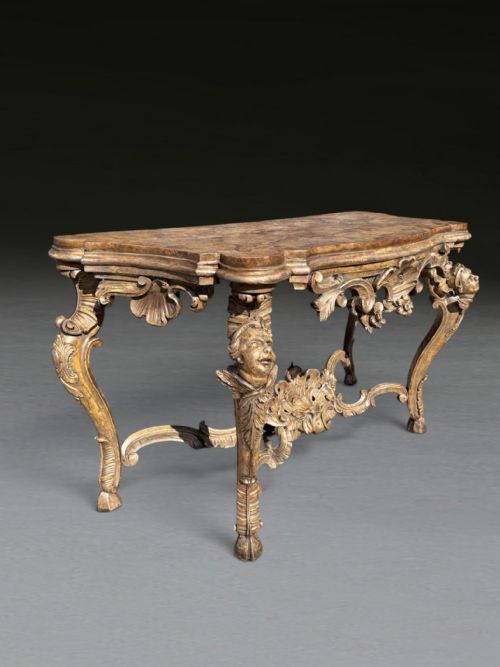
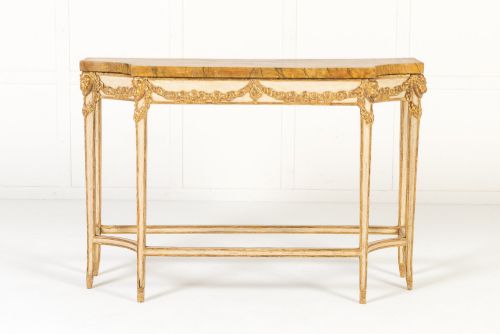
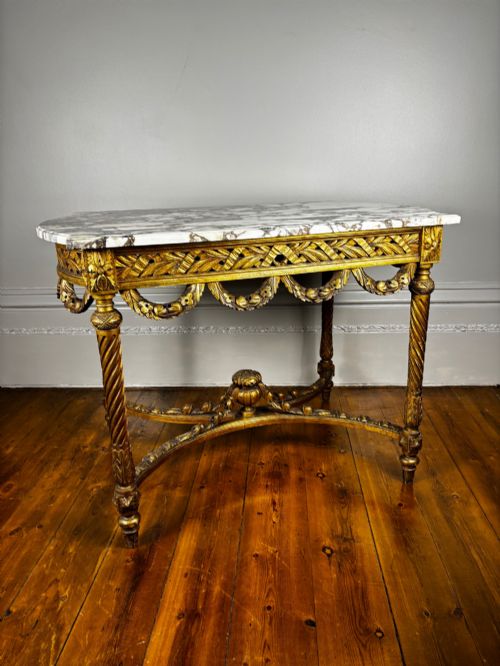
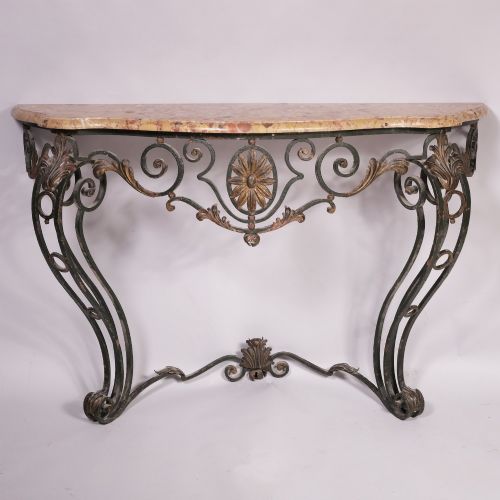
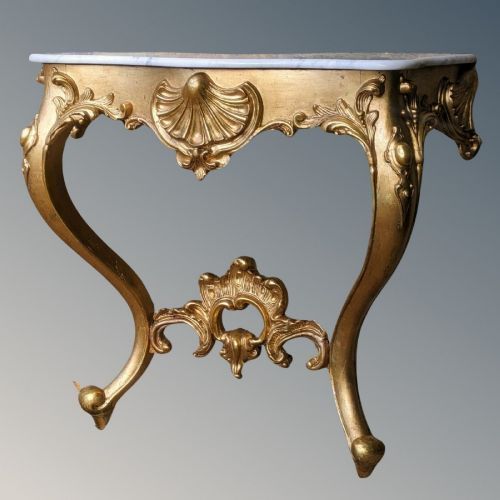
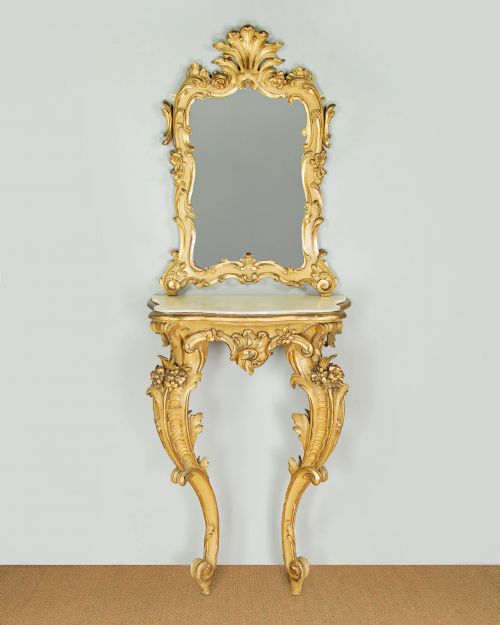
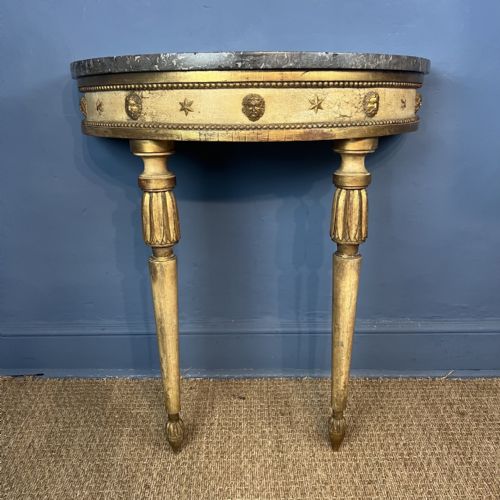
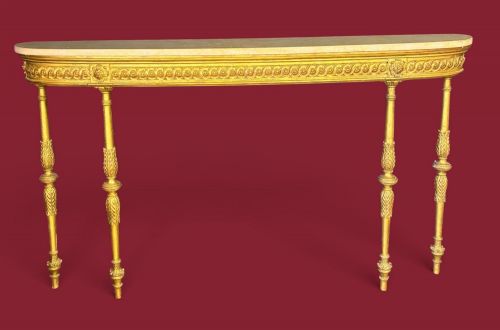
A gilt hall table marble top typically presents as a wall-fixed console table designed for narrow entranceways and formal reception rooms. The form frequently pairs a heavy stone surface with a gilded wooden structure, originating predominantly from eighteenth and nineteenth-century Italian and French workshops.
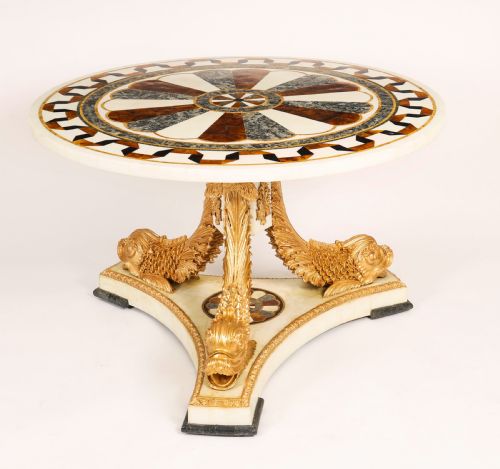
Buyers encountering this phrase will most often find console tables, side tables, and occasional tables spanning the eighteenth century through to the early twentieth century. Many examples reflect revivalist movements such as Rococo, Neoclassical, and Baroque, displaying shaped marble slabs set upon carved wooden frames.
Materials and construction methods
Makers shaped the structural framework from timbers such as walnut, mahogany, or pine, applying coats of gesso to create smooth surfaces for gilding. Gold leaf or silver gilt was then meticulously laid over the prepared wood, sometimes alongside painted or parcel-gilt finishes.
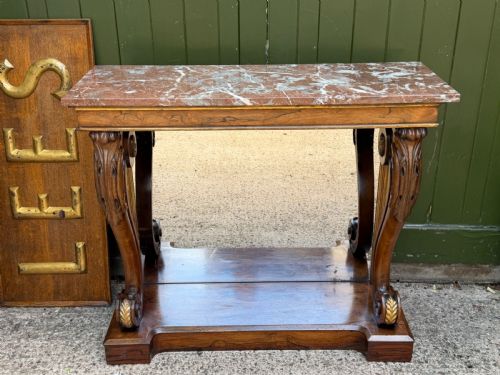
The upper surfaces rely on heavy slabs of natural stone, principally varieties of marble including Carrara, breccia, and rouge. These tops were cut to follow the serpentine, demi-lune, or rectangular outlines of the carved wooden bases beneath them.
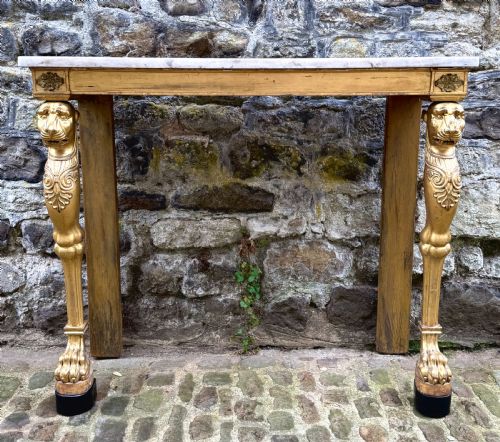
Some tables feature carved lion's paw supports ready to pounce on uninvited hallway dust.
Distinctions in execution and design
Quality rests significantly upon the depth and precision of the hand-carved ornamentation across the wooden frame, from restrained mouldings to elaborate scrollwork and animal supports. Crisp detailing in the acanthus leaves or figural elements separates standard production from exceptional artistry.
The choice and thickness of the marble top also dictate the tier of the piece, with richly figured, solid stone slabs adding substantial gravitas. Furthermore, the integrity of the original gilding and the harmony between the stone and its supporting base define the standing of any given example.
The Gilt Hall Table Marble Top Glossary
- Console table
- A table designed to stand against a wall, traditionally fixed in place by brackets or legs at the front. These pieces serve primarily decorative and display functions in hallways and reception rooms.
- Giltwood
- Timber that has been decorated with a very thin layer of gold leaf applied over a prepared gesso ground. This technique creates a luminous metallic finish that catches interior light.
- Gesso
- A plaster-like mixture applied to wooden furniture frames to provide a smooth base for gilding or painting. It is often built up in layers to allow for sharp, intricate carving.
- Serpentine
- A furniture outline characterised by a wavy, undulating edge curving inward and outward. This form demands advanced carpentry and stone-cutting skills.
- Parcel-gilt
- A decorative treatment where only specific carved details or highlights of a wooden object are gilded, leaving the underlying painted or polished wood visible elsewhere.
Gilt Hall Table Marble Top: Frequently Asked Questions
Where should I place a console table?
These tables find their natural home in entrance halls, corridors, and formal reception rooms where floor space is limited. Their shallow depth allows them to sit flush against a wall without obstructing movement.
Paring them with a matching wall mirror creates a balanced focal point immediately upon entering a room.
How do I care for marble tops?
Marble is a porous stone that reacts readily to acidic liquids, meaning spills require immediate blotting rather than wiping. Regular dusting with a soft, dry cloth keeps the polished surface safe from abrasion.
Avoiding harsh chemical cleaners preserves the natural sheen and prevents dulling of the stone over time.
Are these tables structurally independent?
Many period console tables were originally designed to rely on wall fixings for total stability, utilising front legs for weight distribution. Some freestanding variations exist, but checking the fixing method ensures secure placement in the home.
Heavier stone tops generally anchor the lighter wooden frames effectively through gravity alone.
How can I identify the period style?
Neoclassical pieces display straight lines, symmetry, and classical motifs such as urns and fluting. Rococo and Baroque iterations favour asymmetrical curves, rich carving, and dynamic movement.
Examining the tool marks on the wood and the type of marble helps confirm the era of manufacture.