
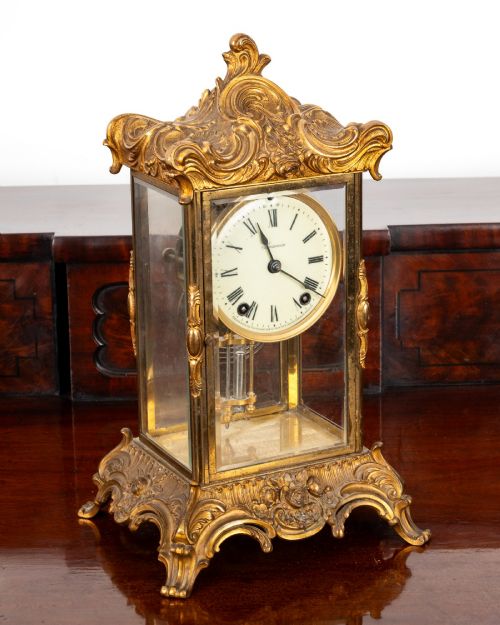


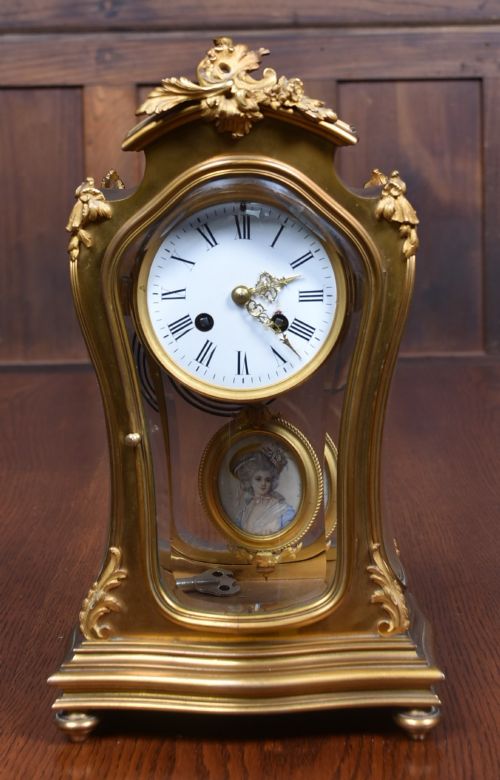


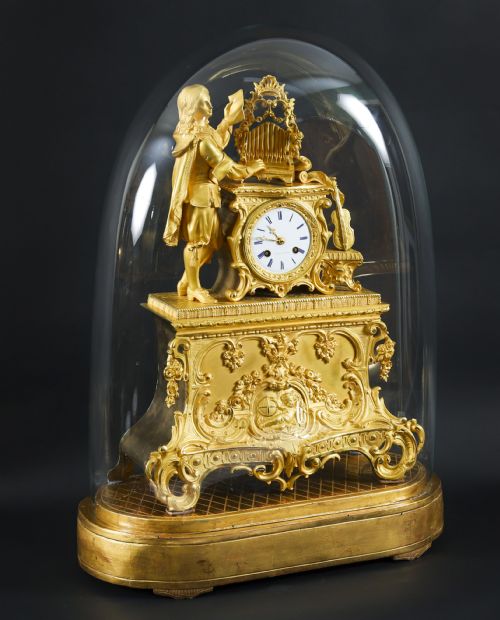


Gilt Glass Mantel Clock
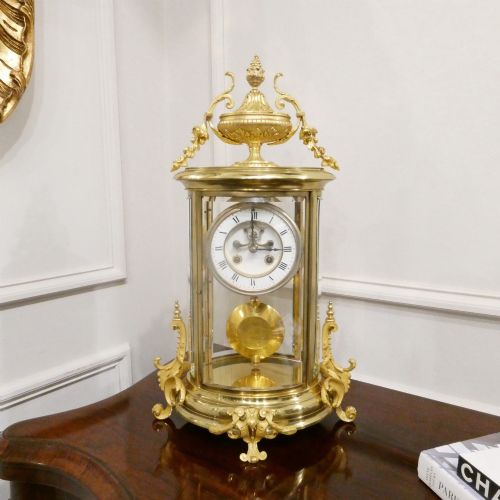
These pieces unite transparent panels with gilded metal frames to showcase the movement within, which is precisely why collectors seek a gilt glass mantel clock for the interior.
Gilt Glass Mantel Clock
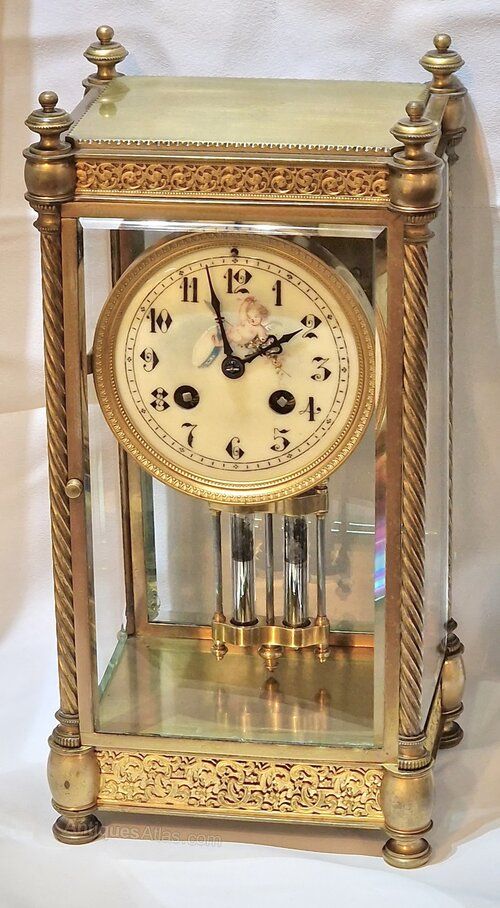
A gilt glass mantel clock typically takes the form of a four glass design, where bevelled glass panes allow an unobstructed view of the pendulum and escapement from every angle. French workshops produced the majority of these pieces during the nineteenth century, often pairing heavy brass frames with mercury pendulums and enamel dials.
Beyond the standard four glass format, the selection includes crystal regulators and portico clocks that use cut crystal columns alongside ormolu mounts. These variations reflect the broader Victorian taste for architectural timepieces that display mechanical precision alongside decorative casting.
How they were made
Maker's workshops cast mounts in bronze or brass before applying mercury gilding or fire gilding to achieve a deep, enduring lustre. The metal frames then house thick, bevelled glass panels held securely in rebate joints without obscuring the interior mechanics.
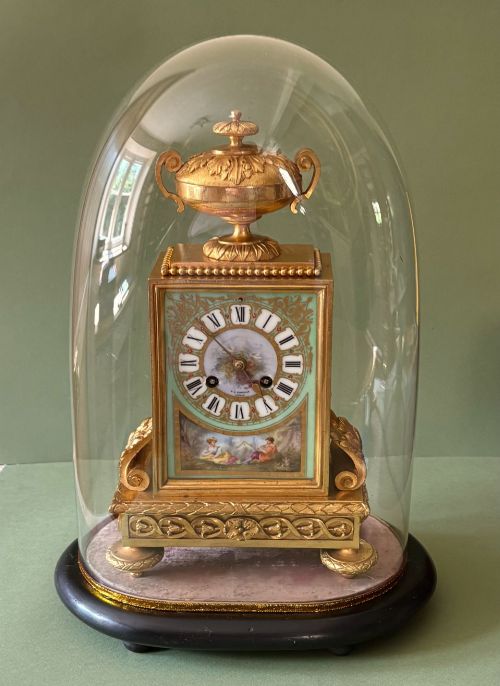
Dials frequently feature hand-painted enamel numerals on convex white grounds, sometimes accented with gilt brass filigree or miniature paintings. Movements inside rely on brass wheel trains, often incorporating striking or chiming mechanisms mounted on gongs or bells.
Listings feature materials including gilt bronze, porcelain, mahogany, and heavy bevelled glass across Victorian and French periods.
What varies in quality
The refinement of the cast bronze mounts sets the finer examples apart, showing crisp chasing and deep relief rather than soft edges from worn moulds. Movement architecture also dictates value, with signed backplates from notable makers indicating superior workshop standards.
The integrity of the glass panels and the originality of the mercury pendulum carry significant weight. Pieces retaining their matching components and original fire gilt surfaces command greater regard among collectors.
Samuel Marti·Goldsmiths Alliance Ltd·Ansonia New York·Leroy Paris·Tiffany·Delépine-Barrois·Breguet·Jaeger-LeCoultre·Moser·Le Roy et Fils à Paris·DROCOURT
The Gilt Glass Mantel Clock Glossary
- Ormolu
- Gilded bronze, where a finely ground gold-mercury amalgam is applied to cast bronze and heated until the mercury vapourises, leaving a rich metallic coating. This technique defines the sumptuous finish seen on French nineteenth-century clock cases.
- Four glass clock
- A mantel clock housed in a brass or gilt bronze frame with glass panels on the front, back, and both sides. This construction exposes the entire movement and pendulum to view.
- Crystal regulator
- A mantel clock featuring heavy bevelled glass walls and a mercury or temperature-compensated pendulum. French makers popularised this style during the late nineteenth century.
- Escapement
- The mechanism within a clock movement that translates rotational force from the gear train into periodic impulses to maintain the pendulum's swing. Different escapement types dictate the precision and character of the beat.
- Gorge case
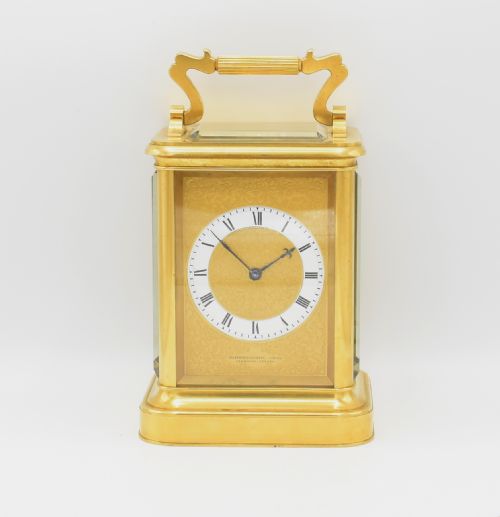
- A specific brass carriage clock housing characterised by stepped, pillared corners and a flat top handle. The form provides a robust structure for travel while displaying clean architectural lines.
Gilt Glass Mantel Clock: Frequently Asked Questions
How do I wind a four glass mantel clock?
Use the matching key provided with the movement, inserting it gently into the winding arbors on the enamel dial. Turn clockwise until firm resistance indicates the mainspring is fully wound.
Take care not to overwind the mechanism, as this can strain the spring. For striking models, ensure you synchronise the hands carefully to avoid disrupting the strike train sequence.
Where should I place a gilt glass clock?
Position the piece on a stable, level surface such as a mantelpiece, sideboard, or heavy desk away from direct sunlight and draughts. A level foundation is essential for the pendulum to beat evenly.
Avoid high-humidity environments like kitchens or damp spaces, which can tarnish the gilt bronze mounts and discolour delicate enamel dials over time.
How do I tell an 1880s clock from a later copy?
Examine the casting quality of the gilt brass frame and the construction of the movement backplate. Period pieces from the nineteenth century feature hand-cut screw threads, numbered matching components, and crisp engraving.
Look for maker signatures or stamped workshop medals on the brass movement plates, which help verify the production era and origin.
What is a mercury pendulum?
A temperature-compensated pendulum featuring glass jars filled with liquid mercury at the base. As ambient temperature changes cause the suspension rod to expand or contract, the mercury shifts to keep the centre of mass constant.
This ingenious Victorian invention ensured the clock maintained accurate time regardless of seasonal temperature fluctuations in the room.