



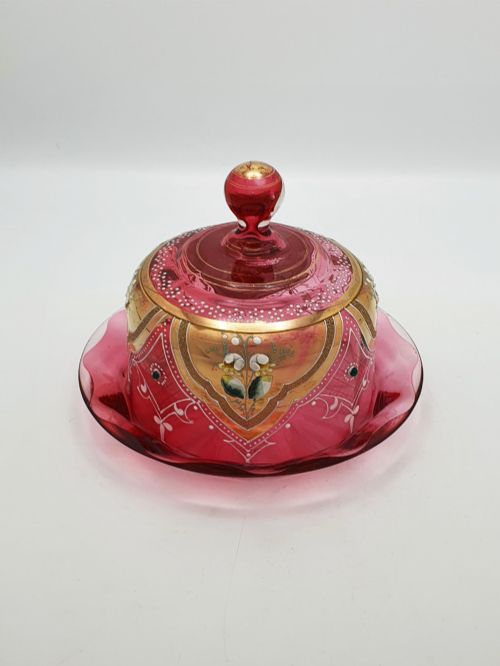


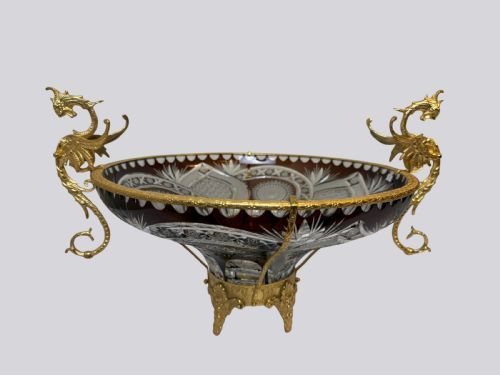


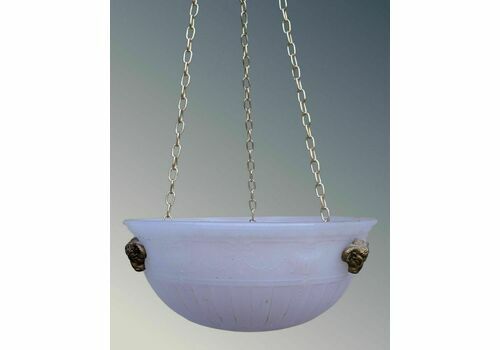


Gilt Glass Dish
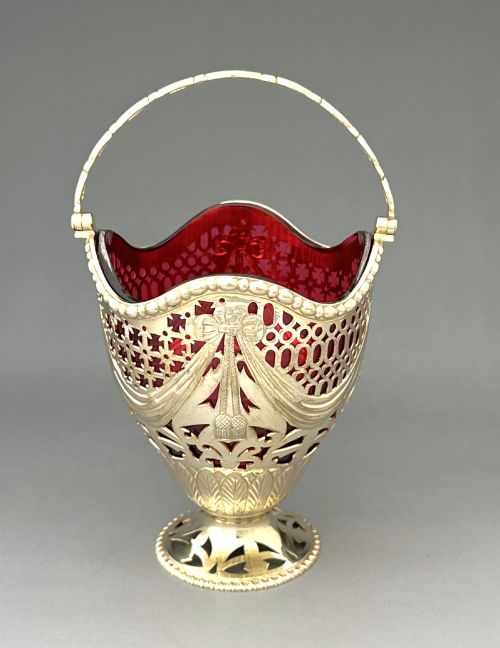
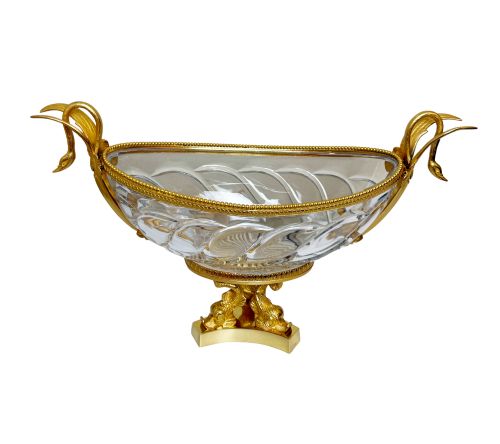
These gilt glass dish examples bring together heavy cast mounts and rich mineral vessels to anchor a grand table setting with period weight.
Gilt Glass Dish
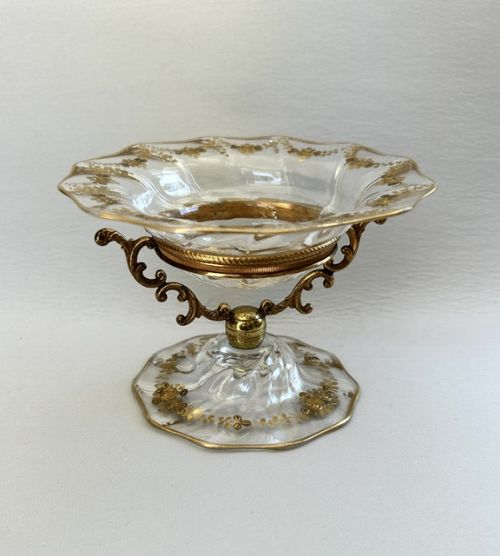
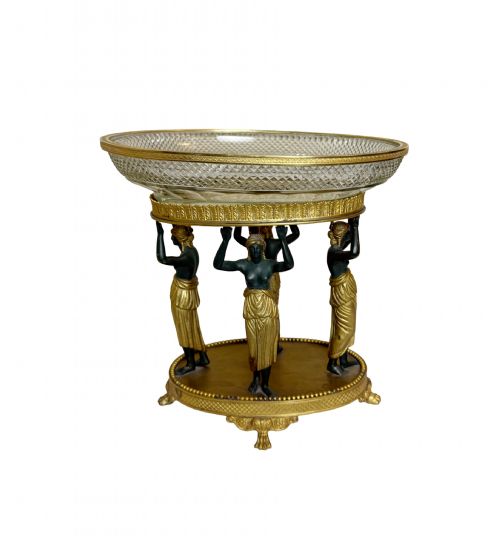
A gilt glass dish combines moulded or cut mineral vessels with gilded metal stands, mounts, or rims. The selection spans substantial Victorian serving pieces, Edwardian baskets, and French Empire style centrepieces intended for display.
Forms range from deep bowls and covered cheese dishes to tazzas and shell-shaped dishes. Many rely on coloured mineral bodies, particularly cranberry and ruby glass, held in frameworks of ormolu or gilt bronze.
Origins stretch across the nineteenth century into the early twentieth century, taking in both English silver gilt pairings and continental gilt bronze workshops. Buyers encounter everything from small decorative dishes to large centrepiece bowls.
Materials and construction
Makers fused clear and coloured glass with metallic components through mechanical fitting and pinning. Cut crystal and moulded opaline glass provide the vessel body, while cast ormolu, gilt bronze, and silver gilt form the structural stands and decorative handles.
Surface ornamentation relies on paste gilt decoration, hand-applied gold leaf edges, and chased metal detailing such as cherubs, rams heads, and gilded eagles. The heavy metal mounts require precise casting to secure the brittle glass securely without fracture.
Gilt Glass Dish Retail Price Guide 2026
Typical asking prices for gilt glass dish among the pieces listed under this phrase on Sellingantiques today, from the lower quarter to the upper quarter. They describe what is for sale here now, not the wider market.
Design influences span French Empire, Rococo Revival, Belle Epoque, and Grand Tour aesthetics from the Victorian and Edwardian eras.
Judging quality in metal and glass
Quality rests upon the crispness of the metal chasing and the depth of the glass cutting. Superior pieces display finely detailed figures, sharp cast mounts, and heavy crystal or saturated coloured glass rather than thin, machine-pressed alternatives.
The integration between the metal frame and the glass vessel dictates overall success. Tightly fitted mounts, secure pinning, and intact gilding separate workshop pieces made for grand interiors from standard domestic tablewares.
George Fox
The Gilt Glass Dish Glossary
- Ormolu
- Gilded bronze, widely utilised in French nineteenth-century furniture and decorative metalwork mounts. It creates a warm, gold-coloured finish through an amalgam of mercury and gold.
- Tazza
- A shallow ornamental cup or bowl raised on a stem and foot, designed for serving fruit or sweets. These glass examples typically feature gilded rims or etched crystal bodies.
- Opaline glass
- An opaque or translucent art glass developed in nineteenth-century France, coloured with bone ash or metal oxides. It appears in soft pastel tones like green and pink.
- Plique-a-jour
- An enamelling technique where enamel is applied in cells without a backing, letting light shine through like stained glass. It appears on select decorative objects from the early twentieth century.
- Silver gilt
- Silver objects that have been coated with a thin layer of gold over the exterior surface. This provides the durability of silver alongside the rich colour of gold.
Gilt Glass Dish: Frequently Asked Questions
What periods do these dishes come from?
The pieces span the nineteenth century through the early twentieth century, covering Victorian, Edwardian, and Belle Epoque eras. Many reflect earlier design revivals like French Empire and Rococo styles.
Dates cluster around the late Victorian period and circa nineteen hundred, drawing on both English silver workshops and continental bronze foundries.
How were centrepiece bowls used?
These large vessels sat in the middle of dining tables to hold fruit, sweetmeats, or decorative arrangements. They functioned as grand visual focal points for formal entertaining.
Smaller iterations served specific functions like holding preserves, sugar, or cheese at the end of a meal.
What is the difference between ormolu and gilt bronze?
Ormolu specifically describes the historical French technique of mercury gilding bronze mounts, producing a distinct warm golden lustre. Gilt bronze is a broader term for bronze metal treated with gold leaf or electroplating.
Both materials serve to frame and elevate the glass bowls they support.
How should I care for gilded glass?
Keep the pieces away from abrasive cleaning agents to protect the delicate gold leaf and paste gilt decoration. Dust the metal mounts gently with a soft dry cloth.
Hand wash the glass liners cautiously in lukewarm water, avoiding immersion of the glued or pinned metal frames.