

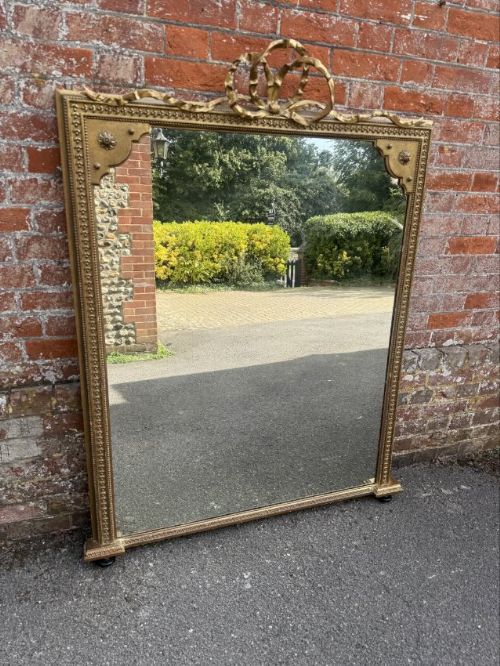


Gilt Gesso Hall Mirror
A gilt gesso hall mirror brings instant light and presence to an entryway, combining carved wooden warmth with bright metallic reflection.
Gilt Gesso Hall Mirror
The forms span from compact vanity mirrors and convex designs to large arched overmantel pieces and ornate wall hangings. English and French pieces dominate, showing stylistic influences ranging from Baroque and Rococo to Neoclassical taste.
Materials and construction methods
The foundation of these pieces relies on carved wood, overlaid with gesso to create crisp relief ornamentation before finishing. Artisans applied gold leaf or paint over the gesso base to achieve the characteristic metallic surface sheen.
Glazing takes the form of traditional mirror glass, occasionally showing age-related foxing or over-painting. Frames incorporate structural timbers such as oak alongside intricate rope twist motifs and elaborate mouldings.
Gilt Gesso Hall Mirror Retail Price Guide 2026
Typical asking prices for gilt gesso hall mirror among the pieces listed under this phrase on Sellingantiques today, from the lower quarter to the upper quarter. They describe what is for sale here now, not the wider market.
Convex mirrors let you watch the entire hallway from one spot.
Factors determining quality
Quality rests heavily on the depth and crispness of the carved wood and gesso relief work. Finer examples display meticulous hand-finishing in the gilding and well-preserved surface detail across the ornate motifs.
The integrity of the original frame structure and the character of the glass further distinguish individual items. Pieces retaining their original silver or gold leaf finish without heavy modern restoration hold distinct appeal.
The Gilt Gesso Hall Mirror Glossary
- Gesso
- A plaster-like mixture applied to wood frames to create a smooth surface for carving and gilding. It allows for intricate relief ornamentation.
- Giltwood
- Timber that has been covered with a thin layer of gold leaf. This technique provides a durable and brilliant metallic finish.
- Convex mirror
- A round mirror with a curved surface that reflects a wide-angle view of the room. These were popular for monitoring larger entrance spaces.
- Foxing
- Age-related spots and discoloration appearing within the mirror glass plate. Collectors often view this as a sign of authenticity.
- Overmantel mirror
- A large wall mirror originally designed to hang above a fireplace mantel. Many find new life in hallways and principal rooms.
Gilt Gesso Hall Mirror: Frequently Asked Questions
Where should I hang a hall mirror?
Hang your mirror at eye level opposite a light source to maximise brightness in a hallway or entrance passage. This placement creates an illusion of greater depth in narrow spaces.
Ensure the wall fixings match the substantial weight of carved wood and gesso frames. Secure mounting directly into wall studs provides necessary stability.
How do I clean a gesso frame?
Dust the ornate carved details gently using a soft, dry artist brush or feather duster. Avoid using water or chemical cleaners that can soften the gesso layer.
Keep moisture entirely away from the gilded surfaces to prevent flaking. Professional conservation is recommended for any deeper cleaning needs.
Are these mirrors original antiques?
The pieces listed date primarily from the nineteenth century, encompassing Victorian and French revival periods. Construction methods utilise period materials like gesso, gold leaf, and traditional mirror glass.
Documentation of materials and styles helps confirm the nineteenth-century origins. Archival examples also extend back to the Georgian and Regency eras.
What is an overmantel mirror?
An overmantel mirror is a large format looking glass originally built to sit above a fireplace. Their grand scale translates exceptionally well to spacious entrance halls.
These pieces often feature arched tops or elaborate frames designed to dominate a wall. They function as striking focal points in high-ceilinged rooms.