

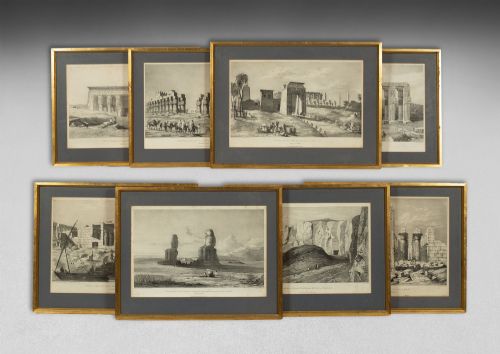
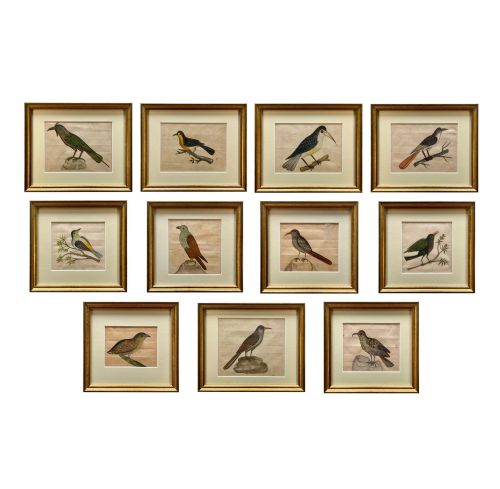
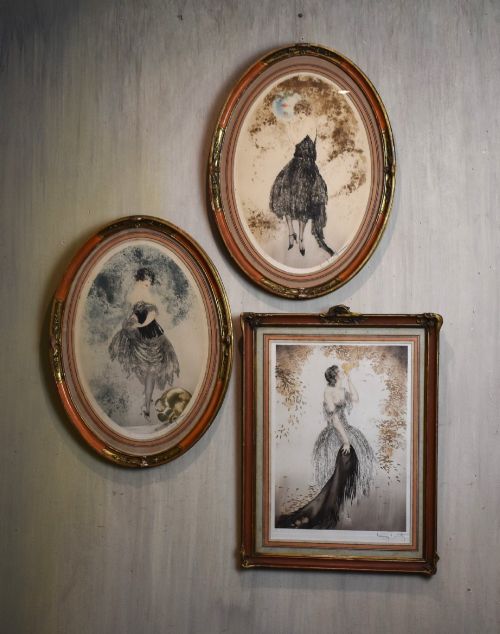


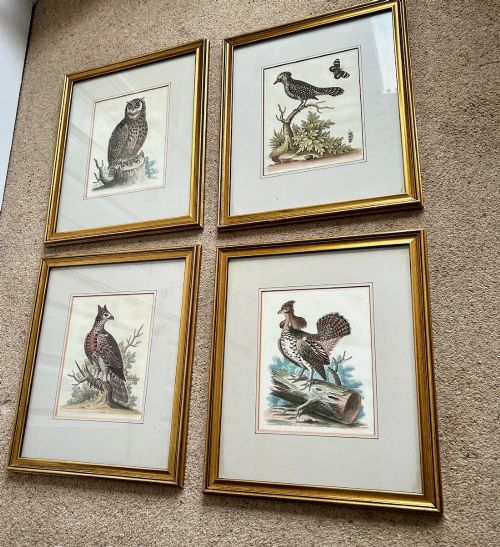
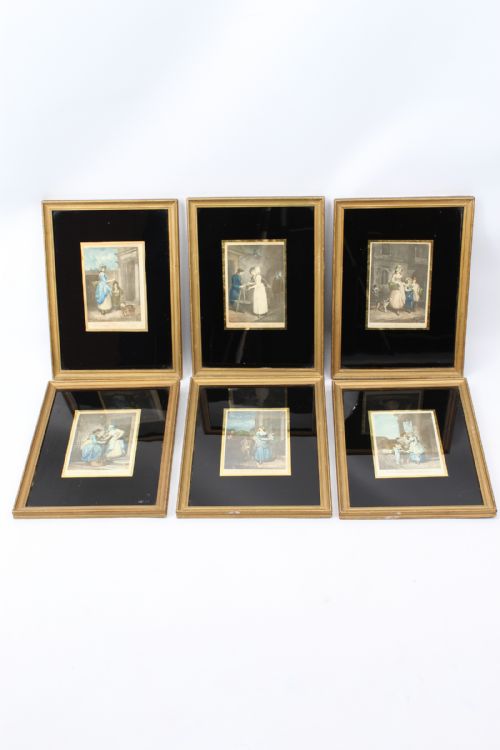


Gilt Framed Print Set
A gilt framed print set brings together matched walls of history, from eighteenth-century natural history plates to nineteen-twenties modern elegance.

Gilt Framed Print Set
A gilt framed print set groups multiple works, such as engravings, lithographs, and watercolours, united by a single subject or publisher. Buyers searching this phrase look for matched wall displays from the eighteenth, nineteenth, and early twentieth centuries.
The most common groupings on this page include natural history series like birds and sea shells, architectural scenes, and sporting prints. These sets often preserve the original decorative intent of period interiors.
Materials and construction
Prints in these sets rely on paper supports carrying hand-colouring, mezzotint, stipple engraving, or lithography techniques. These images sit behind protective glass within timber mouldings.
Frames are finished in gilt wood, gold leaf, or giltwood to provide a metallic border that complements the artwork. The combination of paper, glass, and gilded framing defines the physical object.
Gilt Framed Print Set Retail Price Guide 2026
Typical asking prices for gilt framed print set among the pieces listed under this phrase on Sellingantiques today, from the lower quarter to the upper quarter. They describe what is for sale here now, not the wider market.
Several sets capture Victorian obsessions, including theatrical decoupage and detailed studies of racehorses.
Qualities that distinguish sets
Quality rests in the crispness of the impression and the precision of any hand-applied colour. Stronger sets retain sharp plate marks and vibrant pigments without fading or heavy foxing.
The craftsmanship of the frame also dictates overall standard. Original period gilt wood mouldings with deep, intact leaf patination elevate a grouping far above later replacements.
Louis Icart·George Edwards·Edward Stodart·John Flaxman·David Roberts·William Swainson·Edward Lear
The Gilt Framed Print Set Glossary
- Engraving
- A printmaking method where an artist cuts lines into a metal plate to hold ink. This technique produces fine, precise details often seen in botanical and architectural plates.
- Mezzotint
- A tonal printmaking process that allows for rich darks and subtle gradations. It gained popularity for reproducing portraits and romantic subjects.
- Giltwood
- Wood carved and covered with a thin layer of gold leaf or metal powder. It provides the characteristic metallic sheen on period frames.
- Lithography
- A planographic printing process based on the repulsion of oil and water. It enabled vibrant multi-coloured prints during the nineteenth century.
- Plate mark
- The indentation left on paper by the edge of a printing plate under pressure. Its presence confirms an authentic antique impression.
Gilt Framed Print Set: Frequently Asked Questions
How do I hang a set?
Keep the visual centre of the grouping at standard eye level, allowing equal spacing between frames to maintain balance.
For larger sets arranged in a grid or horizontal line, measure the combined footprint on the floor before placing nails in the wall.
Are these frames original?
Many sets retain their period gilt wood frames, which show appropriate age through minor surface wear and oxidation of the gold leaf.
Checking the backing boards and joining methods helps determine whether the frames date to the same era as the prints inside.
How do I care for paper art?
Position framed prints away from direct sunlight to prevent the paper from yellowing and the hand-applied watercolours from fading.
Maintain stable room humidity to protect both the antique paper and the wooden gilded frames from warping.
What subjects are most common?
Natural history studies, including ornithology, botany, and sea shells, form a large portion of available groupings alongside architectural and sporting scenes.
These educational and decorative themes reflected the interests of collectors from the Georgian and Victorian periods.