


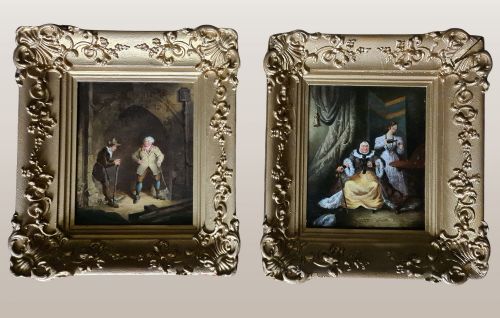
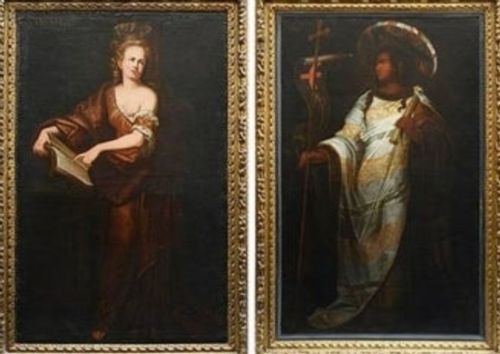
Gilt Framed Portrait Pair
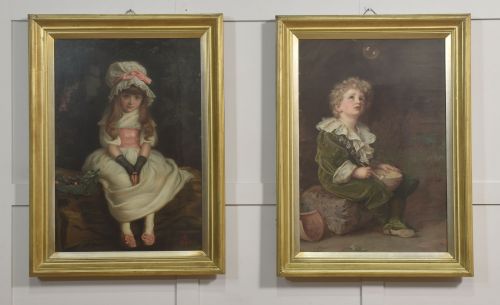
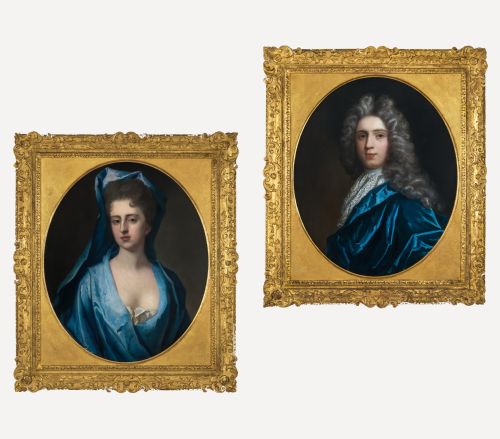
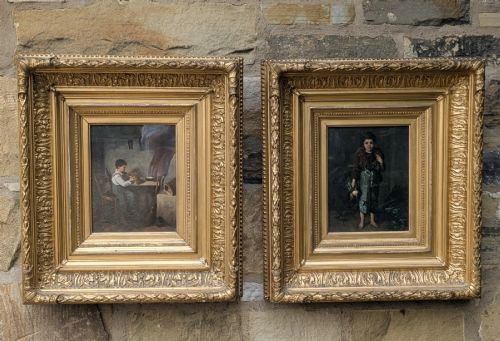
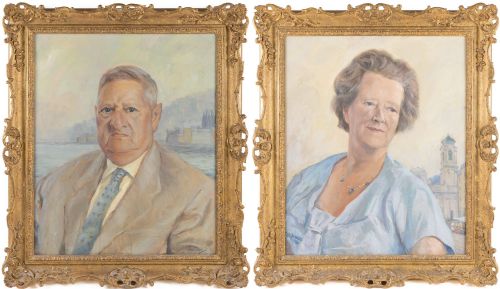
A gilt framed portrait pair brings balanced symmetry to a wall, offering matched likenesses executed in oil, pastel, watercolour, or print.
Gilt Framed Portrait Pair
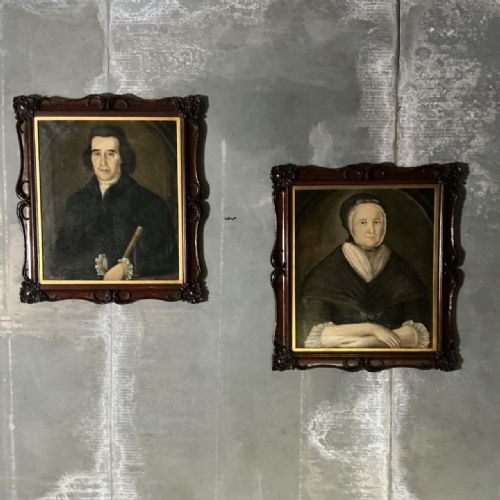
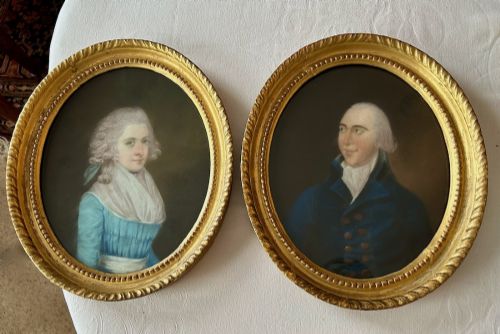
A gilt framed portrait pair consists of two companion likenesses housed in matching gold leaf, gilt wood, or gilded frames, designed to be hung together as a visual balance on the wall. These pairings frequently depict husbands and wives, historical figures, children, or character studies created across centuries.
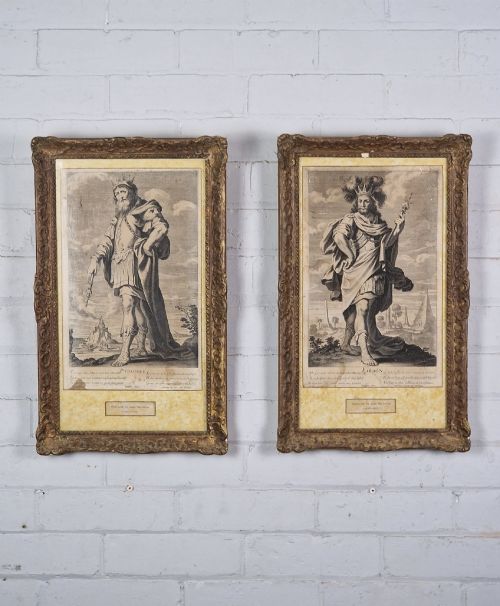
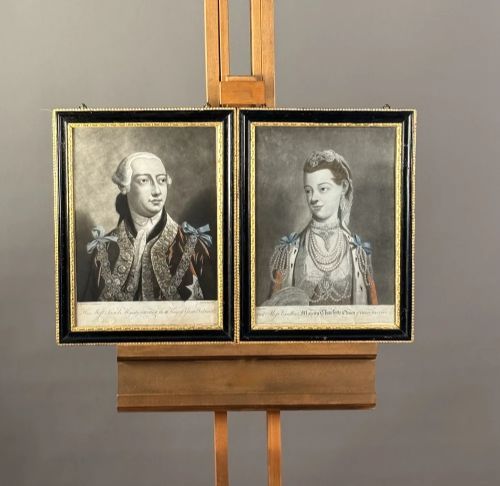
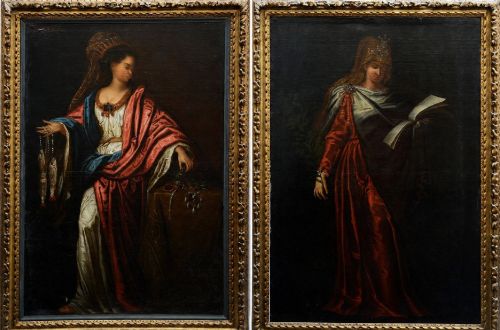
The selections available range from 18th Century pastels and Georgian watercolours to 19th Century oil paintings on canvas and early 20th Century pastel portraits. French and British schools are represented, alongside specialised formats such as portrait miniatures, mezzotints, engravings, and wax reliefs.
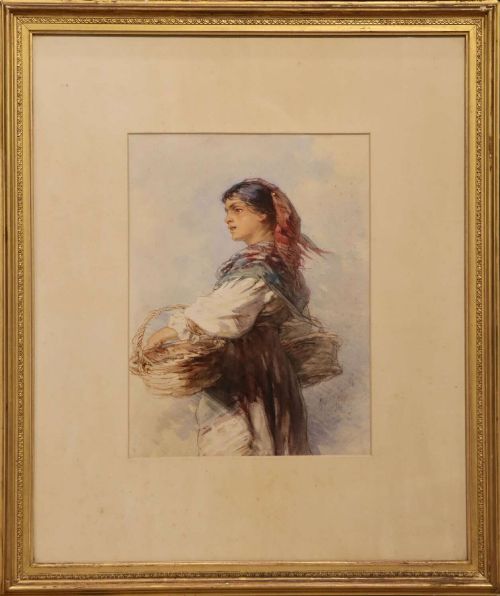
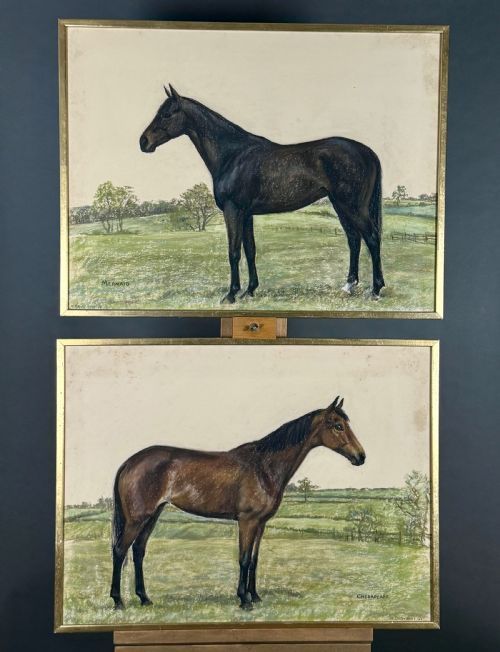
Buyers seeking this phrase encounter works framed in Regency or Victorian styles, French Baroque frames, and mid-century swept gilt mouldings. The subjects span named sitters, children, equestrian studies, and Italian peasant figures.
How they were made
The physical objects rely on traditional artist materials including oil on canvas, paper, pastel, and watercolour, supported by wood frames finished with gold leaf or giltwood. Engravings, mezzotints, and prints utilise paper substrates often paired with glass protection.
Framing techniques incorporate hand-carved wood mouldings treated with layers of gold leaf or gilt, alongside rosewood and metal embellishments found on 19th Century pieces. Structural work involves stretching canvas over wooden frames or mounting paper and pastels behind glass.
Frame materials recorded include gold leaf, giltwood, rosewood, and swept mouldings housing British and European subjects.
What varies in quality
The matching of the pair also dictates distinction, where both frames and images maintain equal historical integrity and aesthetic harmony. Original frames matching the period of the artwork elevate the historical cohesion of the set.
Guido Bach·Jean Mariette·James Sharples·Emily Eyres·Michael Dahl·Thomas Murray·Thomas Frye·Richard Purcell·Adam Buck·Theodore Jensen·E H Windred
The Gilt Framed Portrait Pair Glossary
- Giltwood
- Wood carved and coated with gold leaf, metal powder, or leaf finish to create a bright metallic surface. It provides the primary reflective border for many historic portraits.
- Mezzotint
- A printmaking process of the intaglio family where the plate is roughened to achieve deep tones and subtle gradations. It was frequently utilised for royal and aristocratic portrait prints.
- Pastel
- A dry painting medium consisting of powdered pigment and a binder, applied to paper. Works in this medium require glass protection to prevent pigment loss.
- Intaglio
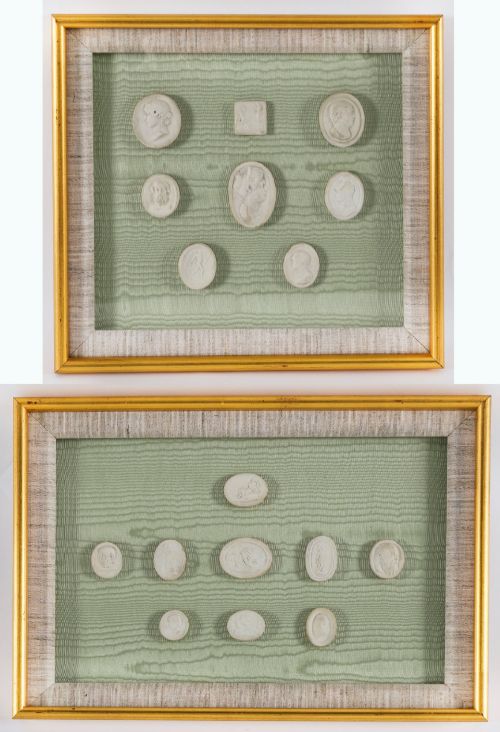
- A design carved into the surface of a material such as plaster or stone. Framed Grand Tour examples record classical profiles.
- Regency
- An English design period spanning the early 19th Century characterised by classical restraint and refined proportions. Frames and portraits from this era often exhibit clean neoclassical lines.
Gilt Framed Portrait Pair: Frequently Asked Questions
How should I hang a portrait pair?
Companion portraits are traditionally hung side by side at eye level, maintaining equal spacing to preserve the visual symmetry intended by the matched frames. Sitters depicted in profile typically face inward toward one another rather than outward away from the centre.
Ensure the hanging fixings match the weight of the timber and glass, utilising secure wall anchors appropriate for older heavy frames.
Are these portraits always created as pairs?
Many portraits were commissioned together as pendant pieces to commemorate marriages, family members, or companion subjects from the outset. Other pairings are assembled later by collectors matching size, period, and framing style.
Examining the canvas backing, paper type, and frame construction helps determine whether two works originated together in the same studio.
How do I care for works on paper versus canvas?
Portraits executed in pastel, watercolour, or print require protection from direct sunlight to prevent the fading of delicate pigments and paper discolouration. Glazed frames should remain sealed to keep dust and atmospheric moisture away from the fragile surface.
Oil paintings on canvas tolerate indirect light better but benefit from stable room temperatures and occasional professional dusting with soft implements.
How can I tell the period of the frame?
Frame styles often correspond to the era of the portrait, displaying Regency neoclassical reeding, Victorian ornamentation, or ornate French Baroque moulding work. Examining the joinery, backboards, and the type of gold leaf application reveals the age of the woodwork.
Original frames frequently show age-appropriate wear and shrinkage in the gesso, distinguishing them from later replacements.