
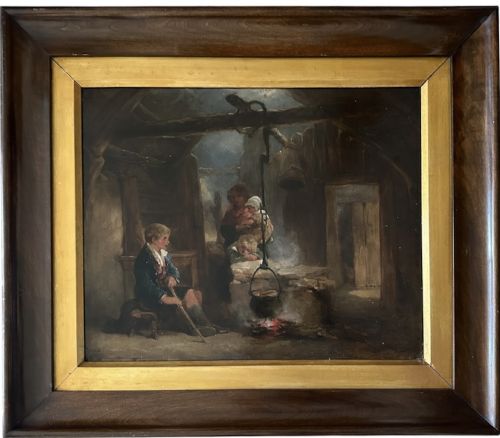
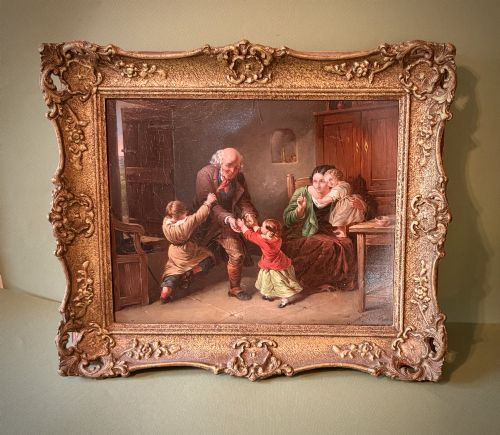
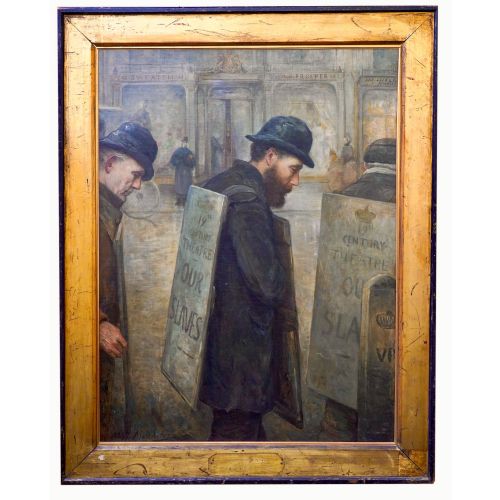
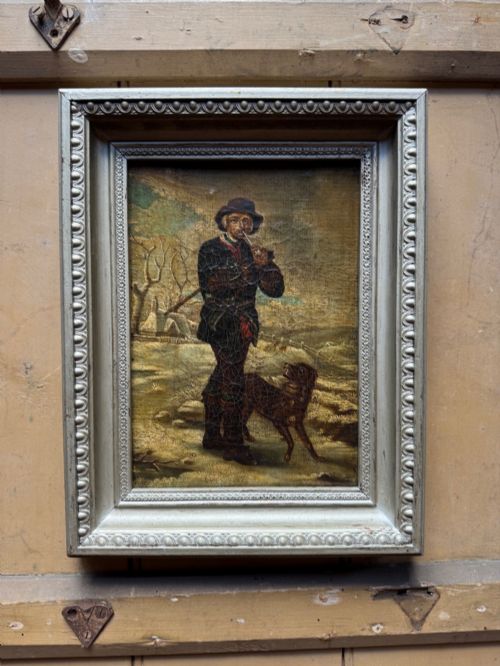
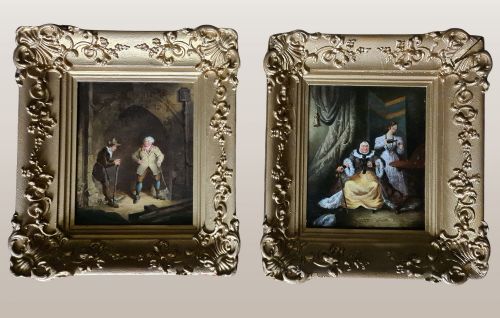
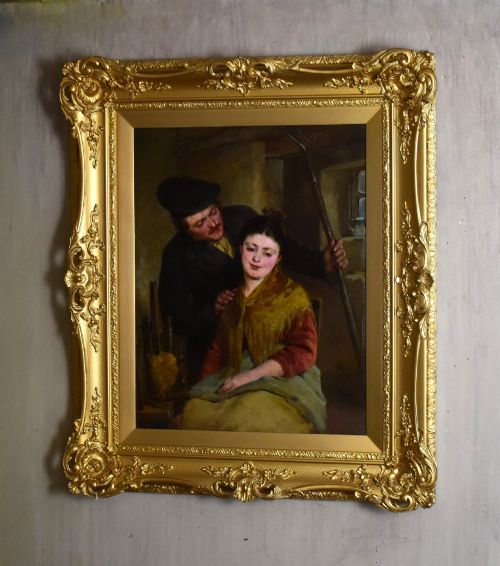
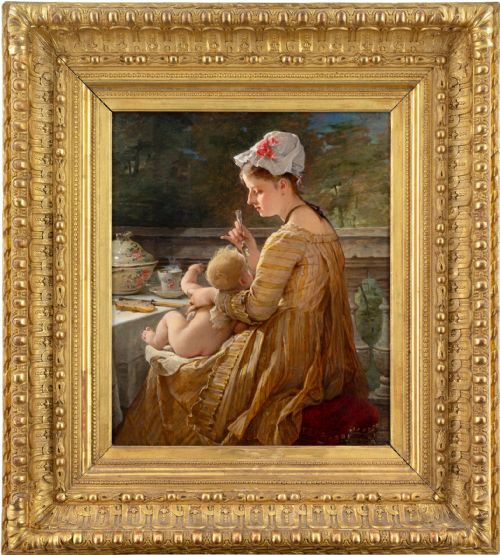
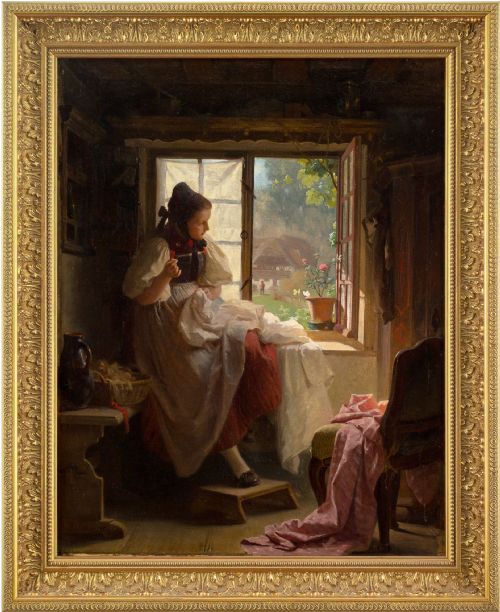
Gilt Framed Genre Art
Gilt framed genre art brings domestic narrative and historical scenes into a room through oil on canvas and paper enclosed in ornate gilded surrounds.

Gilt Framed Genre Art
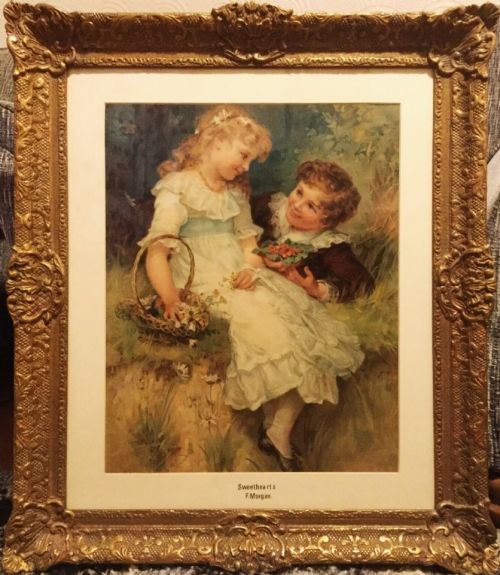
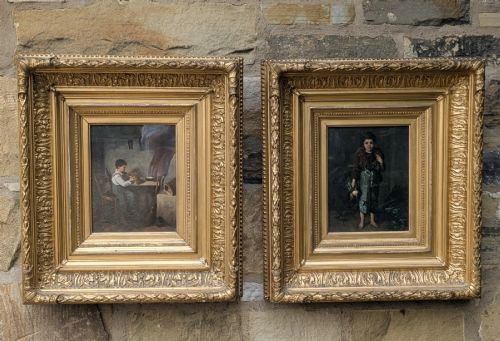
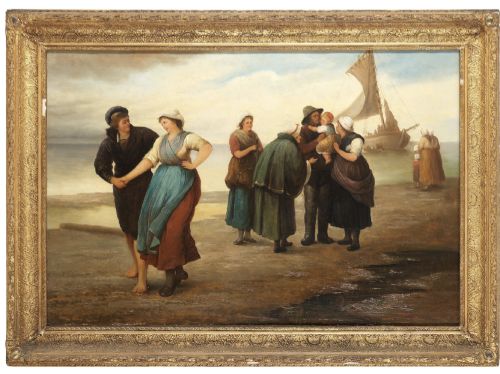
When searching for gilt framed genre art, collectors look at figurative scenes of everyday life, interior domestic moments, and historical narratives captured across the nineteenth century. The examples met most frequently on this page comprise nineteenth century oil paintings, watercolours, and framed prints housed in wooden surrounds finished with gesso and gold leaf.
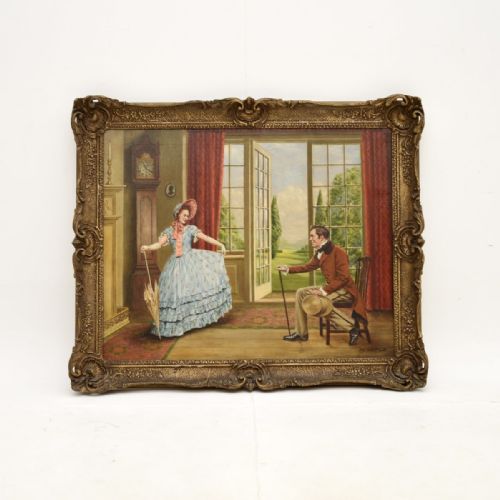
These works record human activities ranging from quiet moments by a window to tavern interiors and children playing, framed to match the period aesthetic of the canvas. Originating from British, French, Dutch, and Italian schools, the pieces reflect academic realism, social history, and regional domestic traditions from the Victorian era onwards.
How they were made
The physical objects rely on canvas stretched over wooden frames, painted in oil or watercolour, and occasionally produced as paper prints or engravings. Pigments are applied to canvas or paper support layers, recording fine brushwork in academic and realist styles.
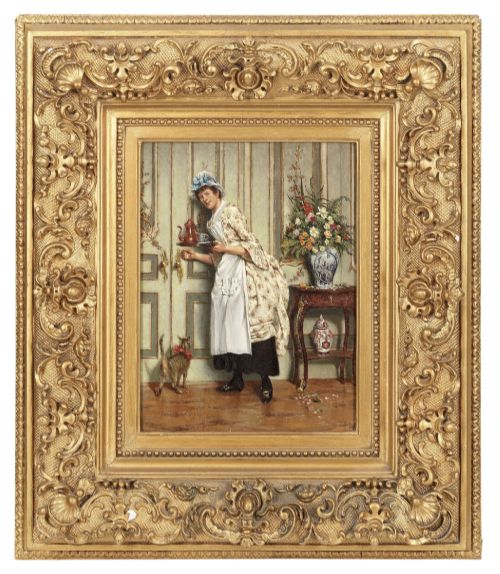
The surrounding frames consist of wood bases shaped with moulded gesso, then finished with layers of gold leaf or giltwood to create a reflective border that complements the dark tones of nineteenth century interior painting.
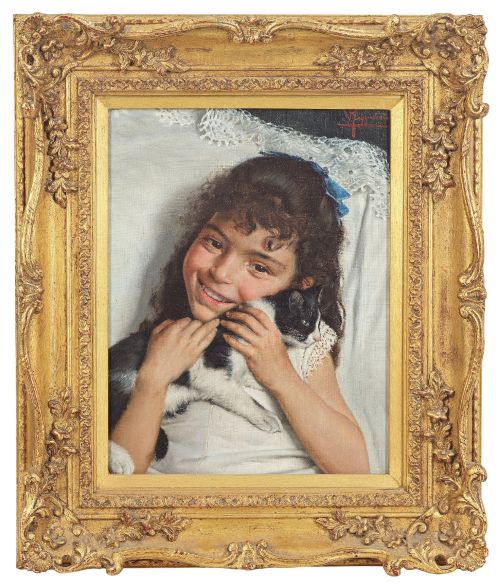
Cats appear frequently in nineteenth century domestic scenes, often supervising tea time or playing quietly by the window.
What varies in quality
Quality separates through the expressive handling of the human figure, the depth of narrative detail within the interior or exterior setting, and the integrity of the original giltwood frame. Works by recorded academic and realist painters display superior command of light, shadow, and human interaction compared to anonymous school pieces.
The preservation of the canvas and the original gesso moulding on the frame dictates the overall retention of the maker's original intent, where clean unlined surfaces and crisp leaf gilding hold greater visual weight.
Felix Stone Moscheles·Stephen Samuel Lewin·Vittorio Reggianini·Mark William Langlois·Alfred Lyndon Grace·Howard Helmick·Adelaïde Salles-Wagner·Max Kaltenmoser·James Hamilton·Hendrik Valkenberg·Joseph Farquharson·Bernard De Hoog·Valdemar Magaard·Renato Moretti·Alfred Arthur Brunel de Neuville·Jacob Akkersdijk·Delapoer Downing·Thomas Kent Pelham·Charles Henry Slater·Charles Edward Wilson
The Gilt Framed Genre Art Glossary
- Genre painting
- Painting that depicts aspects of everyday life by portraying ordinary people engaged in common activities. These scenes often capture domestic interiors, market stalls, or social gatherings.
- Gesso
- A plaster mixture used as a base coat on wood before applying gold leaf. It allows craftsmen to carve intricate relief details into frames.
- Giltwood
- Wood that has been covered with a thin layer of gold leaf or gold paint. This technique protects the underlying timber while providing a bright, decorative metallic finish.
- Academic art
- A style of painting and sculpture produced under the influence of European academies of art. It follows strict rules of composition, drawing, and historical subject matter.
- Social realism
- An artistic movement that highlights the everyday conditions of the working class and poor. These works document social issues and labour without sentimentality.
Gilt Framed Genre Art: Frequently Asked Questions
What defines genre art?
Genre art depicts scenes from everyday life involving ordinary people rather than historical heroes or religious figures. These works show domestic interiors, street sellers, children playing, and quiet moments in the home.
Subjects are drawn from real observation, capturing the social habits, dress, and working conditions of past centuries through painted or printed narratives.
How do I date these paintings?
Dating relies on costume, hair styles, interior furnishings, and the specific construction methods of the canvas stretcher and frame. Signatures, dates inscribed on the canvas reverse, and artist biographical records provide precise eras.
Stylistic shifts between early nineteenth century romanticism and later Victorian social realism help narrow down the decade of creation.
Where should I hang these?
These works suit traditional reception rooms, studies, and hallways where warm lighting enhances the gold leaf and dark oil pigments. Placing them away from direct sunlight protects both the canvas and the delicate gesso on the frame.
Pairing them with period furniture creates a cohesive historical interior that reflects nineteenth century domestic display.
Are the frames original?
Many paintings retain their period giltwood or gesso frames, which were selected by the artist or contemporary dealers to complement the palette. Original frames show matching wear patterns and corner construction consistent with the painting's era.
Replacements occur when earlier surrounds suffered structural damage or when collectors rehoused works to suit changing decorative tastes.