

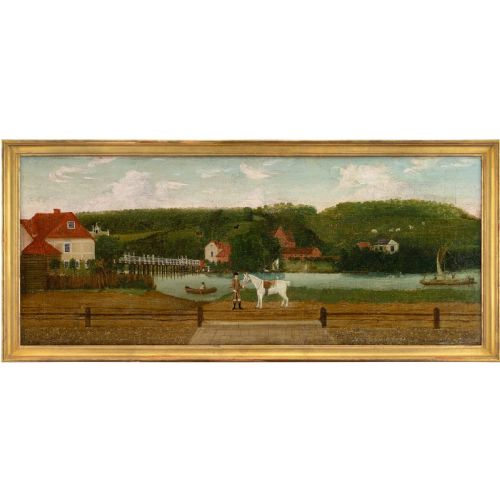
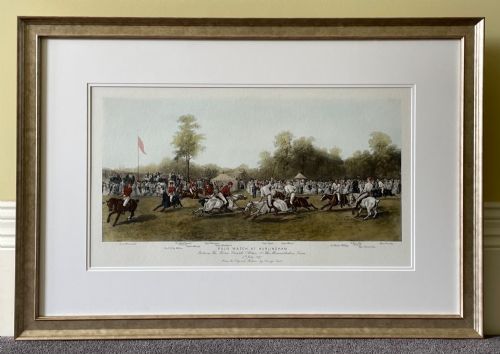
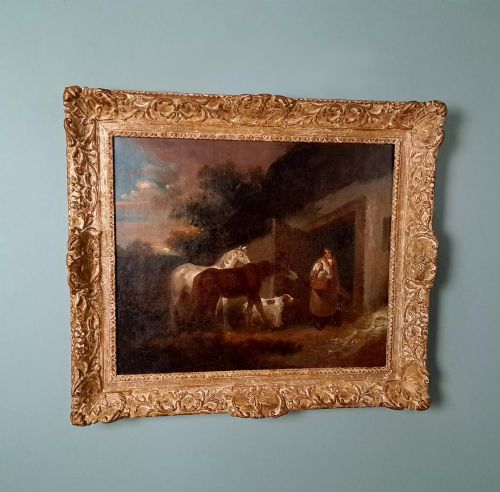
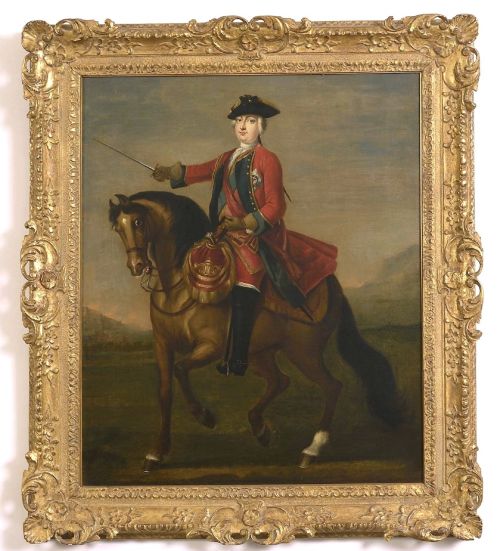
Gilt Framed Equestrian Art
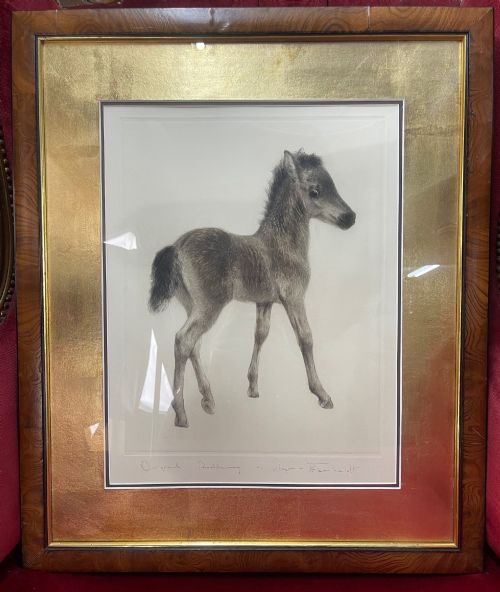
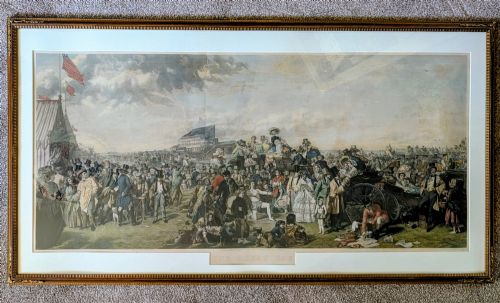
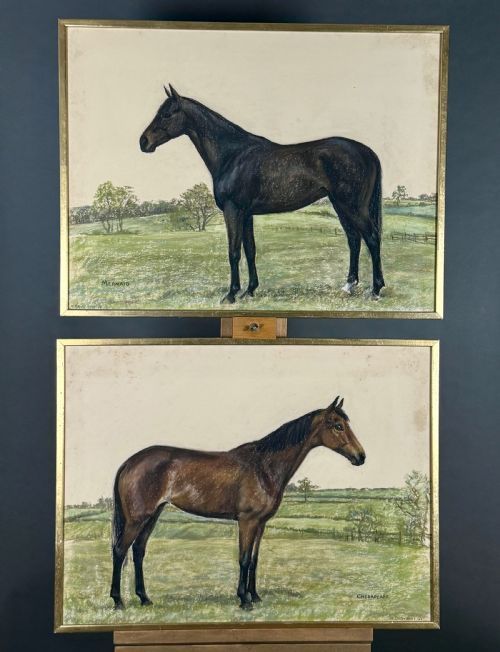
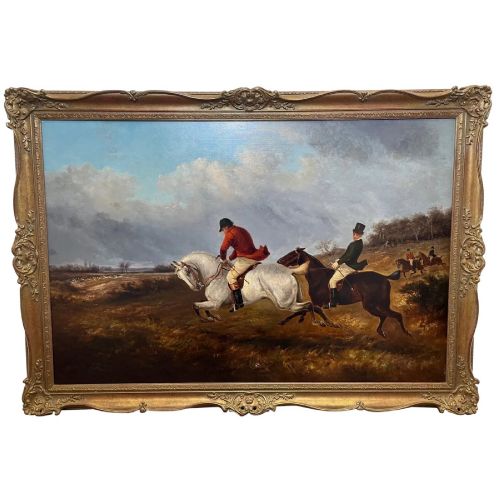
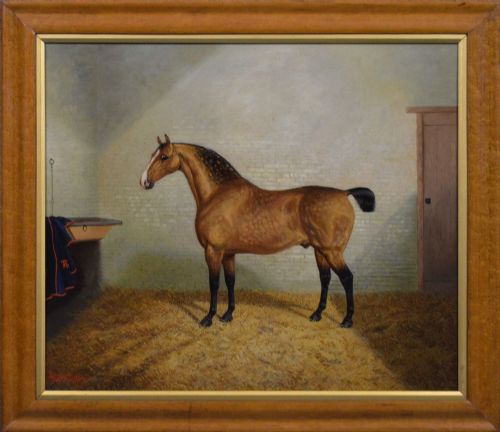
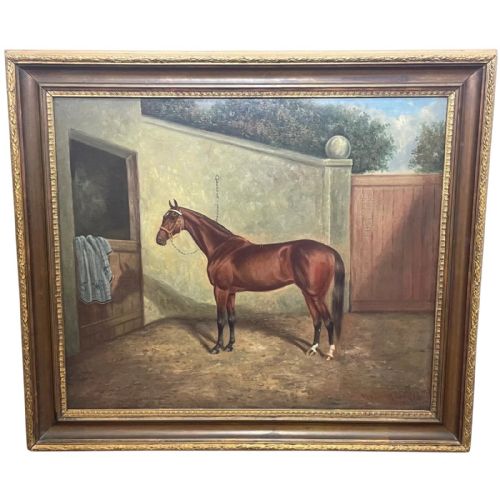
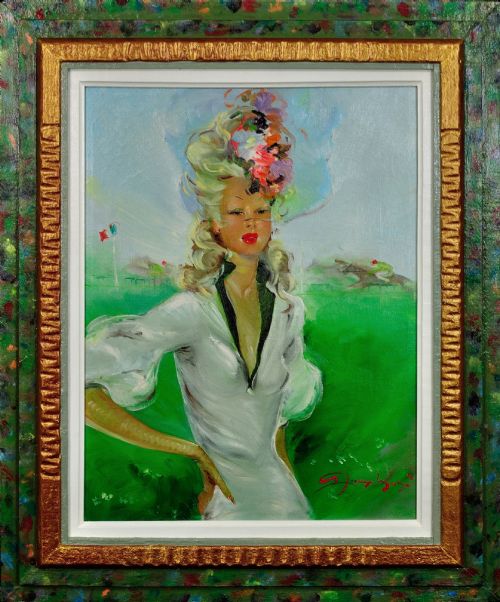
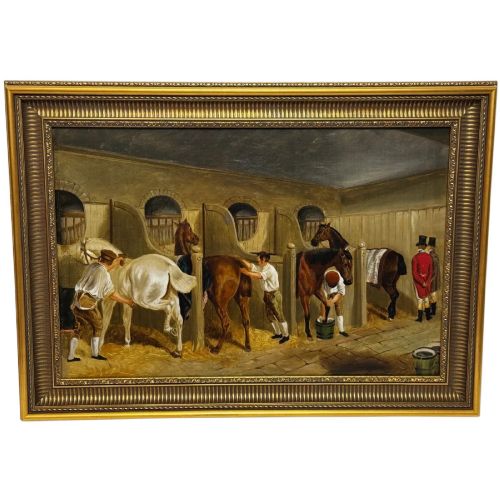
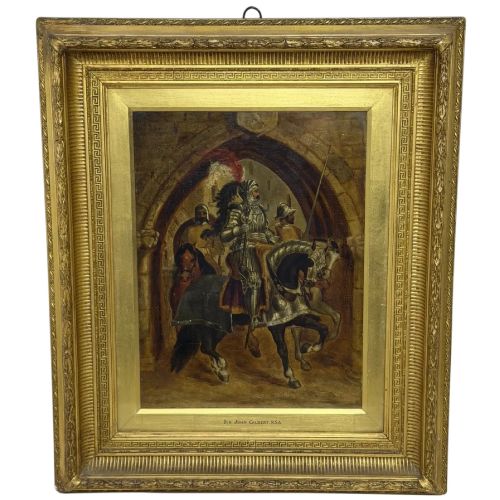
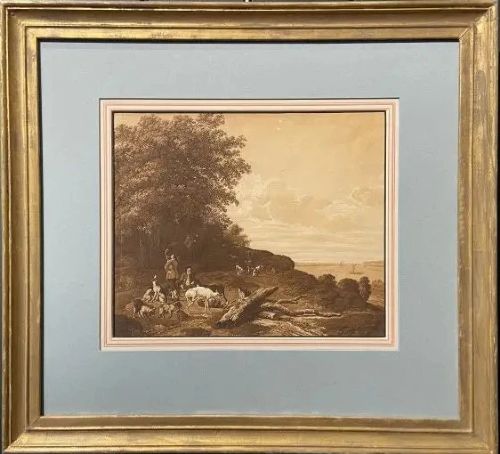
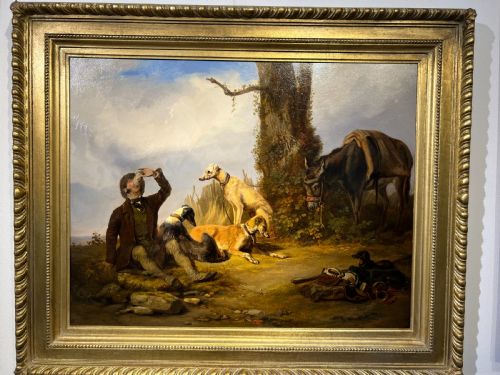
These pieces of gilt framed equestrian art capture horse racing, hunting and stable portraits bound in gleaming gold-toned timber.
Gilt Framed Equestrian Art
Gilt framed equestrian art encompasses oil paintings, watercolours, pastel studies and lithographs depicting horses, riders and sporting scenes housed within metallic or gilded wooden frames. A buyer seeking this genre will encounter nineteenth-century canvases, Victorian sporting works and twentieth-century depictions of racehorses and hounds.
The most common formats found in these listings are oil paintings on canvas or board, alongside framed prints and drawings dating from the eighteenth century through to the mid-twentieth century. Subjects range from individual equine portraits and coaching scenes to panoramic views of racing and the hunting field.
Materials and construction
Works within this category utilise traditional media including oil paint on canvas, watercolour, pastel on paper, and ink drypoints, mounted behind glass or presented on stretched canvas. The surrounding frames are constructed from wood, finished with gilt or applied leaf to provide a reflective border.
Makers applied pigments using fine brushes for detailed hair and musculature in equine portraits, while printmakers employed lithography and drypoint etching to multiply sporting imagery. Wooden mouldings were carved or gessoed before gilding to complement the traditional subjects.
Several Victorian canvases capture horses with distinct personalities peering out from stable doors as if judging the viewer right back.
Assessing quality in equestrian works
Quality rests upon the artist's command of equine anatomy, movement and proportion, where superior works render bone structure, muscle tone and light with acute observation. Lesser examples rely on formulaic compositions and stiff, generic postures that lack individual character.
The integration of frame and artwork also distinguishes finer pieces, with period giltwood frames that match the age and scale of the picture elevating the overall presentation above later or mismatched housing.
William Joseph Shayer Senior·Kurt Meyer-Eberhardt·Thomas Smythe·Albert Clark·Abraham Cooper·Fred Fitzpatrick·C. H. Weigall·Ernest Payne·John Alfred Wheeler·Philip Rideout·Thomas Walker Bretland·John Frederick Herring Snr·Herman S Melville·George Morland·Charles Walter Simpson·John Arthur Lomax
The Gilt Framed Equestrian Art Glossary
- Giltwood
- Timber carved and coated with gold leaf or metallic powder to create a bright, reflective surface. This finish characterises the traditional frames associated with period paintings.
- Drypoint
- A printmaking technique where an artist scratches a design directly into a metal plate with a sharp needle. This process produces velvety lines rich in character.
- Lithography
- A planographic printing method based on the repulsion of oil and water on a limestone or metal plate. It allows for the accurate reproduction of tonal drawings and paintings.
- Sporting Art
- Genre of painting and illustration dedicated to rural pursuits, particularly horse racing, hunting, shooting and coaching. Works in this field document the history of equine breeding and field sports.
Gilt Framed Equestrian Art: Frequently Asked Questions
What periods do these artworks cover?
The pieces span from the eighteenth century through the Victorian era and into the mid-twentieth century, reflecting changing artistic styles in equine portraiture.
Earlier examples often depict stately hunting scenes, whilst later Victorian and twentieth-century works focus closely on named racehorses and local sporting events.
How should I care for gilt frames?
Gilt frames require gentle dusting with a soft, dry brush to avoid disturbing fragile gold leaf or gesso mouldings.
Keep the artwork away from direct sunlight and damp environments to protect both the canvas and the gilded wood from degradation.
Are these works original paintings or prints?
The selection includes both original hand-painted oils, watercolours and pastels, alongside vintage lithographs and printed reproductions.
Each listing specifies the exact medium, allowing buyers to distinguish between a unique painted canvas and a period print.
What subjects are most common?
Horse portraits dominate the selection, often featuring named racehorses, hunters, and broodmares alongside their stable environments.
Other frequent subjects include fox hunting parties, coaching scenes, polo matches, and rural landscapes featuring working horses.