
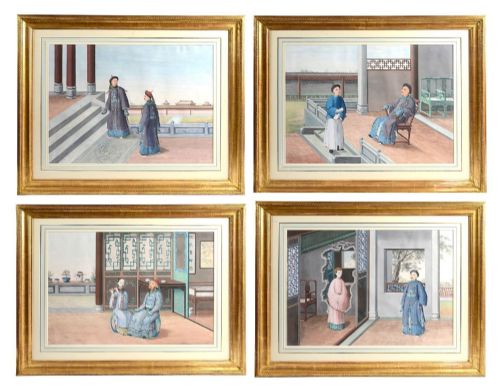
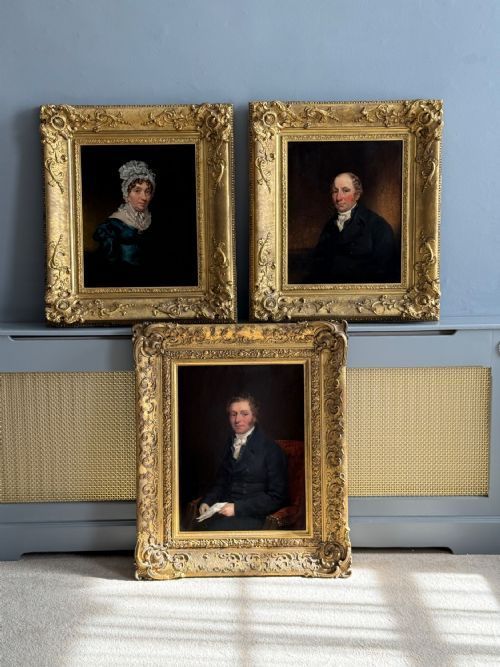
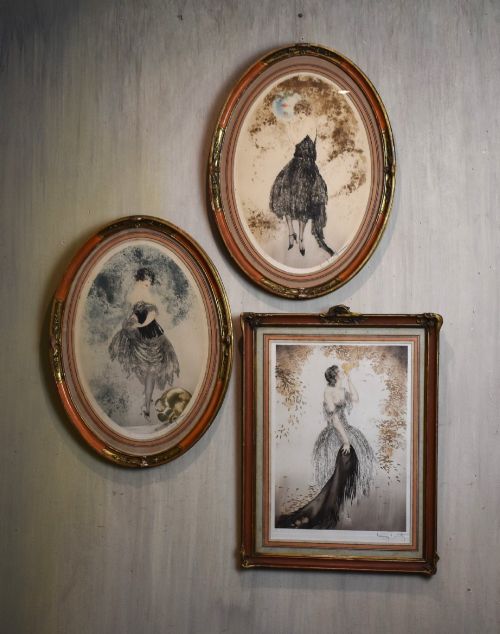
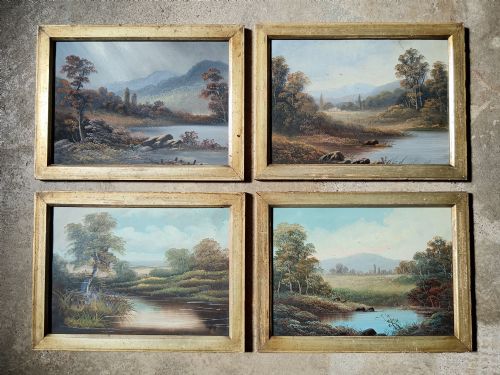


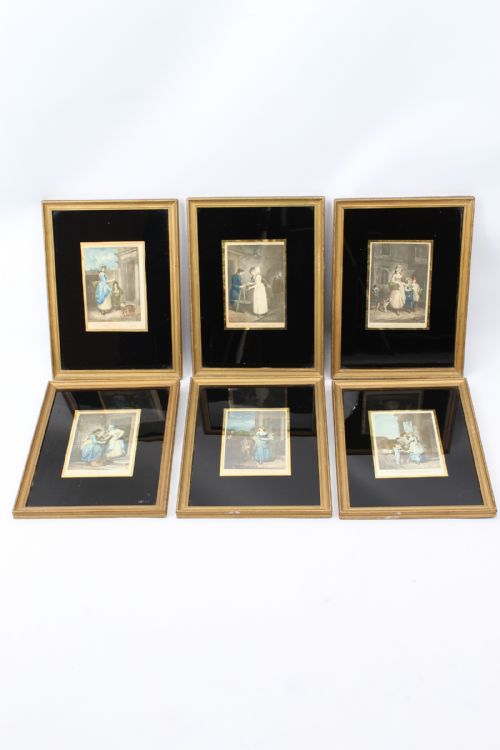
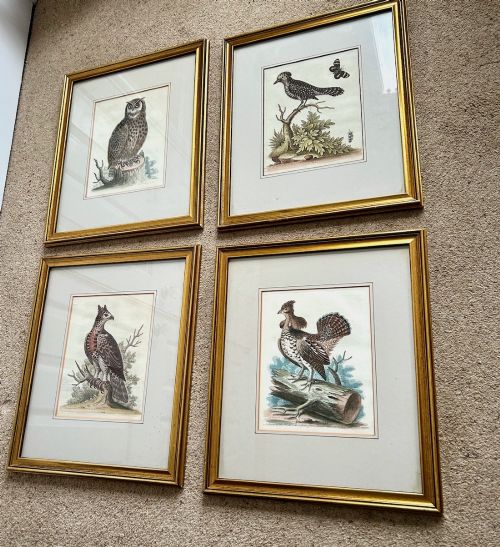


Gilt Framed Art Set
A gilt framed art set brings together matching historical prints, watercolours or panels enclosed in coordinated golden mouldings for symmetrical wall display.
Gilt Framed Art Set
A gilt framed art set gathers multiple coordinated works of art within matching metallic frames, frequently originating from the eighteenth and nineteenth centuries. These groupings often comprise botanical plates, ornithological engravings, topographical scenes or classical illustrations produced in matching numbers.
Buyers encounter series ranging from modest pairs and trios up to extensive groupings of thirty-five intaglios or prints. The visual uniformity of the golden borders unites diverse subjects, from hand-coloured natural history studies to neoclassical architectural scenes.
The materials enclosing these works span traditional wood, carved giltwood and gold leaf applied over foundational substrates. Glazing protects delicate paper surfaces, watercolours and gouache paintings within their respective surrounds.
Materials and framing techniques
Makers constructed the enclosing mouldings from wood, finishing them with genuine gold leaf or liquid gilt to create a reflective golden surface. Artisans shaped these frames to complement the scale of the enclosed engravings, watercolours, or oil panels.
The artworks themselves utilise traditional mediums such as paper, glass, and card, often embellished with hand-colouring. Printmakers employed copperplate engraving, lithography, and stipple techniques to produce multiple identical or themed plates for uniform sets.
Listings feature eighteenth and nineteenth-century works including hand-coloured ornithological engravings, botanical studies, and grand tour intaglios.
Quality factors in matching sets
Quality rests primarily in the uniformity of the frames and the preservation of the art within them. Sets that retain their original matched mouldings and undisturbed glass hold greater cohesion than those assembled from disparate sources later.
The clarity of the print impression, the vibrancy of the hand-applied watercolours, and the crispness of carved giltwood details distinguish finer examples from standard decorative items.
Joseph Clover RA·Louis Icart·Oliver Goldsmith·Giovanni Liberotti·George Edwards·John Flaxman·K & K Hof Atelier Pietzner·E. Jackson Stodart·Thomas Mackay·Charles Paillasson·David Roberts RA·William Swainson·Edward Lear·Charles Hunt·Francis Calcroft Turner
The Gilt Framed Art Set Glossary
- Engraving
- An image produced by cutting lines into a metal plate which holds ink for transfer to paper under pressure. Many natural history sets utilise this method.
- Stipple engraving
- A printmaking technique using dots to create tonal gradations and subtle shadows rather than continuous lines. This method suits portraits and figurative scenes.
- Intaglio
- A design incised into a gemstone, glass, or plaster medallion for decorative or seals purposes. Grand Tour examples often assemble these into framed display sets.
- Lithography
- A planographic printing process based on the repulsion of oil and water on a limestone or metal slab. It allowed nineteenth-century artists to produce multi-coloured plate series.
Gilt Framed Art Set: Frequently Asked Questions
How many pieces are usually in a set?
Sets commonly contain between three and eight matched pieces, though larger archival collections can extend to thirty-five or more individual framed works.
Buyers select the size according to available wall space and the intended symmetry of the display arrangement.
What periods do these artworks date from?
The listings span from the eighteenth century through the Regency and Victorian eras into the early twentieth century.
Earlier eighteenth-century examples lean towards natural history and classical illustration, while later Victorian and Edwardian sets include photography and theatrical decoupage.
Are the frames original to the art?
Many sets preserve their contemporary or period frames, particularly those housed in matched giltwood or wood mouldings.
Some collections bring together vintage prints within coordinated frames to achieve a uniform appearance on the wall.
How should I hang a multi-piece set?
Symmetrical arrangements work best for sets of four, six or eight identical frame sizes to maintain visual balance.
Spacing the frames evenly allows the shared subject matter and golden mouldings to read as a single cohesive installation.