

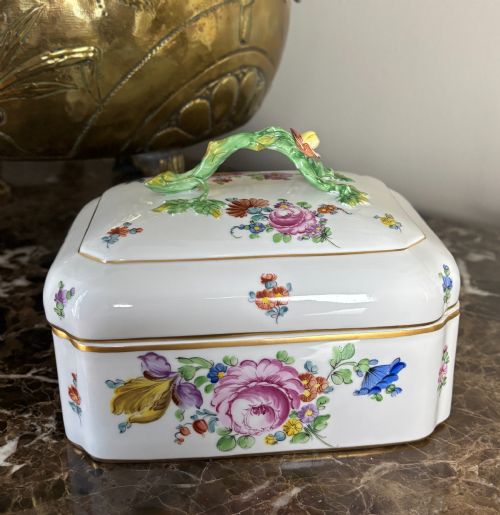
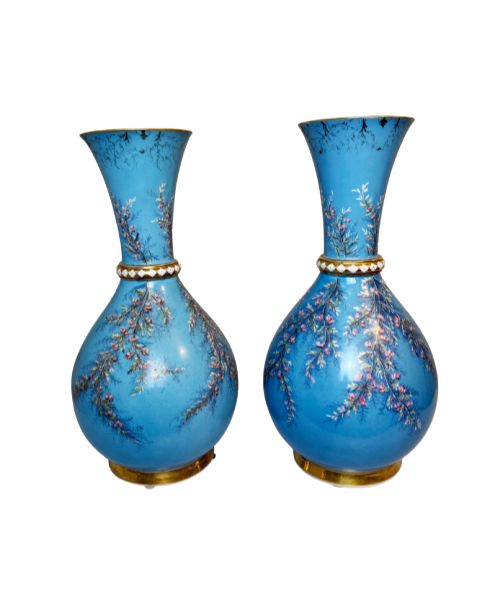
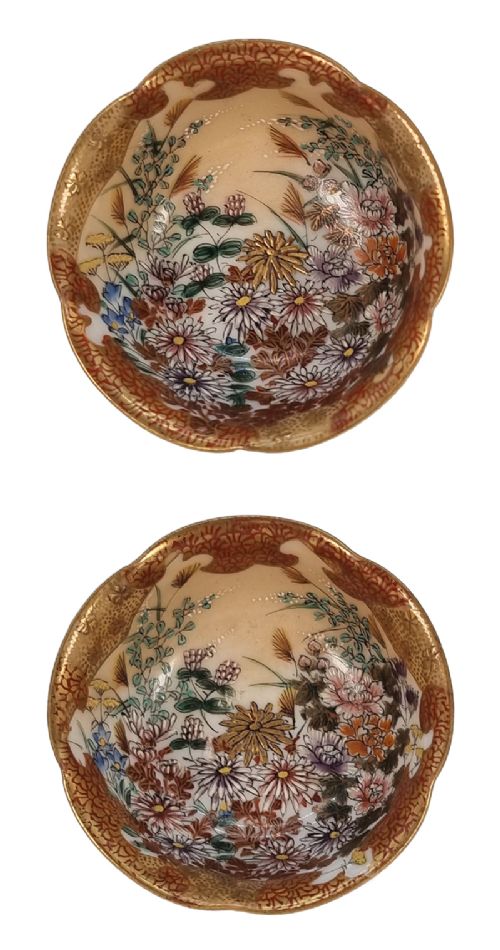
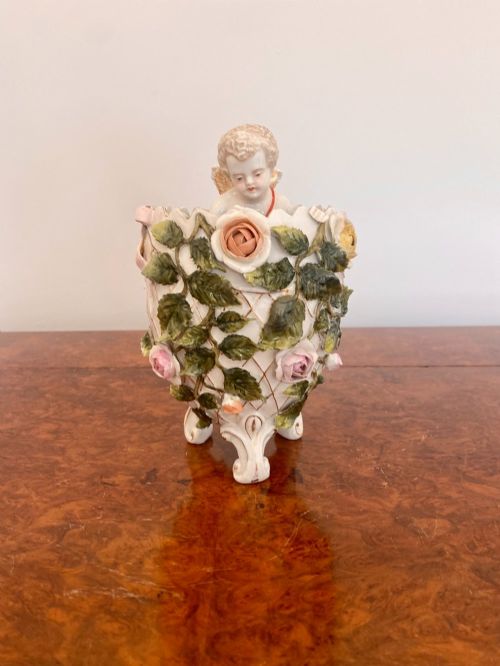

Gilt Floral Porcelain
Gilt floral porcelain brings together handpainted botanical decoration and rich metallic ornament across centuries of ceramic history.
Gilt Floral Porcelain
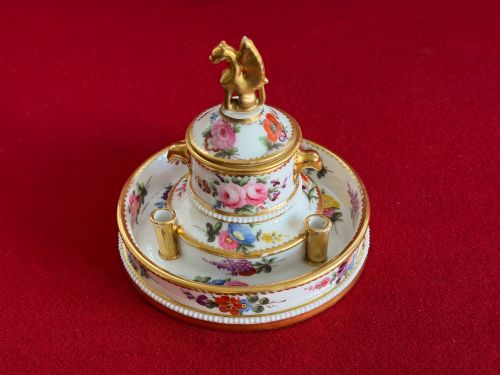
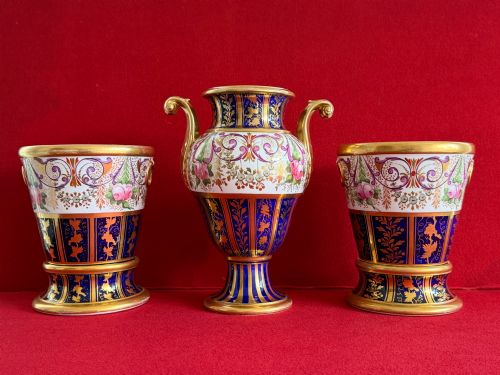
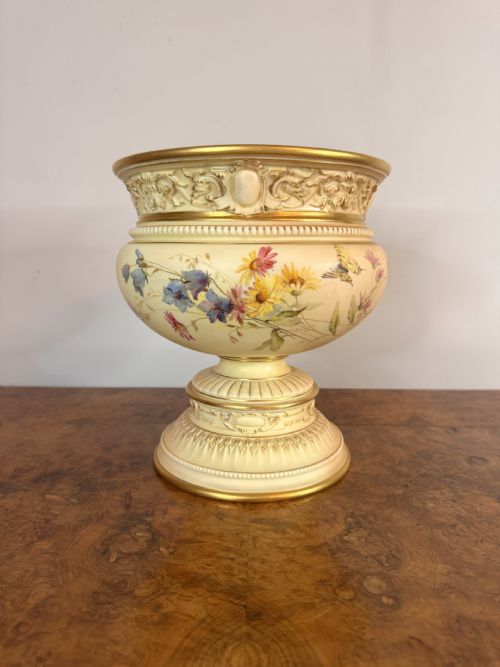
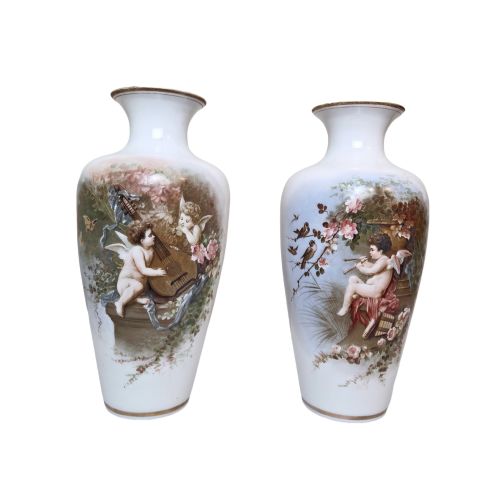
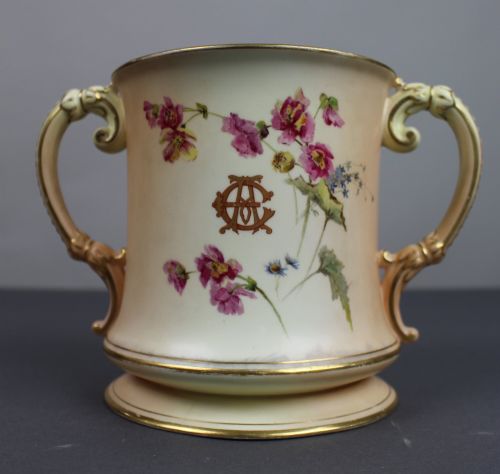
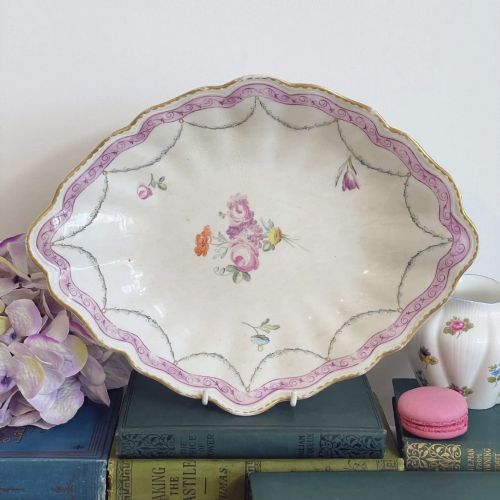
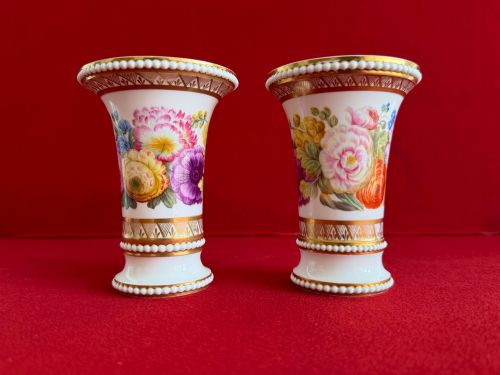
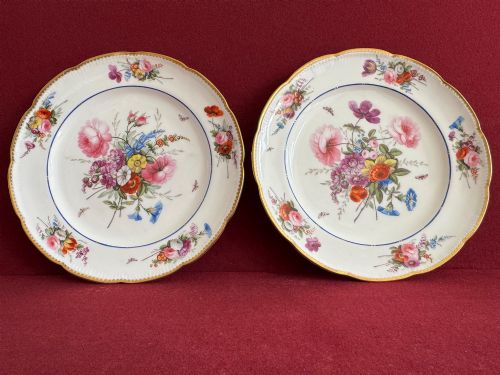
When you search for gilt floral porcelain, you are looking at ceramic vessels and tableware enriched with painted flower motifs and gold leaf or gilding. The pieces span periods from the eighteenth century through to the early twentieth century, taking forms such as vases, teacups, dessert services, and cabinet plates.
You are most likely to meet nineteenth century English and European examples on this page, particularly from the Regency and Victorian eras. Factories such as Worcester, Derby, and Spode dominate the material, alongside continental makers providing decorative wares painted with naturalistic garden flowers.
Materials and production methods
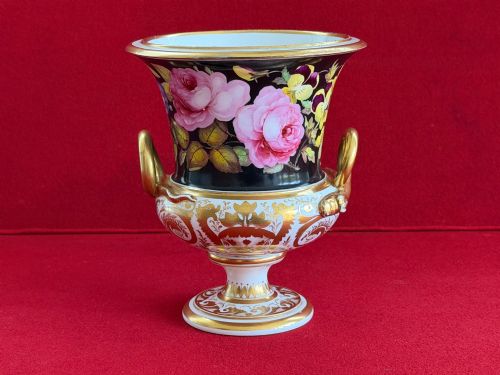
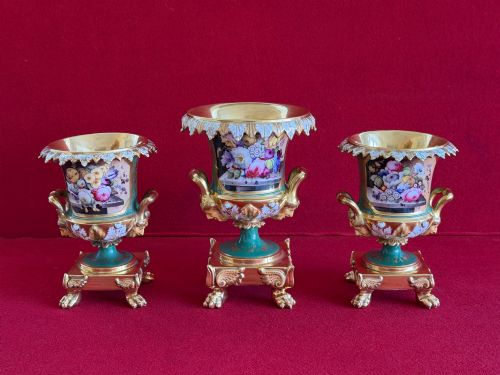
The foundation of these objects is hard or soft paste porcelain, bone china, or ceramic, often finished with a smooth white glaze. Potters shaped these bodies on the wheel or moulded them into campana vases, urns, teapots, and serving dishes before firing.
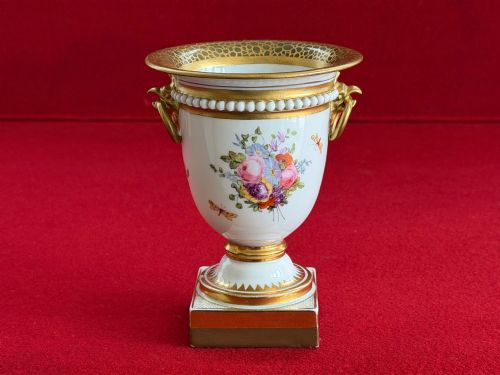
Decoration relied on skilled handpainting for the polychrome flower sprays, executed using enamel colours that were fixed in a kiln. Artisans then applied gold leaf or liquid gilding to rims, handles, and borders, sometimes tooling the metal after firing to catch the light.
Gilt Floral Porcelain Retail Price Guide 2026
Typical asking prices for gilt floral porcelain among the pieces listed under this phrase on Sellingantiques today, from the lower quarter to the upper quarter. They describe what is for sale here now, not the wider market.
One enthusiastic eighteenth century decorator signed his work with the nickname Quaker, proving even porcelain artists enjoyed a strong personal brand.
Assessing visual and technical standards
The standard of a piece rests heavily on the proficiency of the painting. Superior examples display botanical accuracy, delicate brushwork, and subtle shading by named or accomplished ceramic artists, whereas simpler items rely on repetitive stencilled or transfer-printed borders.
The application and preservation of the gilding also divide the ranges. Thick, burnished gold leaf that retains its bright lustre without rubbing marks indicates a higher grade of production from leading factories.
Flight Barr and Barr·Royal Worcester·Minton Porcelain·Spode Porcelain·Derby Porcelain·H and R Daniel
The Gilt Floral Porcelain Glossary
- Gilding
- The application of gold leaf or gold dust suspended in a medium to the surface of porcelain. It provides metallic enrichment to borders and handles.
- Bone china
- A type of soft paste porcelain containing bone ash, invented in England to create a strong, brilliantly white body suitable for fine teawares.
- Campana
- An inverted bell-shaped vessel with a flared rim and pedestal foot, commonly used for nineteenth century decorative vases.
- Garniture
- A matched set of three or more vases or urns designed to be displayed together on a mantelpiece or sideboard.
- Enamel
- Opaque glass-like colours fused to the surface of fired porcelain during a secondary kiln firing. These pigments carry the vibrant hues found in floral bouquets.
Gilt Floral Porcelain: Frequently Asked Questions
Can I use these teacups for daily dining?
Historic teacups and saucers are generally intended for display or occasional light use rather than robust everyday dining. The antique glazes and gold trim can wear down with frequent friction and washing.
Displaying them safely in a cabinet protects both the ceramic body and the delicate painted botanicals from accidental chips.
How do I distinguish Regency porcelain from later pieces?
Regency pieces often feature classical vase shapes like the campana or Warwick form, paired with bright white bodies and precise handpainted floral medallions. The gilding tends to be thick and hand-burnished rather than chemically shiny.
Later Victorian and Edwardian items frequently adopt heavier rococo revival scrolls, transfer-printed outlines filled with colour, or denser groupings of garden flowers.
What is the difference between a bough pot and a standard vase?
A bough pot is a specialised vessel designed specifically to hold cut flowering branches or greenery, usually featuring a pierced or removable cover. They were popular in Georgian and Regency drawing rooms for interior decoration.
Standard vases are built to hold upright flower arrangements without necessarily requiring a fitted pierced lid for stem separation.