

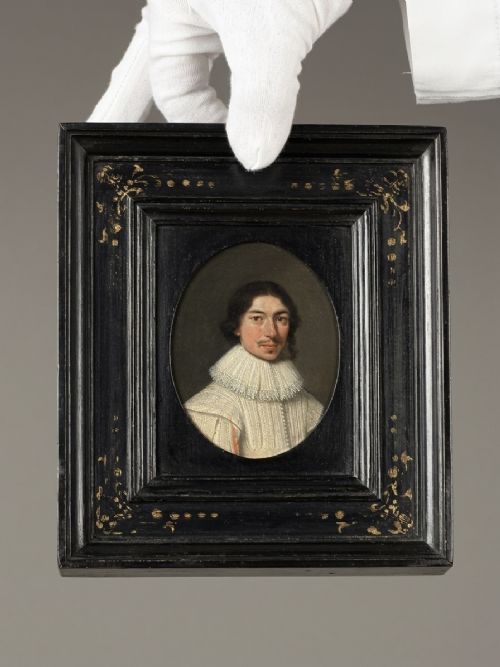
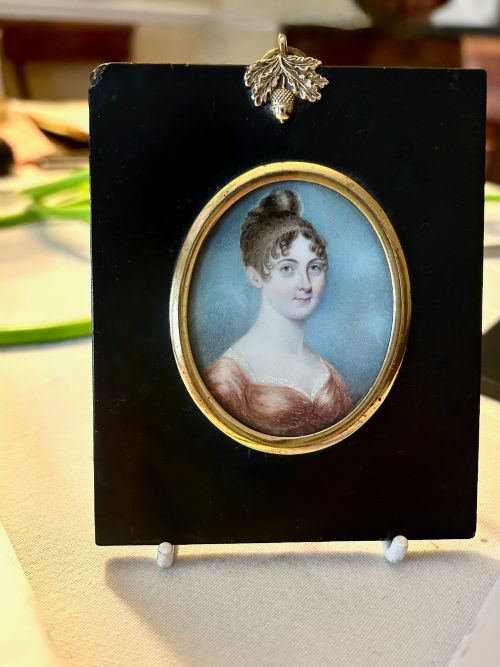
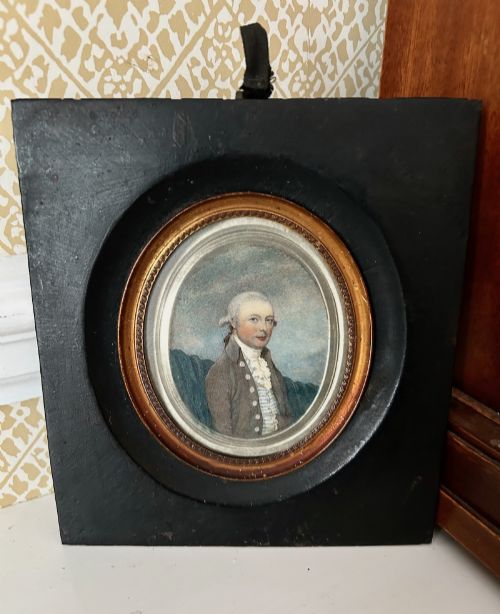
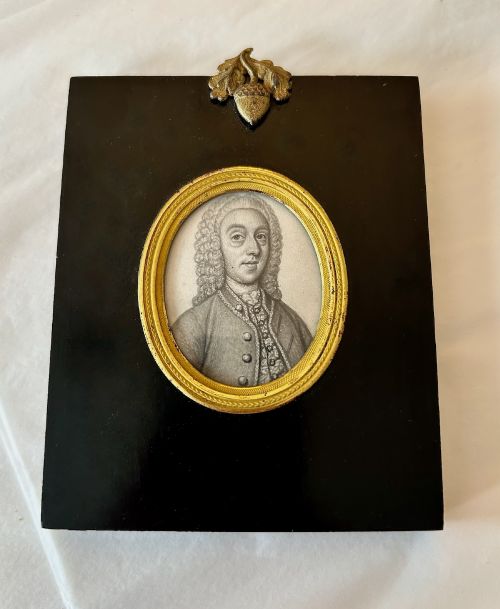
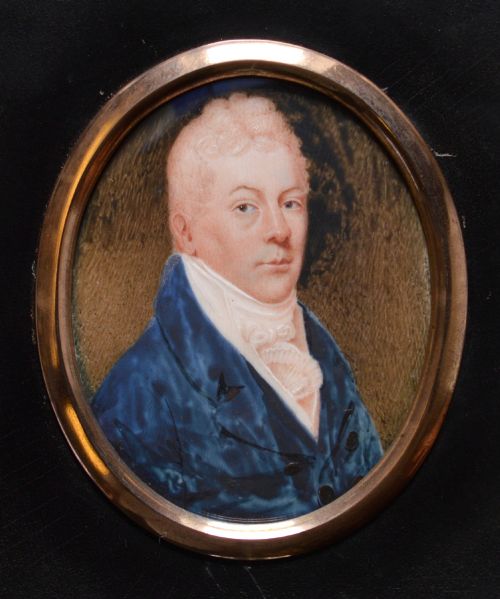
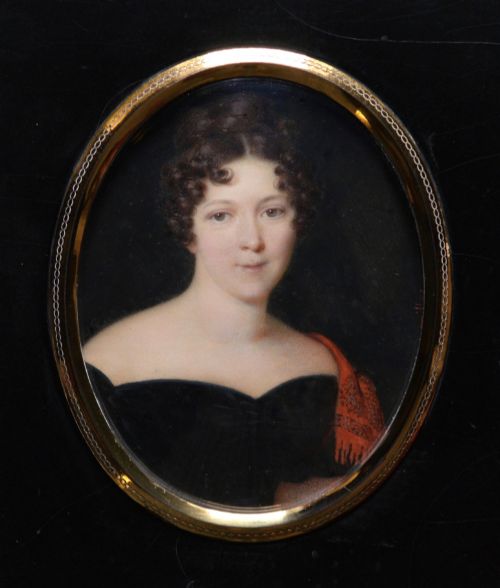
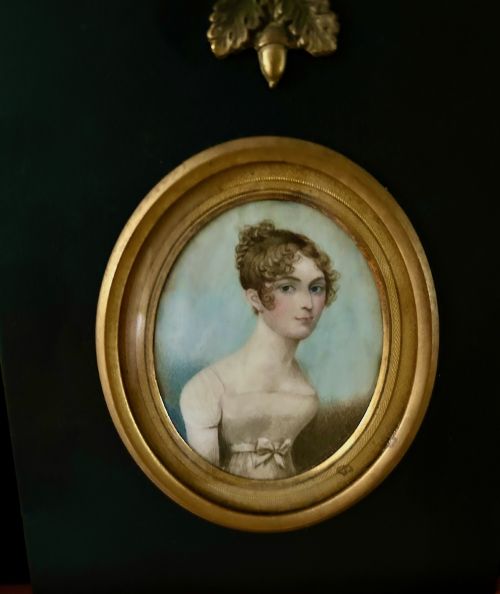
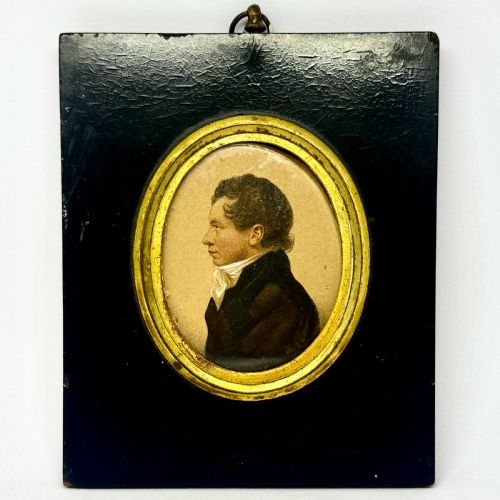
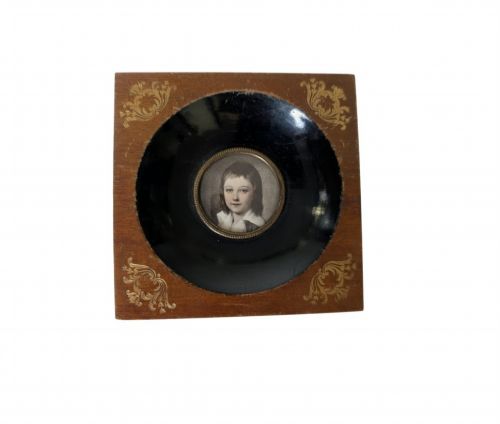


Gilt Ebonised Framed Miniature
A gilt ebonised framed miniature brings together dark timber, gleaming metal and delicate portraiture in a compact, domestic scale.
Gilt Ebonised Framed Miniature
When you search for a gilt ebonised framed miniature, you encounter small-scale artworks enclosed in contrasting dark wooden surrounds highlighted with metallic gilding. The listings present portrait miniatures, silhouettes and small paintings spanning from the seventeenth century through the Victorian era.
Most examples you meet on this page date from the Georgian, Regency and nineteenth-century periods. These works frequently depict individual subjects in watercolour, oil or silhouette format, preserved within their original or period-matching frames.
The form encompasses both painted likenesses on ivory, card and copper, alongside cut paper silhouettes. The combination of black wood and gilt sight edges creates a distinct visual boundary that directs the eye straight to the small image within.
Materials and construction
Makers utilised ebonised wood to create a dense, dark timber finish that mimics ebony, paired with gilt metal or gilt wood slips to frame the artwork. Paintings were executed in watercolour, oil on copper, or ink on paper and ivory.
Protective glass covers the face of the miniature, held within frames constructed during the seventeenth, eighteenth and nineteenth centuries. The combination of organic pigments, metallic leaf and turned wood reflects the prevailing craftsmanship of each specific period.
Gilt Ebonised Framed Miniature Retail Price Guide 2026
Typical asking prices for gilt ebonised framed miniature among the pieces listed under this phrase on Sellingantiques today, from the lower quarter to the upper quarter. They describe what is for sale here now, not the wider market.
A bearded gentleman glowers from a Regency silhouette, proving that even small wooden frames contained very serious historical opinions.
Distinguishing quality in frames and paintings
The relationship between the frame and the artwork determines the integrity of the piece. Superior examples retain their original matching gilt mounts and glass, where the gilding retains its warm lustre against the deep black timber.
James Ferguson·Frederick Buck·Archibald Skirving·Miers·Jeremiah Steele·N Millett·Bartolozzi
The Gilt Ebonised Framed Miniature Glossary
- Ebonised wood
- Timber treated to resemble ebony through staining or painting. This dark finish provides a stark, formal contrast to the gilt elements.
- Portrait miniature
- A small-scale painting executed with fine detail. These works were often kept as personal tokens or worn as jewellery.
- Silhouette
- A portrait depicted as a solid shape, usually black profile cut from paper or painted. John Miers was a notable exponent of this medium.
- Gilt slip
- A narrow interior frame liner covered in gold leaf or gilt metal. It sits between the ebonised frame and the artwork to reflect light onto the image.
Gilt Ebonised Framed Miniature: Frequently Asked Questions
How were these miniatures displayed originally?
These small artworks were hung closely together on parlour walls in arrangements known as picture galleries, or kept on desks and tabletops for private viewing. Their compact dimensions allowed owners to curate intimate displays in smaller rooms.
The dark ebonised frames ensured the pieces stood out against patterned wallpapers of the Georgian and Victorian periods, while the gilt sight edges caught the flickering light of candles and oil lamps.
Can I tell the period from the frame style?
Frames offer strong clues to date a piece, as moulding profiles and gilding techniques shifted from the seventeenth century through to the Victorian era. Seventeenth-century examples often display heavier, deeper profiles, while Regency frames favour cleaner, slimmer sight lines.
However, frames were frequently updated or swapped over centuries, meaning a Regency watercolour might reside in a later Victorian housing. Examining both the backing materials and the construction of the frame helps confirm its age relative to the artwork.
What is the difference between a painting and a silhouette?
Miniature paintings utilise pigments such as watercolour or oil to render likenesses with realistic detail, flesh tones and clothing textures. Silhouettes rely purely on outline and shadow, typically created by cutting black paper or painting a solid dark profile.
Both forms served as personal likenesses before the widespread adoption of photography, yet they required entirely different skills from the artist working at such a reduced scale.
Why are some painted on ivory and others on paper?
The choice of ground depended on the period and the artist's preferred medium. Ivory provided a luminous, translucent surface that gave painted skin tones a natural glow, particularly popular during the Georgian and Regency eras.
Paper, card and copper were also utilised depending on availability and technique. Oil paintings often appeared on copper sheets, whereas watercolours found a stable base on prepared card or paper.