




Gilt Decorated Vases
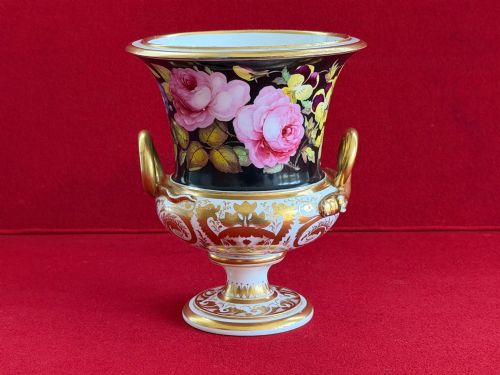
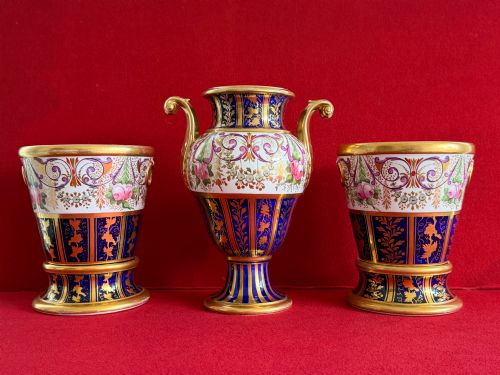
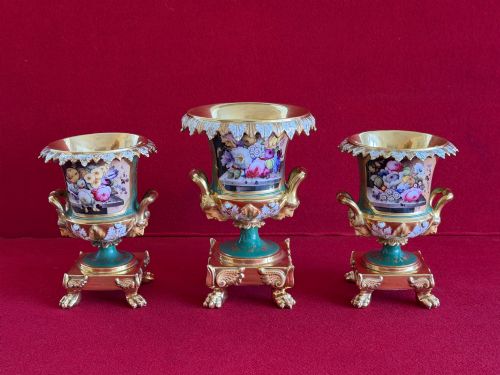
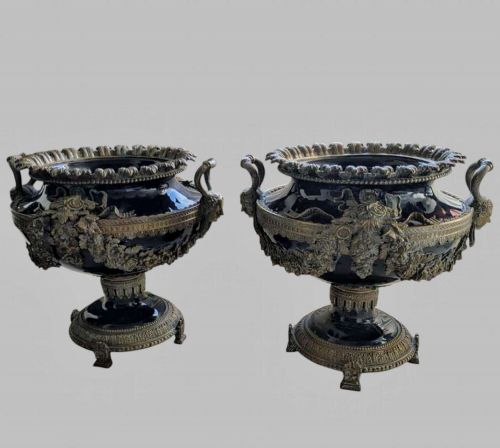
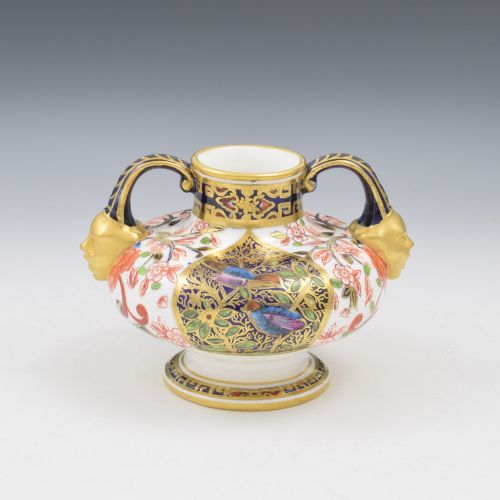
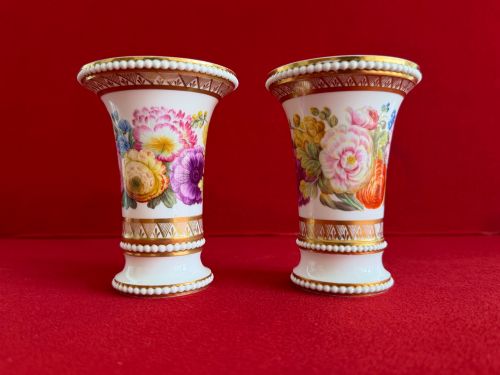
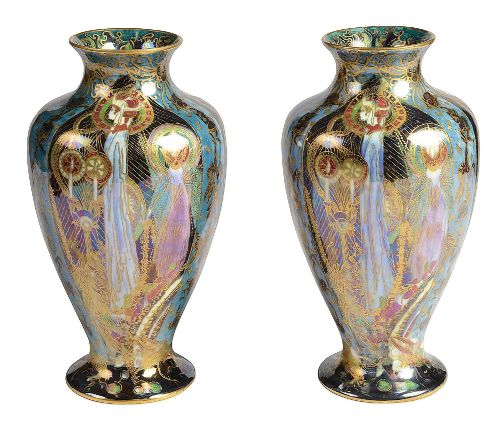
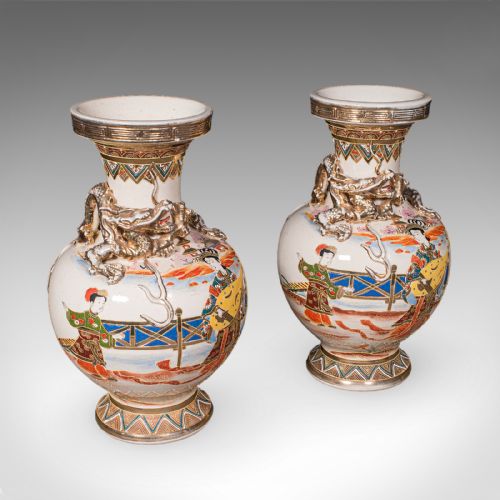
These gilt decorated vases bring together hand-painted surfaces and rich metallic leaf from the Georgian era through to the 1930s.
Gilt Decorated Vases
When you search for gilt decorated vases, you encounter a diverse range of ornamental vessels spanning porcelain, earthenware, glass, and ceramic forms. These pieces include garnitures, spill vases, jardinieres, ewers, and lidded urns created across the nineteenth and early twentieth centuries.
The selection on this page relies heavily on English porcelain factories alongside Japanese Satsuma wares and continental European ceramics. Victorian and Regency periods dominate the offerings, showing both classical revival styles and intricate hand-painted nature studies.
How They Were Made
Makers applied gold leaf and gilding by hand over fired porcelain, earthenware, and glass bodies, frequently combining these metallic highlights with enamel paint. Skilled artists used raised paste techniques, known as moriage on Japanese pieces, to give three-dimensional texture beneath the gold.
Engraved glass vases received surface cutting before application of gilding, while ironstone and ceramic bodies relied on hand-painted enamel patterns often set against cobalt grounds or floral motifs.
Gilt Decorated Vases Retail Price Guide 2026
Typical asking prices for gilt decorated vases among the pieces listed under this phrase on Sellingantiques today, from the lower quarter to the upper quarter. They describe what is for sale here now, not the wider market.
Listings feature porcelain, glass, and earthenware items spanning the Georgian, Victorian, and 1920 eras.
What Varies in Quality
The standard of a piece rests on the precision of the hand-painting and the integrity of the gold leaf or gilding. Works signed by named decorators or produced by premier kilns display superior brushwork and finer detail in enamel and metal application.
Overall balance of form, complexity of pattern such as multi-figure court scenes or detailed animal studies, and the preservation of the delicate gilt surfaces set finer examples apart from standard production.
Derby Porcelain·Spode Porcelain·Minton Porcelain·Royal Crown Derby·Wedgwood·Flight Barr and Barr·Royal Worcester·Kinkozan·Doulton·Ernst Wahliss·Samson of Paris·Vienna Porcelain·Dresden Porcelain·Mason’s Ironstone
The Gilt Decorated Vases Glossary
- Garniture
- A set of three or more matching vases or urns designed to be displayed together on a mantelpiece or sideboard.
- Spill Vases
- Small tubular vessels traditionally held on mantelpieces to contain wooden tapers used for lighting fires and candles.
- Moriage
- A Japanese ceramic technique using piped clay slips to create raised decorative patterns beneath glazes and gilding.
- Peachblow
- A nineteenth-century art glass technique producing a shaded pink-to-red finish, often finished with gilt details.
Gilt Decorated Vases: Frequently Asked Questions
Were these vases meant for flowers?
Many forms like spill vases and jardinieres served practical functions for holding tapers or plants during the Victorian and Regency periods.
Larger garniture urns and decorative vases remained purely ornamental display pieces intended to showcase wealth and artistic taste.
How do I date a Japanese Satsuma vase?
Examine the base for artist signatures, workshop chops, or registration marks that correspond to the Meiji period and late nineteenth century.
Notice the style of the moriage work and the tone of the cobalt ground, which shifted from dense crackle glazes toward finer painted details by 1900.
What is the difference between a ewer and a vase?
Ewers are traditional pitcher forms featuring a formal spout and a single handle, originating from vessels used for pouring liquids.
Vases are symmetrical containers designed strictly for display or holding stems without spouts or pouring lips.