
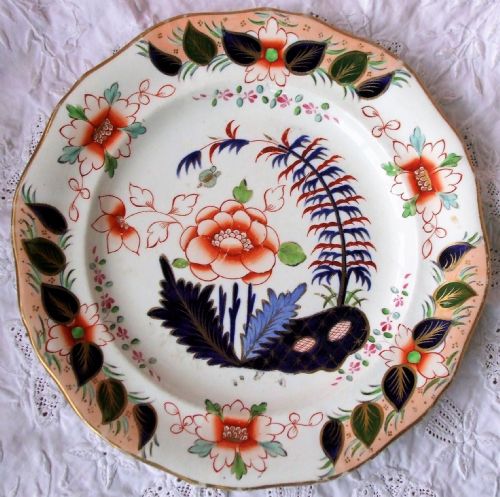
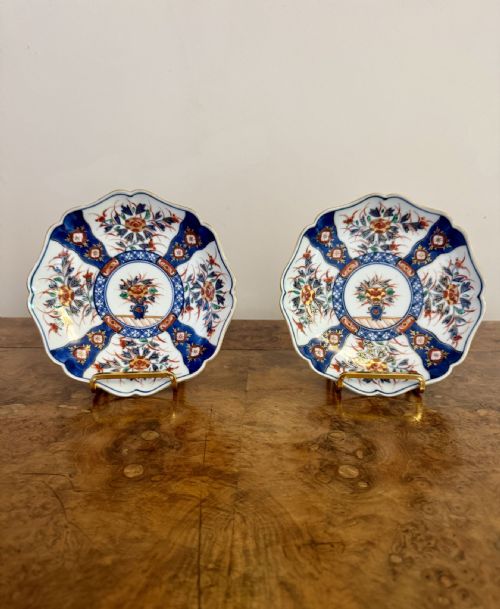
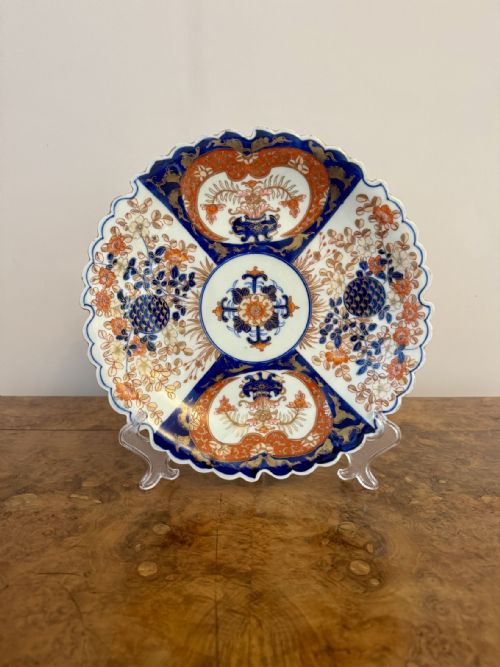
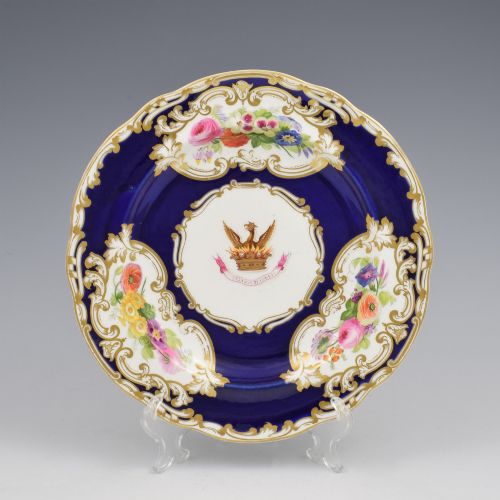


Gilt Cobalt Porcelain Chargers
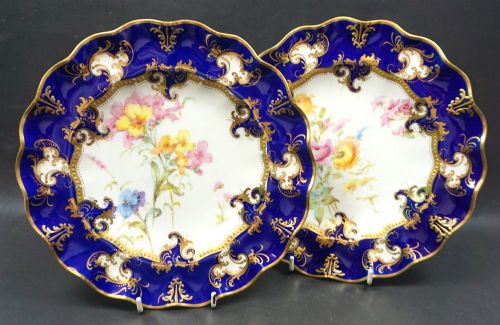
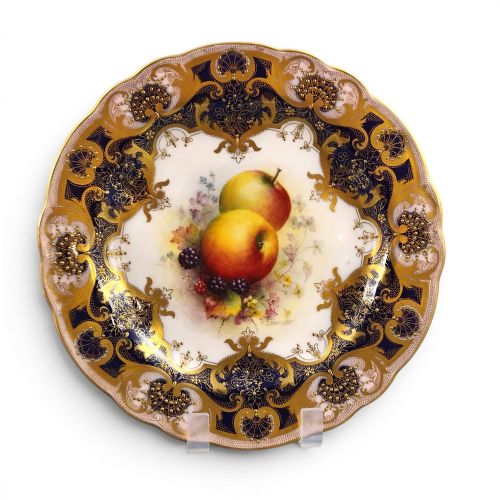
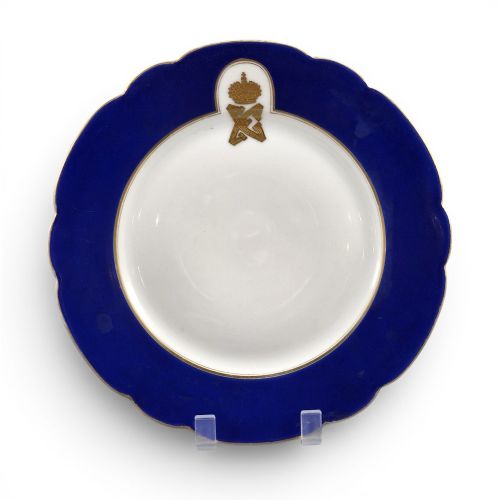
These gilt cobalt porcelain chargers bring rich blue grounds and bright gold leaf together on large ceramic surfaces.
Gilt Cobalt Porcelain Chargers
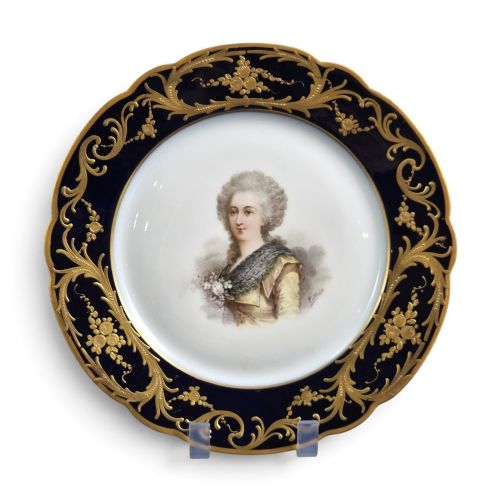
Gilt cobalt porcelain chargers are large decorative plates and display vessels defined by deep blue glazes and applied gold leaf or gilding. Buyers hunting for these pieces encounter diverse forms ranging from traditional Japanese Imari patterns to European cabinet plates and nineteenth-century French and Austrian portrait designs.
The selection on this page spans from eighteenth-century origins through Victorian and Edwardian periods into the twentieth century, including styles such as Neoclassical, Louis XVI Revival, and Art Deco. Forms appear as wide wall chargers, cabinet plates, decorative bowls, and large platters intended primarily for display rather than dining.
Origin points diverge sharply between Asian export traditions, notably Japanese Imari production, and European factories like Sèvres, Royal Vienna, Meissen, and Royal Crown Derby. Each regional tradition applies the characteristic cobalt and gold palette according to distinct local aesthetics and firing techniques.
Materials and Techniques
Makers formed these chargers from hard-paste porcelain, bone china, or ironstone, shaping them into broad plates, shallow bowls, and deep chargers. Cobalt glaze was applied beneath or over the glaze to produce the characteristic deep blue ground before high-temperature firing.
Gold leaf and liquid gilding were hand-painted onto the fired ceramic surface, often over raised enamel details, then subjected to a secondary lower-temperature kiln firing to bond the metal. Many European examples incorporate finely detailed hand-painted portraits or mythological scenes framed by these gilded borders.
The inventory combines European cabinet plates from Sèvres and Vienna with Japanese Imari bowls and chargers.
Distinctions in Quality
Quality rests primarily on the crispness and complexity of the hand-painting, particularly in portraiture, armorial crests, and intricate gilding work. Pieces featuring signed artisan miniatures or detailed historical scenes executed by named painters sit at the upper end of the spectrum, contrasting with repetitive stencilled patterns.
The depth and uniformity of the cobalt glaze also dictate value, alongside the purity of the porcelain body and the weight of the applied gold leaf. Well-preserved gilding with minimal rubbing demonstrates careful handling over centuries, while heavier, finely potted bodies with balanced rims command greater attention from collectors.
Royal Crown Derby·Royal Worcester·John Davenport of Longport·Pucher Deroche·Meissen porcelain
The Gilt Cobalt Porcelain Chargers Glossary
- Cobalt Glaze
- A metallic oxide pigment applied to ceramics to produce a rich, stable blue colour under high heat. This mineral withstands extreme kiln temperatures without losing its depth.
- Gilding
- The application of gold leaf or powdered gold to the surface of porcelain or ceramic bodies. It provides the bright metallic contrast framing the cobalt ground.
- Cabinet Plate
- A decorative plate intended for display in a cabinet or mounted on a wall rather than for practical table use. These pieces often feature elaborate painted scenes.
- Imari
- A traditional Japanese ceramic style exported widely, characterised by underglaze cobalt blue, iron red, and abundant gold accents. European factories frequently copied these distinct palettes.
- Armorial
- A ceramic design bearing a family crest, coat of arms, or heraldic insignia. Commissioned specifically for prominent households, these pieces hold distinct genealogical interest.
Gilt Cobalt Porcelain Chargers: Frequently Asked Questions
What is a charger plate?
A charger plate is a large decorative base plate or wall dish that exceeds standard dining plate dimensions. They serve primarily as visual centerpieces or ornamental wall hangings rather than functional tableware.
Because of their generous surface area, makers utilised them to display elaborate painted scenes, intricate gilding, and deep cobalt glazes.
How do I hang a wall charger safely?
Hanging a heavy porcelain charger requires a specialised spring-loaded plate hanger or a custom-fitted bracket designed to distribute weight evenly across the rim. Avoid wire methods that pinch the edges.
Ensure the wall fixing is anchored securely into plasterboard studs or brickwork to support the considerable weight of nineteenth-century ceramics.
Can I use these chargers for food?
Antique chargers featuring exposed gold leaf and hand-painted enamel are strictly intended for decorative display. Utensils and washing will quickly wear away the delicate overglaze gilding.
Historic glazes and gold applications from the eighteenth and nineteenth centuries are not rated for modern culinary hygiene standards or dishwasher use.