
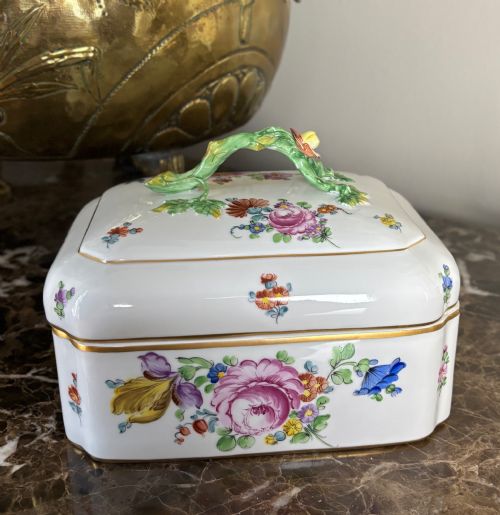
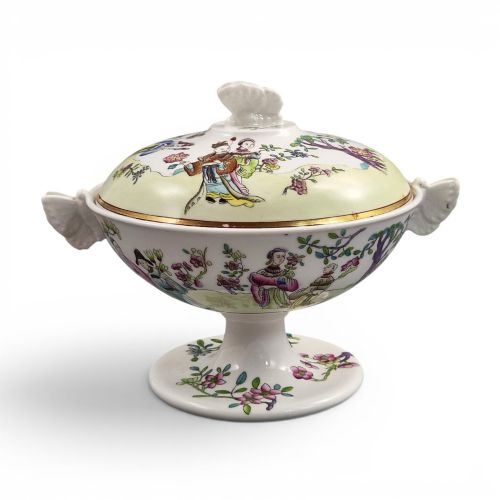
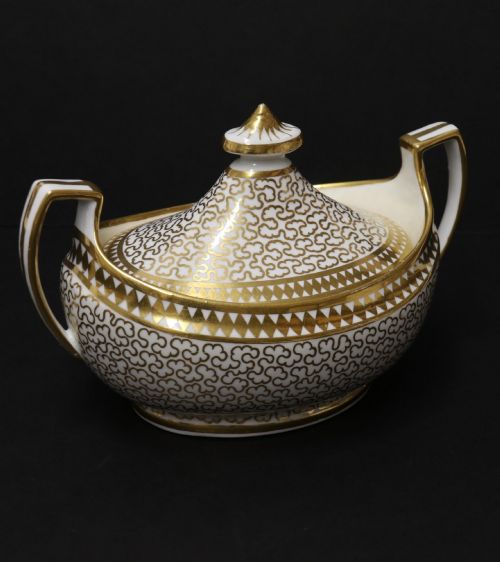


Gilt Ceramic Sugar Bowl
These gilt ceramic sugar bowl pieces bring together bright gilding and fine porcelain forms from the Georgian to the twentieth century.
Gilt Ceramic Sugar Bowl
A gilt ceramic sugar bowl serves as a container for sugar at the tea table, often taking the form of a covered sucrier, a sugar box, or a pedestal bowl. When you search for a gilt ceramic sugar bowl, you encounter tablewares designed to hold refined sugar during formal tea service across several centuries.
The pieces on this page span the Georgian, Regency, Victorian, and later nineteenth and twentieth centuries, originating from English factories such as Spode, Worcester, and Royal Worcester, alongside continental porcelain from Paris, Limoges, Meissen, and Dresden, as well as Japanese Satsuma.
Most examples arrive as standalone covered vessels like sucriers, though some form part of larger tea services, coffee sets, or tea sets. They combine ceramic bodies with gold leaf, gilding, and enamel work in styles ranging from Regency and Rococo Revival to Victorian Imari and Belle Epoque.
How they were made
Potters shaped these vessels using bone china, hard-paste porcelain, felspar porcelain, and standard porcelain before applying glazes and firing the ceramic bodies in kilns. Artisans then added painted decoration, such as the Imari palette or botanical motifs, alongside enamel highlights.
The signature gold elements utilise gold leaf and applied gilding, brushed onto the surface and fired to bond with the glaze. Skilled hands often painted intricate gilt details by brush, complementing moulded handles, pedestal bases, and butterfly motifs.
Some nineteenth-century sugar bowls feature delicate butterfly handles that make it appear as though insects have just landed on the rim.
What varies in quality
Quality rests in the crispness of the porcelain moulding and the precision of the hand-painted enamel and gilt decoration. Superior pieces display finely detailed brushwork, well-defined handles, and secure covers that fit their bodies without wobble.
The depth and purity of the gilding itself set finer examples apart from simpler production. Maker attribution, such as factory marks from Worcester, Spode, or Meissen, also elevates the standing of an individual piece.
Spode·Chamberlains Worcester·Royal Crown Derby·Royal Davenport·Ahrenfeldt and Asalvary·Shozan Kyoto Studio·Royal Worcester·Meissen·Barr Flight and Barr·Coalport
The Gilt Ceramic Sugar Bowl Glossary
- Sucrier
- A covered vessel designed specifically to hold sugar for tea service. This term often appears in historical records and maker descriptions for eighteenth and nineteenth-century bowls.
- Hard-paste porcelain
- A durable ceramic composition made from kaolin and petuntse fired at high temperatures. It provides a bright, hard base for the enamels and gold leaf applied to these vessels.
- Imari
- A decorative style featuring rich underglaze blue, iron red, and gilt details. It originated in Japan and heavily influenced nineteenth-century European factories.
- Gilding
- The application of gold leaf or powdered gold to the surface of ceramics. It defines the metallic highlights seen across these bowls and sugar boxes.
- Bonbonniere
- A small decorative box or container used for sweets. These pieces share similar forms and manufacturing techniques with covered sugar bowls.
Gilt Ceramic Sugar Bowl: Frequently Asked Questions
How do I date a gilt ceramic sugar bowl?
Dating relies on maker marks, factory ciphers, and stylistic markers such as Regency neoclassical shapes or Victorian revival ornamentation. The paste type, whether bone china or hard-paste porcelain, also points toward specific manufacturing eras.
Changes in gilding techniques and colour palettes help narrow the decade of production when factory stamps are absent or worn.
Were these bowls used only for sugar?
While primarily made to hold loose sugar during formal tea service, many covered vessels functioned as sweetmeat boxes or bonbonnieres. Their lidded designs kept contents clean between uses on the parlor table.
Over time, collectors repurposed surviving sugar bowls and boxes as decorative centrepiece items or trinket storage.
How should I clean a gilt porcelain bowl?
Clean these pieces gently using warm water and a mild detergent with a soft cloth. Avoid abrasive sponges, harsh chemical cleaners, or ultrasonic baths that can damage fragile enamel paints and wear away historical gilding.
Hand drying with a lint-free towel prevents water spots from forming on the gold leaf and glazed ceramic surfaces.
What is the difference between a sucrier and a sugar bowl?
A sucrier is simply the traditional French term for a sugar bowl, often featuring a matching lid and handled body. English and continental makers used both terms interchangeably in historical catalogues.
In practical terms, both forms served the exact same function on the nineteenth-century tea table.