




Meiji Studio Glazed Pottery
These pieces of meiji studio glazed pottery bring unmistakable character and expressive modelling to any room.
Meiji Studio Glazed Pottery
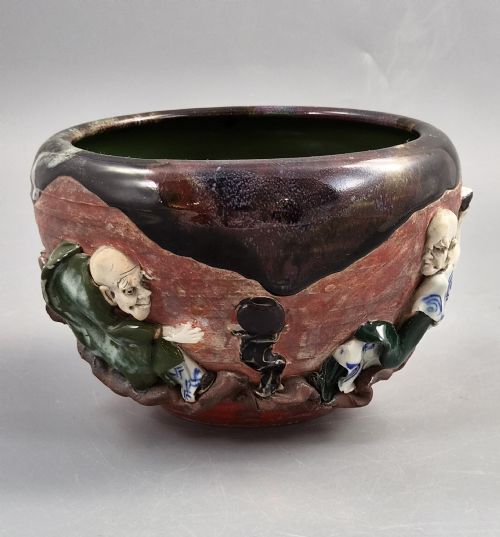
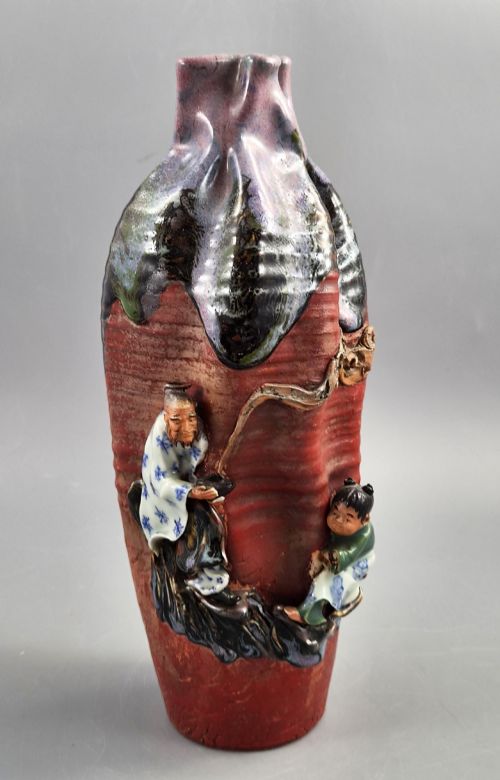
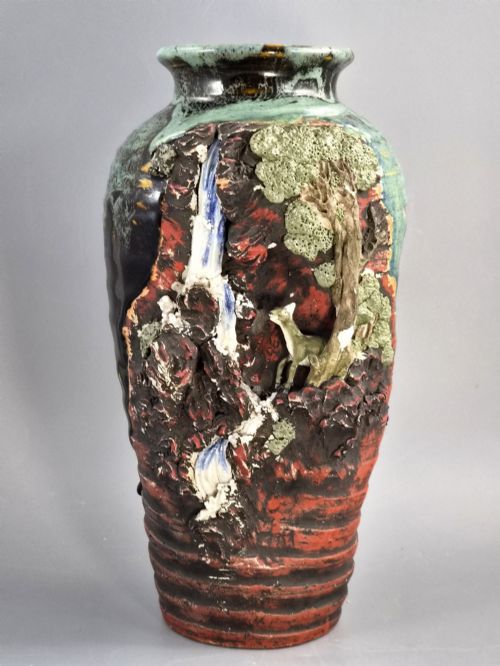
When you search for meiji studio glazed pottery, you encounter vibrant vessels and sculptural forms originating from late nineteenth and early twentieth century Japan. These works range from finely detailed Satsuma vases to highly textured Sumida Gawa creations decorated with figures in relief.
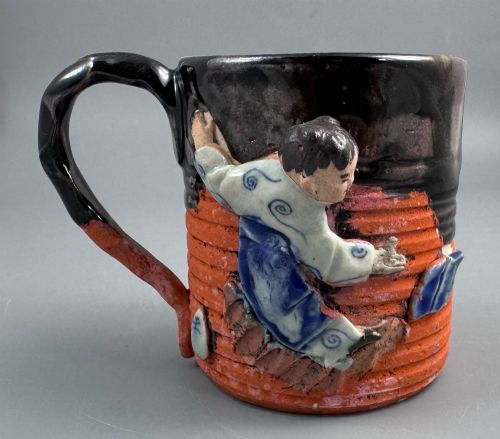
The objects available on this page include vases, decorative bowls, cups and saucers, mugs, and brush washers. Many pieces bridge the Meiji and Taisho periods, showcasing the diverse output of Japanese studios during an era of great artistic exchange.
How they were made
Potters shaped these works using earthenware, stoneware, and terracotta, applying rich glazes, enamels, and occasional touches of gold leaf to the surfaces. The results display a deep understanding of ceramic chemistry, from smooth monochromes to mottled flambé effects.
Many Sumida Gawa pieces incorporate hand-modelled figures applied directly to the body of the vessel, often depicting sages, karako, and climbing characters. These sculptural additions are integrated seamlessly into the wet clay before firing and glazing.
Several vases feature small figures seemingly attempting to escape the ceramic body by climbing over the rim.
What varies in quality
Quality in these ceramics rests upon the crispness of the modelling and the control of the glaze during firing. Pieces carrying clear signatures from renowned makers demonstrate superior handling of both form and surface decoration.
The finesse of the applied figures and the complexity of the landscape or figural scenes distinguish exceptional studio outputs from standard commercial wares. Successful integration of glaze and relief work creates a cohesive object with lasting visual impact.
Inoue Ryōsai·Ban-ni·Kōko·Ishiguro Kōko·Makuzu Kozan·Makuzu Kozan II·Kinkozan·Shozan
The Meiji Studio Glazed Pottery Glossary
- Sumida Gawa
- A style of Japanese pottery originating from the banks of the Sumida River in Tokyo, known for thick, dripping glazes and applied figural relief. These pieces often present a distinctively tactile surface.
- Satsuma
- A type of Japanese earthenware featuring a fine ivory-coloured craquelure glaze, frequently decorated with intricate enamels and gilding. Kyoto studios were particularly famous for producing refined examples.
- Flambé
- A streaked or mottled high-fired glaze achieved through unpredictable chemical reactions in the kiln. This technique creates dramatic transitions of colour across the ceramic body.
- Karako
- A traditional decorative motif depicting Chinese children at play, often shown with shaved heads and robes. They frequently appear in relief on Sumida Gawa vessels.
- Suiban
- A shallow ceramic basin used for displaying stones or arranging plants in water. These vessels require stable construction and balanced form to hold water safely.
Meiji Studio Glazed Pottery: Frequently Asked Questions
What is Sumida Gawa pottery?
Sumida Gawa pottery is a distinct type of Japanese ceramic featuring heavy, dripping glazes and expressive figures modelled in high relief. These pieces originated near Tokyo and often depict traditional sages or children.
The style is instantly recognisable for its rough, tactile body and imaginative sculptural elements that climb across the surface of vases and mugs.
How do I care for meiji studio ceramics?
These ceramic pieces require gentle dusting with a soft, dry cloth to protect the applied relief figures and delicate enamels. Avoid using water or cleaning solutions, particularly on earthenware and unglazed areas.
Display the items away from direct sunlight and areas prone to sudden temperature changes to preserve the integrity of the glaze and gold leaf.
How do I identify a Satsuma vase?
Satsuma wares are generally identified by their characteristic ivory-coloured earthenware body covered in a fine network of crackled glaze. They are frequently decorated with detailed polychrome enamels and raised gold work.
Many pieces carry artist signatures or studio marks on the base, pointing to specific production centres in Kyoto and other regions.
Are these pieces signed by makers?
Many of the listed works bear signatures, either incised into the clay, stamped, or painted in enamel on the base or body. Signatures can attribute pieces to notable workshops and individual ceramicists.
Not all authentic pieces carry signatures, as some studio output was exported or produced without formal marks.