

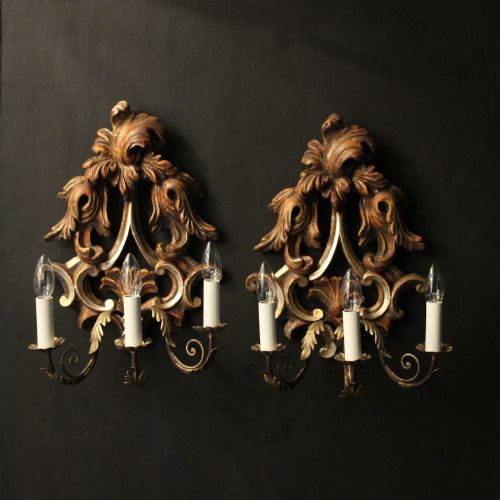


Gilt Carved Appliques
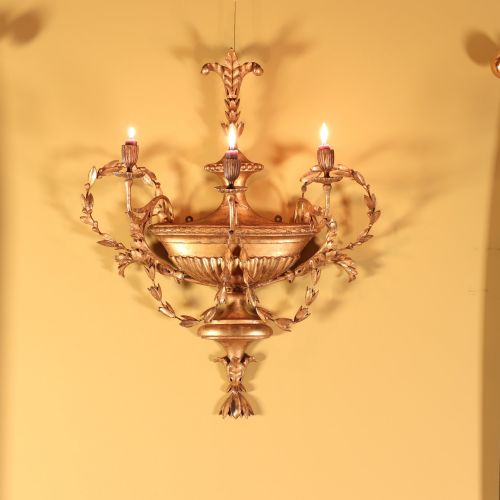
Gilt carved appliques bring metallic warmth and sculptural relief to interiors through antique wall lights, sconces, and architectural fragments.
Gilt Carved Appliques
When you search for gilt carved appliques, you encounter decorative wall fittings designed to illuminate and ornament interior spaces with carved detail and metallic finishes. The pieces appearing here span from the 17th century through the 19th century and into the 1920s and 1930s, reflecting classical European craftsmanship.
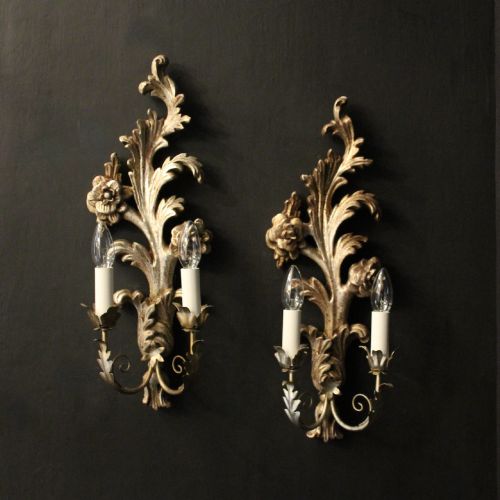
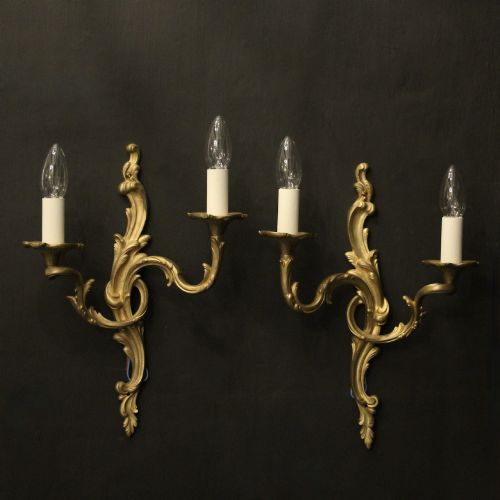
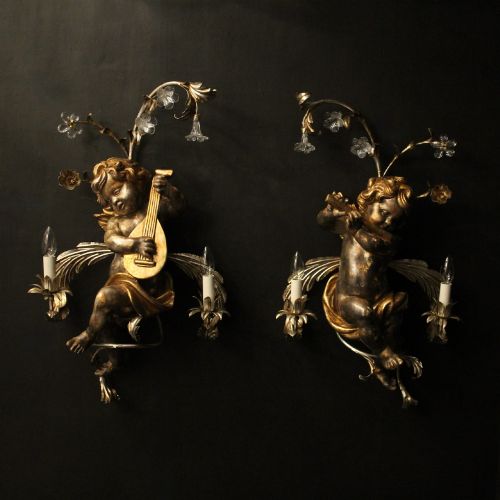
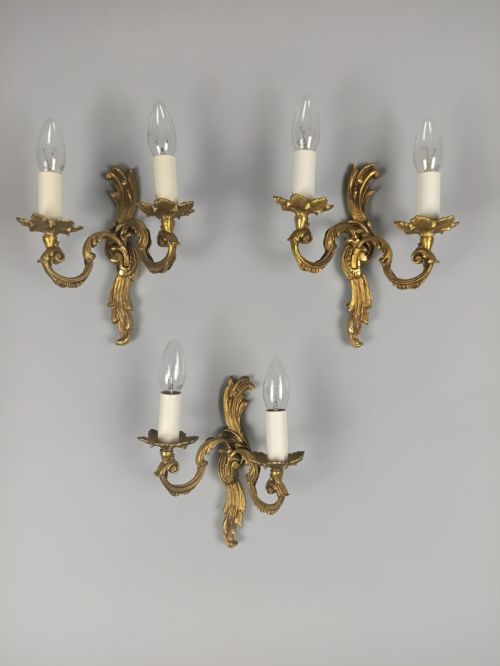
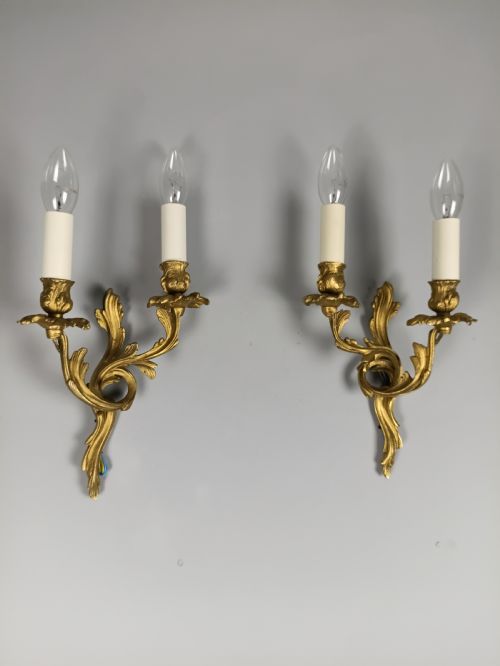
You are most likely to meet pairs and sets of wall lights and sconces originating from French and Italian workshops. These items frequently take the form of twin-arm, triple-arm, or single-arm lighting fixtures shaped in Florentine, Rococo, Baroque, and Neoclassical styles.
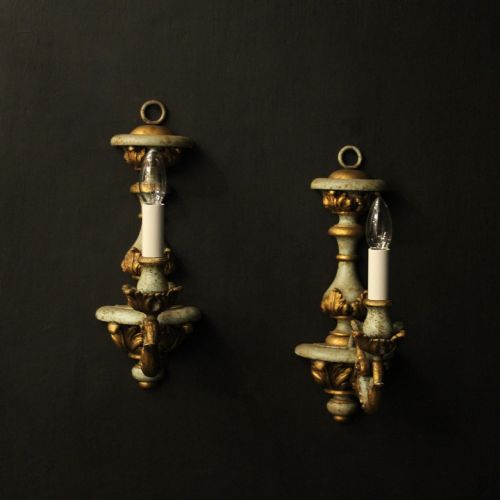
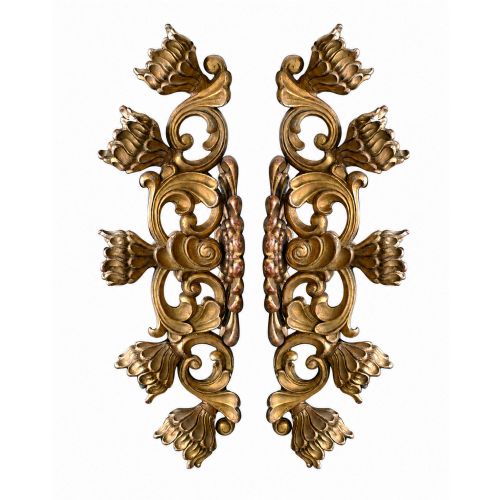
The selection includes architectural fragments and wall brackets alongside functional candelabra and wall lights. Materials range from carved wood and gesso to giltwood, bronze, brass, and metal, sometimes accented with polychrome or ebonised details.
How gilt carved appliques were made
The construction of these pieces relies on the union of solid timber bases or cast metals with applied metallic finishes. Artisans hand-carved woods into scrolls, cherubs, ribbons, and floral motifs, creating high-relief surface depth before applying surface treatments.
Finishing techniques involved applying layers of gesso to carved wooden frames prior to gilding with gold leaf or silver gilt. Metal components utilised casting methods in brass, bronze, and ormolu to achieve intricate scrollwork and structural armatures for candles and bulbs.
Listings feature periods spanning from the 17th century through the 19th century up to the 1930s, rendered in giltwood, brass, bronze, and gesso.
What varies in quality
Depth of carving and sharpness of detail separate standard production from superior examples. Hand-carved wooden appliques with crisp undercut foliage and well-defined figural elements display a higher level of artisanal skill than mass-produced or lightly incised items.
The integrity of the surface finish dictates visual success. Items retaining original gold leaf, gesso layering, or untouched patinated gilt bronze possess greater authenticity than later repainted or heavily restored surfaces.
The Gilt Carved Appliques Glossary
- Applique
- A decorative wall-mounted fixture or architectural ornament applied to a vertical surface. In lighting contexts, this refers to wall lights and sconces.
- Giltwood
- Timber that has been coated with gold leaf or powder over a prepared gesso ground. This technique provides a luminous metallic surface on carved wooden forms.
- Gesso
- A plaster mixture applied to wood surfaces as a smooth base for gilding and painting. It allows craftsmen to crisp up fine details before applying gold leaf.
- Ormolu
- Finely chased and gilt bronze popular in French decorative arts. The technique creates a rich golden finish on cast metal mounts.
- Polychrome
- Decoration executed in multiple colours on wood, metal, or gesso. This treatment frequently combines metallic leaf with painted floral or fruit details.
Gilt Carved Appliques: Frequently Asked Questions
How do I install antique wall lights?
These pieces require professional electrical mounting when converting historical candle fittings to modern wiring. Electricians secure the brass or wooden backplates directly to wall studs or junction boxes.
Careful positioning ensures the weight of carved wooden or bronze arms is adequately supported by wall anchors. Wiring must be integrated discreetly behind the architectural bracket.
What is the difference between a sconce and a wall light?
Historically, sconces and wall lights both function to hold candles or light sources against vertical surfaces. The terms frequently overlap in antique descriptions.
Appliques and wall brackets often emphasise decorative woodcarving or metal casting as much as lighting utility. Both types serve to illuminate and punctuate wall expanses.
How should I clean antique giltwood?
Dusting requires a soft, dry ostrich feather brush or a clean microfibre cloth used with gentle strokes. Moisture damages delicate water-gilt surfaces and historical gesso.
Avoid chemical cleaning products, polishes, or abrasive cloths entirely. Professional conservators should address any flaking leaf or structural instability.
How do I date an antique wall sconce?
Dating relies on examining the joinery, tool marks on the carved wood, and the composition of the metal components. 17th and 18th-century pieces show hand-cut joinery and heavy gesso application.
Later 19th-century and 1920s revival pieces often incorporate machine-cast brass, standardised screw threads, or distinct regional styles like Florentine silver giltwood.