





Gilt Bronze Mantelpiece Clock
A gilt bronze mantelpiece clock brings a distinct architectural presence to a room, combining heavy metal casting with functional timekeeping.
Gilt Bronze Mantelpiece Clock
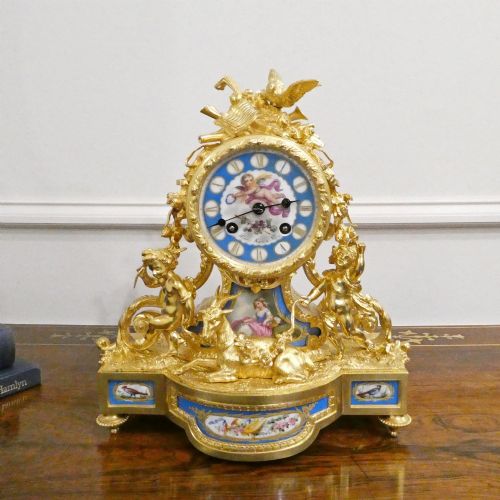
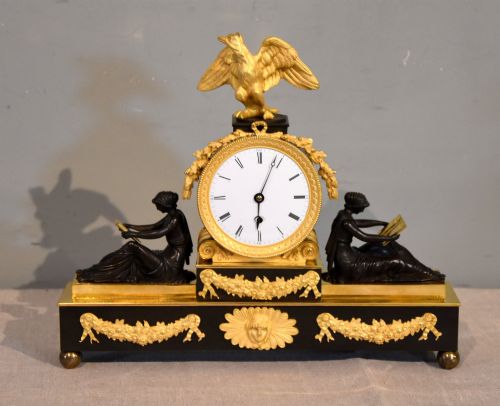
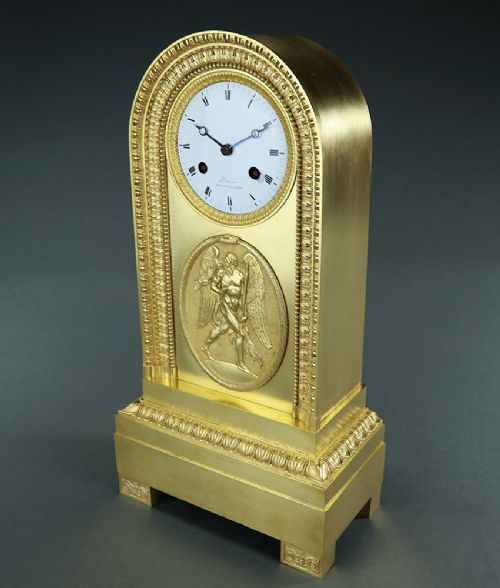
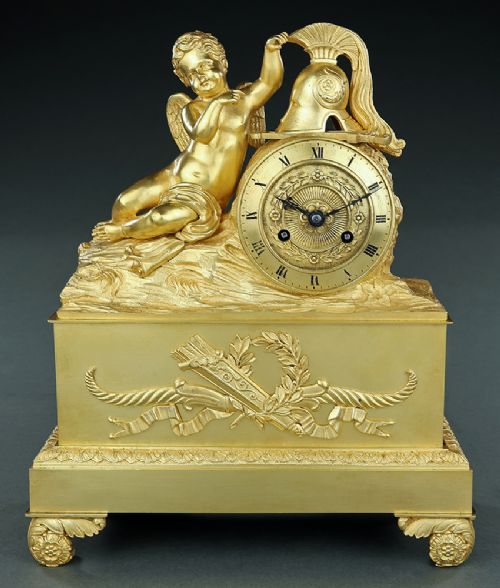
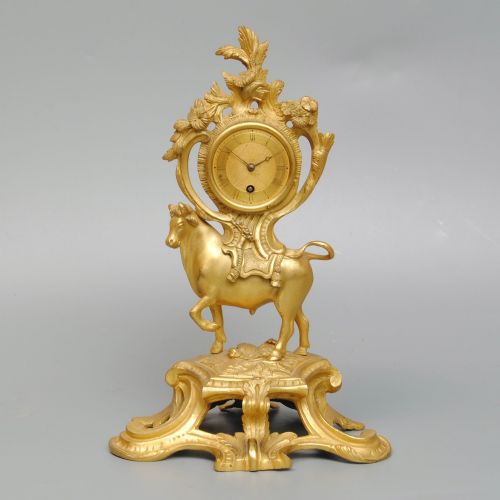
A gilt bronze mantelpiece clock is an ornamental timekeeper designed to sit on a fireplace shelf or side table. These pieces emerge predominantly from nineteenth century France, taking forms that range from simple drum head shapes to elaborate figural compositions.
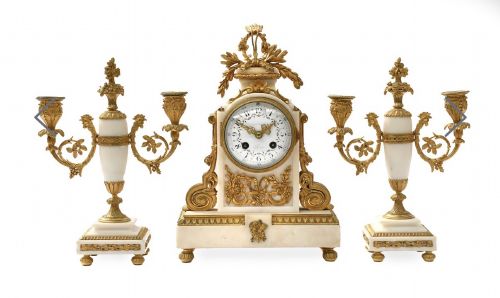
Buyers will encounter single mantel clocks alongside matching clock garniture sets that include side candelabras. The stylistic vocabulary draws heavily on French Empire, Louis XVI Revival, and Rococo Revival aesthetics, often incorporating classical motifs or asymmetrical scrollwork.
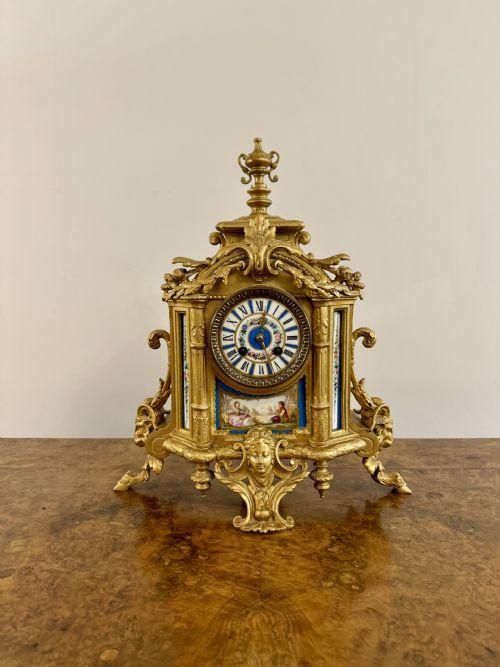
Many examples pair the metallic housing with contrasting materials such as white or red marble, porcelain panels, and glass sides. The resulting objects function simultaneously as practical instruments and decorative centrepieces for nineteenth century domestic interiors.
Materials and Technique
The construction relies heavily on the use of cast gilt bronze and ormolu, which provide a rich, golden metallic surface. Artisans shaped these metals through lost wax or sand casting before applying mercury gilding or modern electrogilding techniques.
Makers frequently combined the cast metal frames with hand-painted porcelain plaques, enamelled dial faces, and panels of polished marble or cut crystal. Movement mechanisms inside were typically driven by brass gear trains designed to run for eight days on a single wind.
Listings feature items dated from the early nineteenth century through to the Victorian era, utilising marble, porcelain, and gilt bronze.
Assessing Quality
The integration of secondary materials also dictates the standing of a piece, with hand-painted porcelain panels and genuine marble bases marking out finer workshop production. Mechanical refinement, seen in signed movements by noted makers, separates standard commercial production from top tier items.
Henry Marc·Baetens London·Henry Dasson·Viner London·Japy Freres·Breguet
The Gilt Bronze Mantelpiece Clock Glossary
- Ormolu
- Gilded bronze produced through the application of a mercury and gold amalgam to a bronze base, creating a durable golden finish. This technique was widely practiced by nineteenth century French bronziers.
- Garniture
- A set of matching ornamental objects consisting of a central clock flanked by matching candelabras or urns. These sets were designed to sit symmetrically upon a mantelpiece.
- Portico clock
- A mantel clock featuring a architectural case supported by four columns, often housing a suspended pendulum swinging within the open central space. They frequently date to the early nineteenth century.
- Drum head clock
- A clock design where the dial and movement are housed within a circular metal drum resting on a rectangular base or plinth. This form appears frequently in Victorian and French domestic interiors.
- Chasing
- The process of hand-finishing a metal casting with chisels and punches to sharpen details and texture the surface. High quality pieces show intricate chasing work across the bronze elements.
Gilt Bronze Mantelpiece Clock: Frequently Asked Questions
How do I wind a mantel clock?
Most mechanical clocks use a key inserted into specific winding holes on the enamel dial face to tension the internal springs. Care must be taken not to overwind the mechanism.
Eighty day striking clocks require both the time train and the strike train to be wound at regular weekly intervals to maintain accurate timekeeping.
Where should I place a heavy bronze clock?
These clocks require a sturdy, level surface such as a solid mantelpiece or heavy sideboard to support their substantial weight. Placing them away from direct heat sources prevents timber shrinkage underneath.
Uneven placement can cause the pendulum to beat irregularly, leading the clock to stop running.
What is a clock garniture set?
A clock garniture set includes a main mantel clock accompanied by a matching pair of side ornaments, usually candelabras or decorative urns. These pieces were designed to be arranged symmetrically across a fireplace mantel.
Materials and decorative motifs match across all items in the set, creating a unified display.
How can I identify a French nineteenth century clock?
French clocks of this era often feature cast bronze or ormolu mounts, enamelled dial faces, and makers stamps marked on the backplate of the brass movement. Stylistic cues include Empire, Louis XVI, and Rococo revival designs.
The inclusion of painted porcelain plaques and decorative marble bases is also characteristic of nineteenth century French production.
Are these clocks suitable for daily use?
Many antique mantel clocks remain fully functional and can keep accurate time when properly serviced and set up on a level surface. Regular cleaning of the brass gear train is necessary for continuous operation.
Some owners choose to let them run periodically rather than keeping them in constant daily operation.