
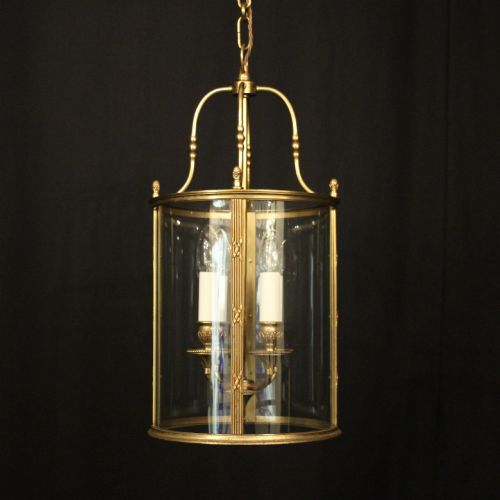
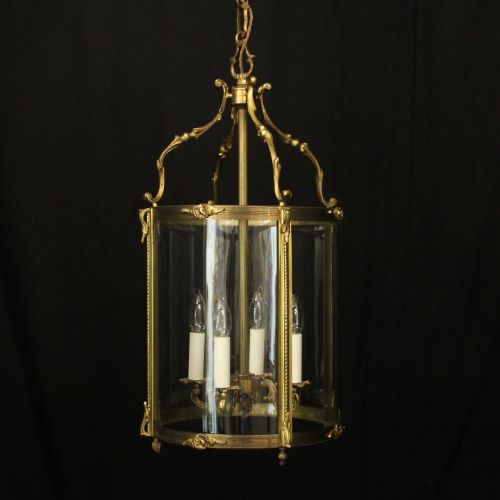
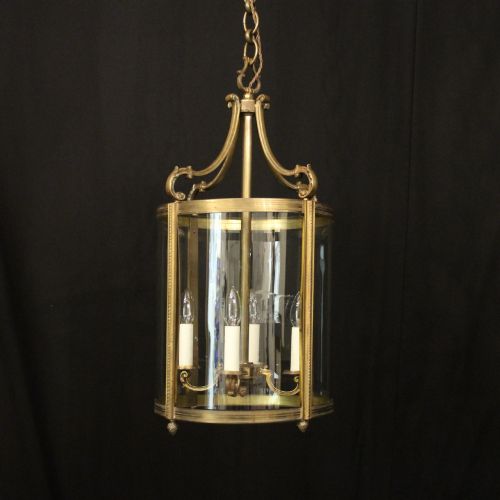
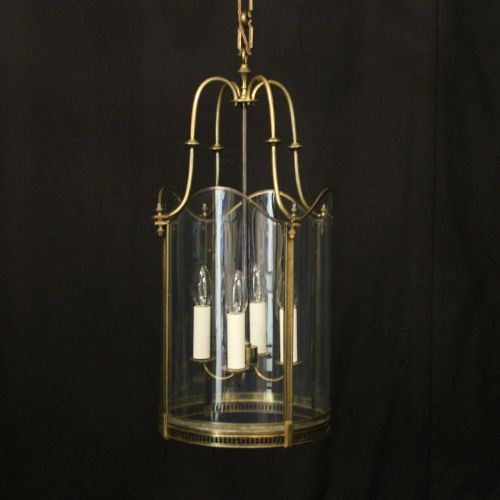
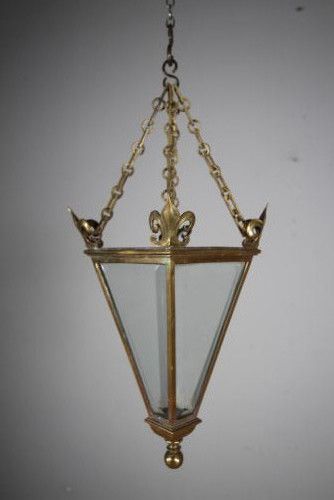
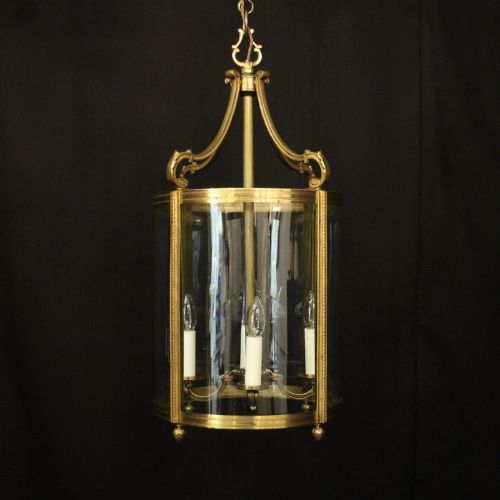


Gilt Bronze Hall Lantern
A gilt bronze hall lantern brings warmth and definition to an entrance, casting patterned light through glass panels.
Gilt Bronze Hall Lantern
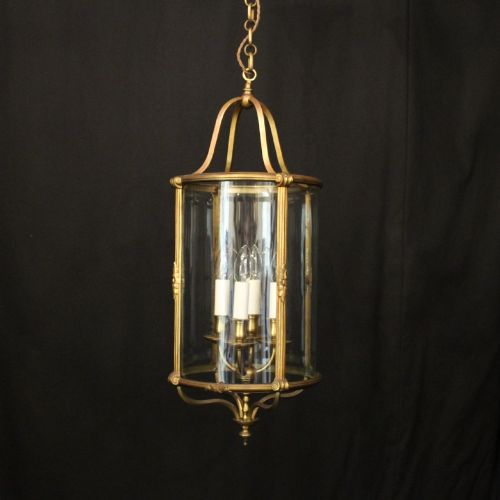
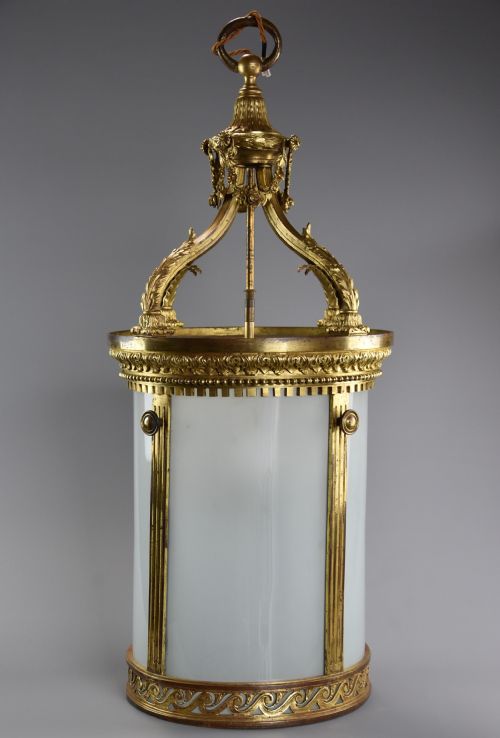
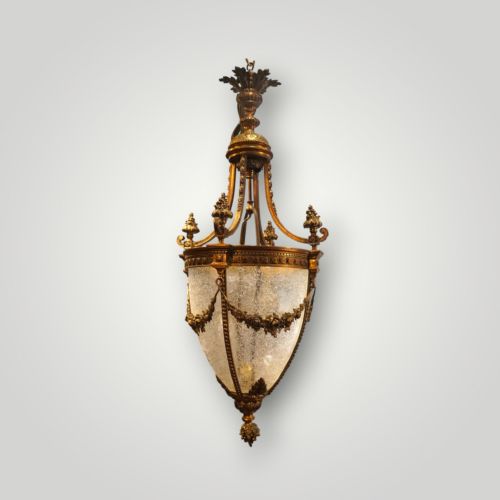
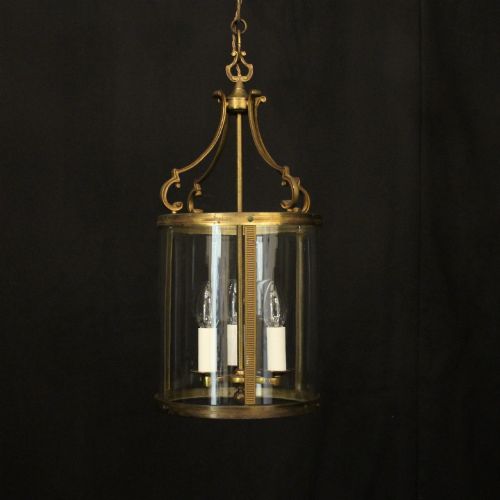
A gilt bronze hall lantern is a hanging ceiling light designed for entranceways and corridors, predominantly originating from French workshops. The selection here leans heavily towards twentieth-century productions from nineteen twenty alongside nineteenth-century pieces.
Most examples adopt French styling, drawing on Rococo, Louis XVI, and Neoclassical vocabularies. Forms range from simple convex profiles to large four-light fixtures and hexagonal frames modelled on Palace of Versailles designs.
Quality factors
The precision of the metal casting and the depth of the gilding set superior pieces apart from simpler versions. Heavier gauge bronze and refined chasing on the mounts indicate higher workshop standards.
The complexity of the glass work also marks the division, with bevelled, cut, or convex glass panes requiring considerably more skill than flat panels.
Materials recorded across the inventory include gilt bronze, brass, opaline glass, and convex glass.
Perry & Co
The Gilt Bronze Hall Lantern Glossary
- Gilt bronze
- Metal cast with a layer of gold applied to the surface. It provides a durable finish that resists tarnishing while retaining a warm metallic lustre.
- Convex glass
- Curved glass panes used in lantern construction. This shape diffuses light more broadly across a hallway.
- Ormolu
- Finely ground high-carat gold-mercury amalgam applied to a bronze object. The technique produces a rich golden surface found on French decorative metalwork.
- Bevelled glass
- Glass with an edge ground and polished at an angle. This treatment catches and refracts light from the interior bulbs.
Gilt Bronze Hall Lantern: Frequently Asked Questions
Where should I hang a hall lantern?
These fixtures suit entrance halls, vestibules, and high-ceilinged corridors where overhead lighting is necessary. Their proportions work best when allowed enough clearance beneath to hang freely.
Ensure the scale matches the room dimensions, as larger four-light versions require wider spaces to look balanced.
How do I date a gilt bronze lantern?
Dating relies on stylistic clues, metal patination, and the type of glass fitted into the frame. Nineteenth-century examples often display heavier cast mounts with hand-finished chasing.
Twentieth-century pieces from the nineteen twenties frequently adopt simplified neoclassical or Louis XVI revival patterns while maintaining traditional construction methods.
What is the difference between bronze and brass?
Bronze is an alloy primarily of copper and tin, while brass combines copper and zinc. In antique lighting, bronze usually accepts gilding with greater depth and sharpness of detail.
Both metals appear across these listings, sometimes finished with silver gilding to alter the overall tone.
Can these lanterns be rewired for modern wiring?
Most antique hanging lights accommodate modern electrical wiring safely with professional adaptation. Electric lamp holders fit inside the original frame without altering the exterior appearance.
It is advisable to consult a qualified electrician to ensure the internal candle tubes or bulb sockets meet current standards.