

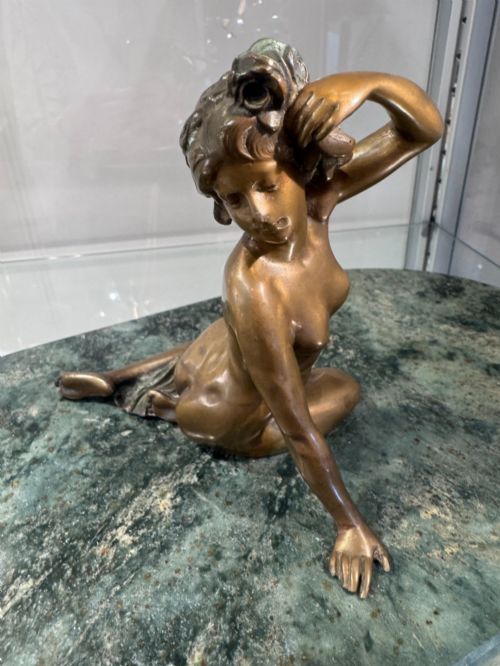
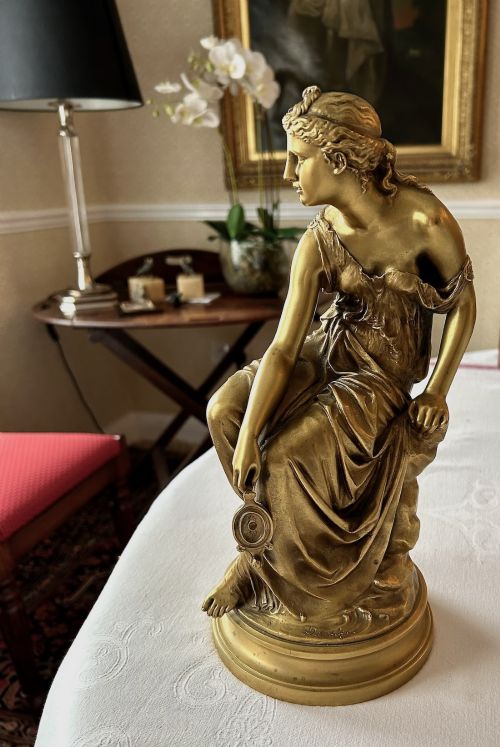
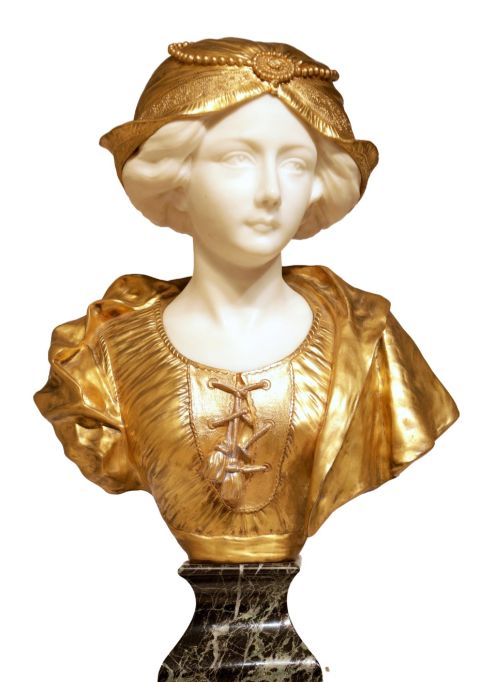
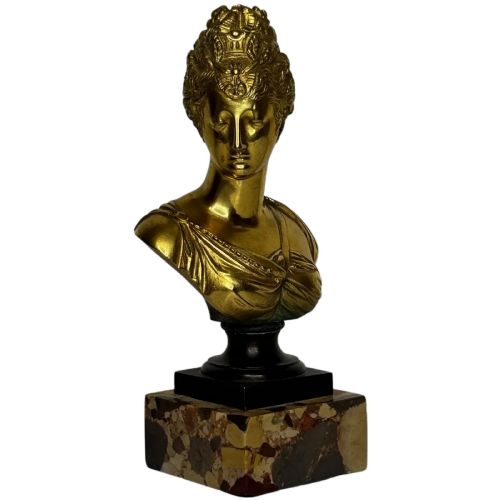

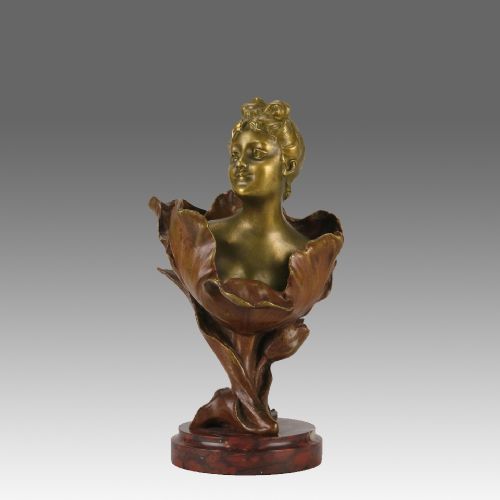
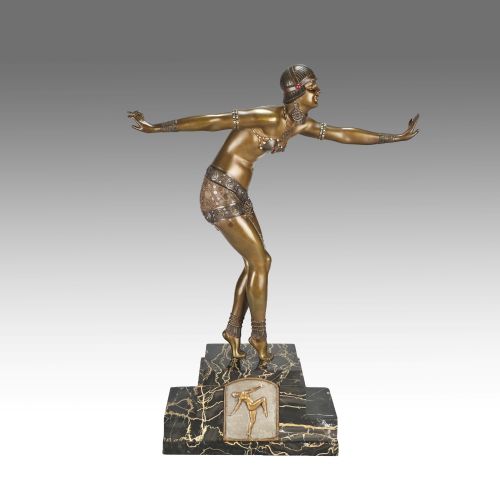

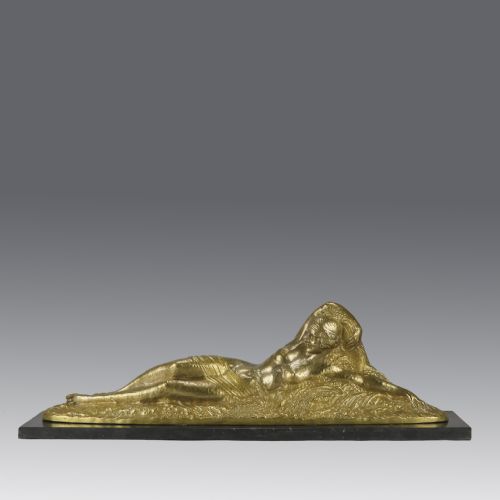


Gilt Bronze Female Sculpture
These gilt bronze female sculpture pieces bring classical poise, Art Nouveau curves, and Art Deco motion into a room.
Gilt Bronze Female Sculpture
A gilt bronze female sculpture represents women in diverse forms, ranging from classical maidens and historical figures to dancers and allegorical studies. These figures emerge primarily from nineteenth century French workshops and twentieth century modernist studios.
Buyers encounter subjects such as dancers, mythological figures, and portraits mounted on solid bases of marble, onyx, or alabaster. The selection spans periods from the mid nineteenth century through the Art Deco era.
Common formats include full figures, busts, and functional objects like lamps or vases incorporating female figures. The aesthetic shifts from ornate nineteenth century revival styles toward streamlined twentieth century silhouettes.
Materials and Construction
Casting utilises bronze shaped through traditional foundry methods, subsequently finished with fire gilding, parcel gilding, or cold painting to accent the metal surface. Makers combine these metallic elements with carved bases of white marble, portoro marble, onyx, or alabaster.
Gilt Bronze Female Sculpture Retail Price Guide 2026
Typical asking prices for gilt bronze female sculpture among the pieces listed under this phrase on Sellingantiques today, from the lower quarter to the upper quarter. They describe what is for sale here now, not the wider market.
Several ladies on this page choose unusual hobbies, doubling as lamps, vases, or even a golf playing car mascot.
Judging Quality
The refinement of the casting and the crispness of the hand chasing determine the quality of the finish. Superior pieces retain sharp details in the hair, fingers, and drapery without surface pitting or soft edges.
The choice and integration of the base material matter significantly. High quality examples pair the bronze with dense, well polished marble or onyx that complements the proportions of the figure.
Etienne-Henri Dumaige·Josef Lorenzl·Demetre Chiparus·Henri Godet·Carrier-Belleuse·Barbedienne·Paul Philippe·Ernst Barrias·Claire Colinet·Jean Jacques Pradier·Charles Korschann
The Gilt Bronze Female Sculpture Glossary
- Gilt bronze
- Metal coated with a thin layer of gold using mercury amalgamation or electrochemical methods. This technique creates a durable golden finish that resists tarnishing.
- Ormolu
- Finely ground high carat gold applied to a bronze base. The term describes the specific French method of mercury gilding common in nineteenth century decorative arts.
- Chryselephantine
- A sculpture combining bronze and ivory elements. This technique gained popularity during the Art Deco period for figures with carved ivory faces and hands.
- Parcel-gilt
- A decorative treatment where only specific portions of an object receive gold leaf or gilding. This highlights particular details against a dark bronze or patinated background.
- Portoro
- A distinct black Italian limestone with dramatic golden veins. It frequently forms the plinth for high end Art Deco and Art Nouveau sculptures.
Gilt Bronze Female Sculpture: Frequently Asked Questions
How do I clean a gilt bronze sculpture?
Dust the surface gently with a soft, dry brush to prevent accumulation in recessed details. Avoid water, abrasive cloths, and chemical cleaners that damage the delicate gold layer.
Keep the piece away from direct sunlight and high humidity. Natural oils from hands can tarnish the metal, so handle the bronze by its stone base whenever possible.
What is the difference between art nouveau and art deco figures?
Art Nouveau figures from the turn of the twentieth century feature flowing lines, organic botanical motifs, and long streaming hair. The posture is often languid and naturalistic.
Art Deco pieces from the nineteen twenties and thirties adopt geometric symmetry, clean angles, and dynamic movement. Dancers and athletes dominate this later twentieth century aesthetic.
Why are many sculptures mounted on marble?
Marble and onyx bases provide necessary weight and stability for tall or slender bronze figures. The stone grounds the composition visually and physically.
Different periods favoured distinct stones, such as plain white marble in the nineteenth century and dark portoro or onyx during the Art Deco era.
How can I tell if a signature is genuine?
Signatures cast directly into the bronze during the initial moulding process appear crisp and integrated with the surrounding metal texture. Incised signatures added later by hand show clean edges cut into the finished surface.
Compare the signature style and placement against known works by the same maker. Foundry stamps and cachets often accompany authentic signatures.