
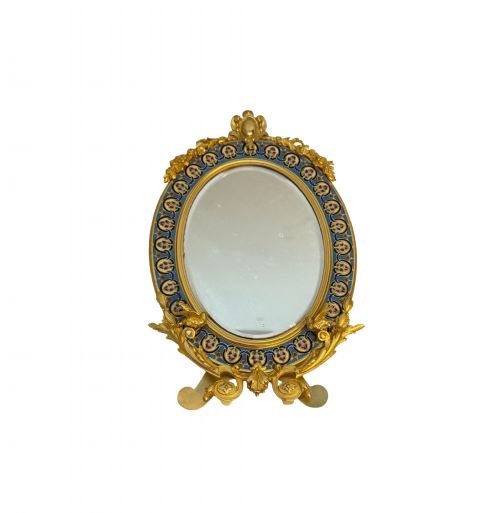


Gilt Bronze Dressing Mirror
These gilt bronze dressing mirror pieces bring French nineteenth-century refinement to a vanity, combining cast metalwork with bevelled glass.
Gilt Bronze Dressing Mirror
A gilt bronze dressing mirror brings nineteenth-century French elegance to a tabletop or dressing table. The search phrase covers several distinct forms, from small hand mirrors and tabletop toilet glasses to large adjustable cheval mirrors and full dressing tables with integrated mirror frames.
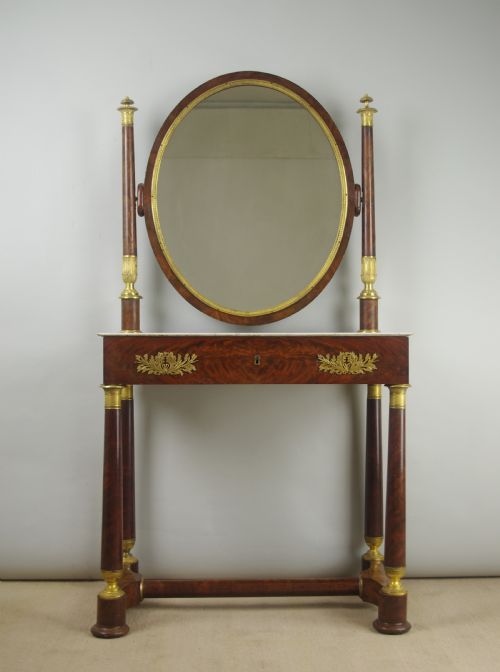
Most examples found here date from the nineteenth century, including specific periods like the 1860s, 1880s, 1890s, and early 1900s. French design dominates these pieces, particularly styles drawing on the French Empire, Napoleon III, Louis XV Rococo Revival, and chateau aesthetics.
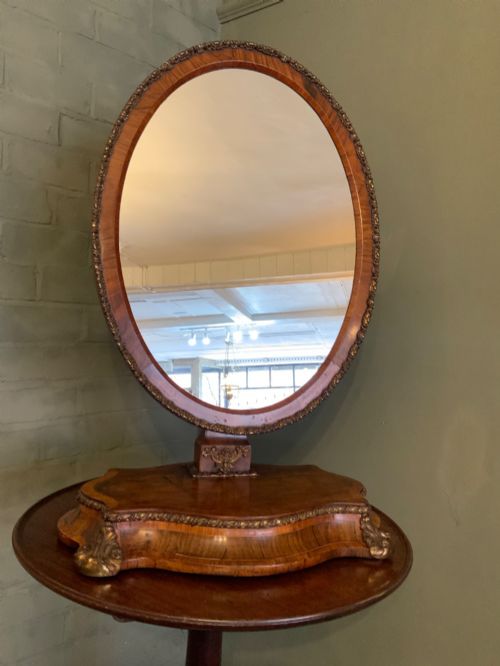
The primary forms include table mirrors, vanity mirrors, and picture frame mirrors, often constructed with pivoting frames supported by stands. Buyers select these items to introduce period character and reflective light into a bedroom or dressing room.
How they were made
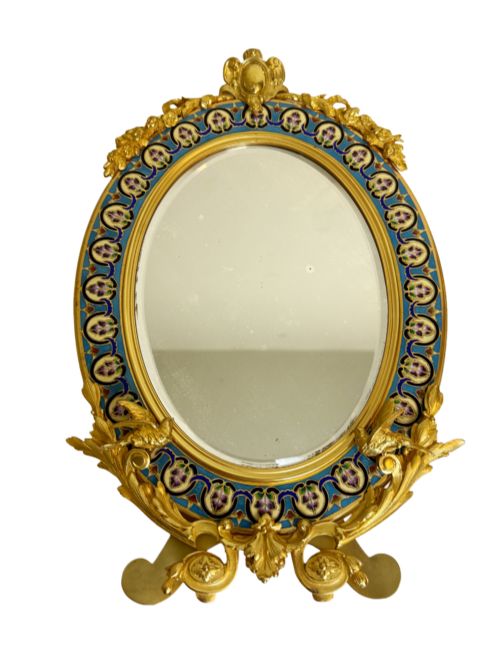
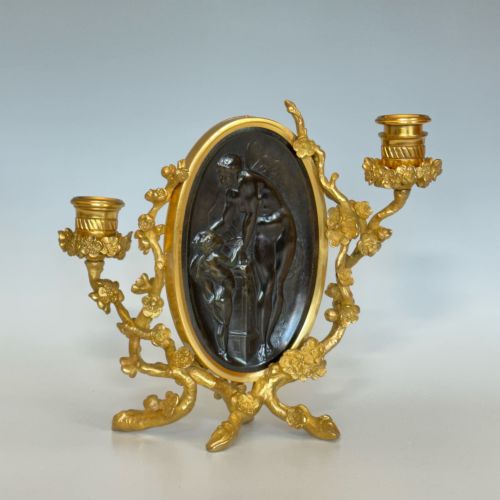
The construction relies on metals such as bronze, gilt bronze, and ormolu, which provide a sturdy yet decorative framework for the glass. Founders shaped the metal through casting and chased the surface details before applying gilding to achieve a bright, reflective golden finish.
Secondary materials enhance the visual weight and texture of the frames, including walnut, mahogany, and marble for structural stability and bases. Decorative accents frequently incorporate champleve enamel, Limoges enamel, and Sevres porcelain plaques set directly into the metal mountings.
The available pieces date from the early nineteenth century through to the Edwardian period.
What varies in quality
Quality rests on the crispness of the bronze casting and the depth of the chased detailing across the frame. Superior examples display sharply defined foliate scrolls, figures, or architectural motifs rather than soft, blurred edges from worn production moulds.
The choice of supplementary materials also defines the tier of the piece, with hand-painted porcelain plaques or intricate champleve enamel work elevating standard cast frames into exhibition-grade items.
Thiebaut Freres·Joseph Meissonnier·F. Bienvue
The Gilt Bronze Dressing Mirror Glossary
- Ormolu
- Gilded bronze produced by applying a mercury and gold amalgam to a bronze base and heating it. This historic technique creates a durable, golden surface common on nineteenth-century French furniture and mirrors.
- Champleve
- An enamelling technique where troughs or cells are hollowed out of the metal surface and filled with vitreous enamel powder before firing. The resulting coloured patterns sit flush with the surrounding metal borders.
- Cheval mirror
- A large, full-length mirror suspended on a vertical frame with pivoting side pins. This allows the glass to tilt at various angles for dressing.
- French Empire
- A neoclassical design style spanning the late eighteenth and early nineteenth centuries. It draws heavily on ancient Roman and Greek motifs, featuring strict symmetry and bronze mounts.
- Sevres porcelain
- High-grade porcelain produced by the French royal factory, often decorated with hand-painted scenes and rich colours. These ceramic plaques frequently appear mounted into decorative metal frames.
Gilt Bronze Dressing Mirror: Frequently Asked Questions
How do I clean a gilt bronze mirror?
Dust the bronze frame gently with a soft, dry brush to prevent dirt accumulation in the recessed cast details. Avoid harsh chemical cleaners or abrasive polishes that can strip the historic gilding.
Clean the glass mirror plate using a mild glass cleaner applied to a cloth rather than sprayed directly onto the glass. This protects the surrounding metalwork and backing from moisture damage.
Where should I place a table mirror?
Position the mirror on a sturdy dressing table, chest of drawers, or vanity surface where its pivoting mechanism can be adjusted safely. Ensure the weight of the bronze frame is fully supported by the furniture top.
Place the piece near a natural light source to maximise the reflective quality of the glass and highlight the gilded metal details in the room.
Are these mirrors adjustable?
Many of the tabletop and pedestal mirrors feature pivoting pins or hinges on the sides of the frame. These allow you to tilt the glass angle to suit your viewing preference.
Larger cheval mirrors also use side pivots mounted on upright stands, designed for full-length adjustment in a bedroom setting.
How do I identify the period?
Examine the stylistic cues and secondary materials, as French Empire and Napoleon III designs carry distinct decorative vocabularies from different decades of the nineteenth century. Details like champleve enamel work and Sevres porcelain mounts point towards specific late-nineteenth-century manufacturing trends.
Look at the construction of the mirror back, the type of glass, and any maker signatures stamped into the bronze or enamel work. These elements help narrow down the date of production.