


Gold Ormolu Mirror
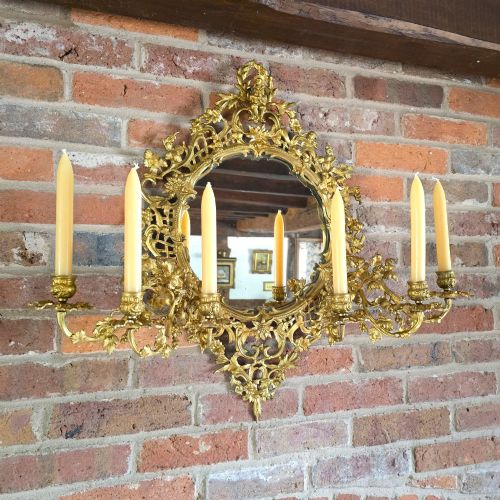
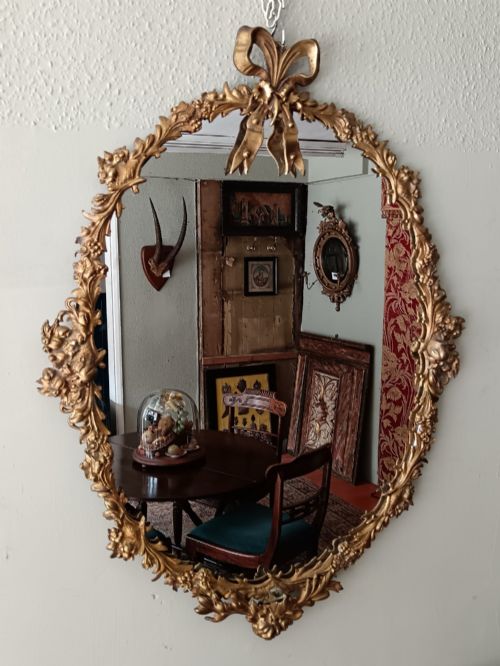
These gold ormolu mirror pieces combine gilt bronze mounts with glass, bringing nineteenth-century French revival luxury directly to a room.
Gold Ormolu Mirror
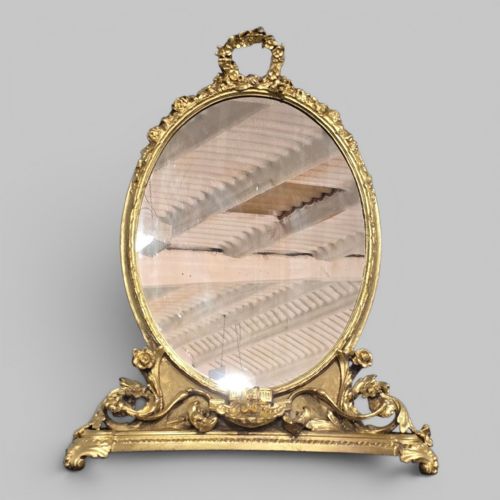
A gold ormolu mirror brings nineteenth-century decorative styles into domestic spaces, drawing heavily on French design vocabulary. Buyers seeking a gold ormolu mirror typically encounter wall mirrors, tabletop dressing mirrors, and girandoles dating across the Victorian era and the late nineteenth century.
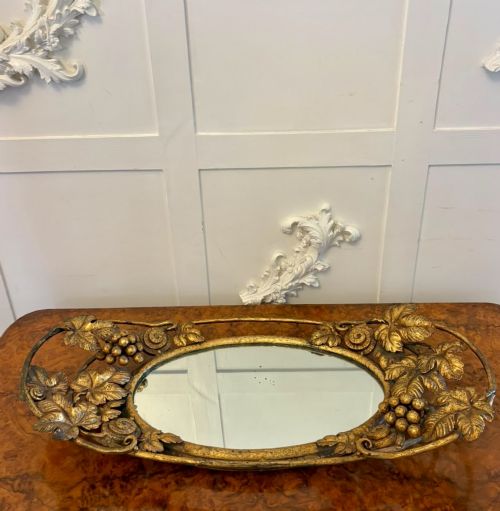
The selection on this page centres on pieces from the eighteen-sixties through to nineteen-hundred. Common forms include oval dressing table mirrors, wall sconces, and trays framed in gilt bronze or gilt metal.
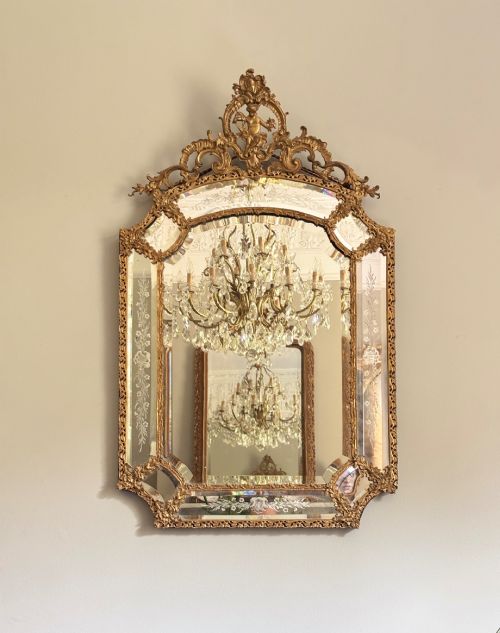
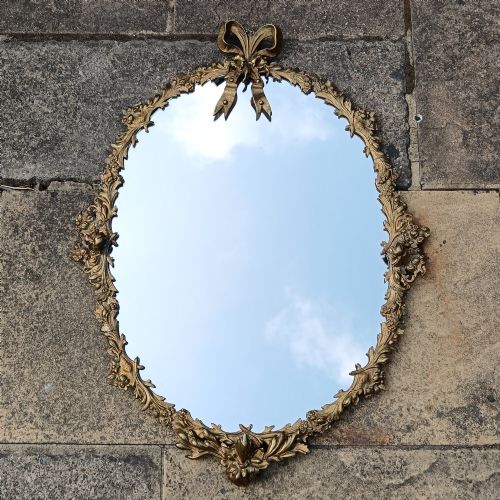
Stylistic influences lean toward Louis XVI Revival, French Rococo, and Empire periods. These designs reflect the Victorian appetite for ornate, continental metalwork and classical revival motifs.
Materials and construction methods
Construction relies on cast bronze or brass treated with mercury gilt or modern electrogilding to create the characteristic ormolu surface. Frames often incorporate glass plates alongside mahogany, copper, or enamel inserts depending on the specific object type.
Casting methods allow for intricate relief work, particularly in revival styles featuring scrollwork, floral garlands, and figural elements. Skilled metalworkers assembled these frames with mechanical fasteners to secure the heavy glass and secondary woods.
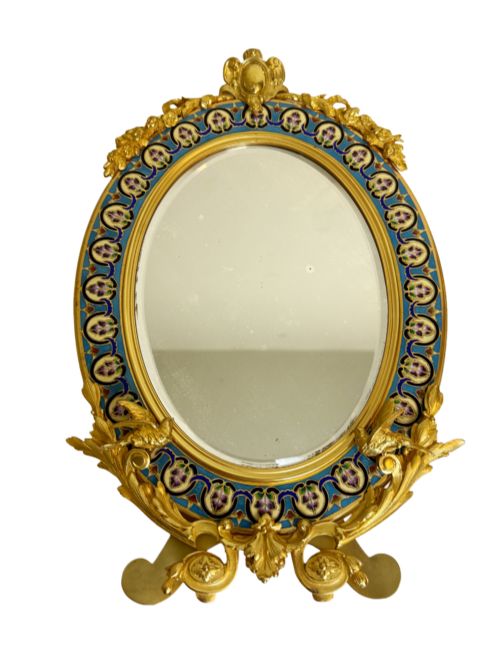
F. Bienvue signed an eighteenth-century style mirror, leaving a quiet maker's mark to delight future collectors of nineteenth-century Limoges enamel work.
Assessing quality in nineteenth-century metalwork
Quality shows in the crispness of the cast ornamentation and the depth of the gilding across the bronze or brass frame. Finer examples retain sharp relief in chased details like acanthus leaves and ribbon twists rather than softened, blurred edges.
The integration of secondary materials such as Limoges enamel panels, champlevé work, or crystal elements indicates higher workshop ambition. Structural stability in heavier wall-hanging frames and the clarity of the original mirrored glass further separate standard production from superior pieces.
The Gold Ormolu Mirror Glossary
- Ormolu
- Gilded bronze, where a finely ground gold-mercury amalgam is applied to a bronze base and heated to drive off the mercury. This technique creates a durable, golden metallic surface characteristic of luxury decorative objects.
- Champlevé
- An enamelling technique where troughs or cells are hollowed out in the metal surface and filled with vitreous enamel before firing. It frequently appears on late nineteenth-century dressing table accessories alongside gilt bronze mounts.
- Girandole
- A branched wall mirror or candle sconce designed to reflect and multiply candlelight through its mirrored backplate. These fixtures combine functional lighting with decorative metal framing.
- Empire Period
- A decorative style spanning the early nineteenth century characterised by classical Roman and Greek motifs, heavy mahogany timbers, and disciplined ormolu mounts. It forms one of the foundational design vocabularies seen in these listings.
- Louis XVI Revival
- A nineteenth-century design movement copying the neoclassical restraint, symmetry, and straight lines of the eighteenth-century French royal court. It contrasts with the more asymmetrical curves of Rococo revival pieces.
Gold Ormolu Mirror: Frequently Asked Questions
How do I date a gold ormolu mirror?
Dating relies on examining the assembly methods, backboards, and casting styles characteristic of the nineteenth century. Stylistic markers such as Louis XVI revival ribbons or Empire neoclassical lines help narrow down the period.
Material composition also offers clues, as later nineteenth-century pieces often utilise machine-rolled brass or varied gilt metal alloys alongside traditional bronze casting.
Where should I place a tabletop dressing mirror?
Tabletop dressing mirrors work best on sturdy chests of drawers, dressing tables, or console surfaces where their weight is fully supported. Placing them near a light source enhances the reflective quality of the glass and highlights the ormolu frame.
Ensure the placement protects the piece from excessive moisture, particularly if the mirror incorporates enamel panels or delicate mahogany woodwork.
What is the difference between ormolu and gilt brass?
Ormolu specifically refers to gilded bronze, which was the standard luxury material for high-end French decorative objects during the nineteenth century. Gilt brass or gilt metal generally represents a slightly more accessible alternative utilised in later or less expensive revival pieces.
Both materials achieve a similar golden appearance, though traditional ormolu usually exhibits a heavier, warmer tone due to the underlying bronze alloy.
How do I clean an antique ormolu frame?
Dusting gently with a soft, dry microfibre cloth prevents the accumulation of dirt in the recessed areas of the cast ornamentation. Avoid chemical cleaners, abrasive polishes, or water, as these can strip or damage the historic gilt surface.
If the glass requires cleaning, apply glass cleaner directly to a cloth rather than the mirror to prevent liquid seeping beneath the ormolu mount.