



Nineteenth Century Tabletop Mirror
A nineteenth century tabletop mirror sits ready on a dressing chest, catching the morning light with honest glass.
Nineteenth Century Tabletop Mirror
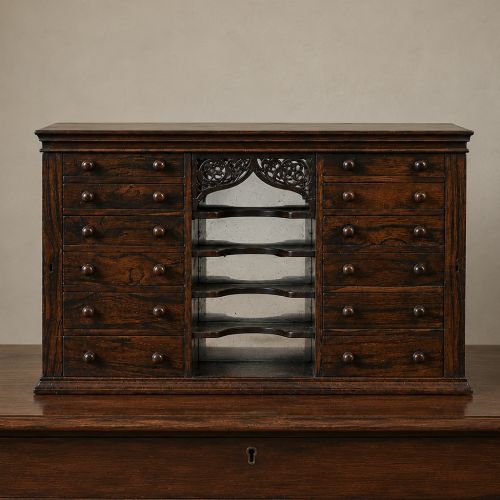
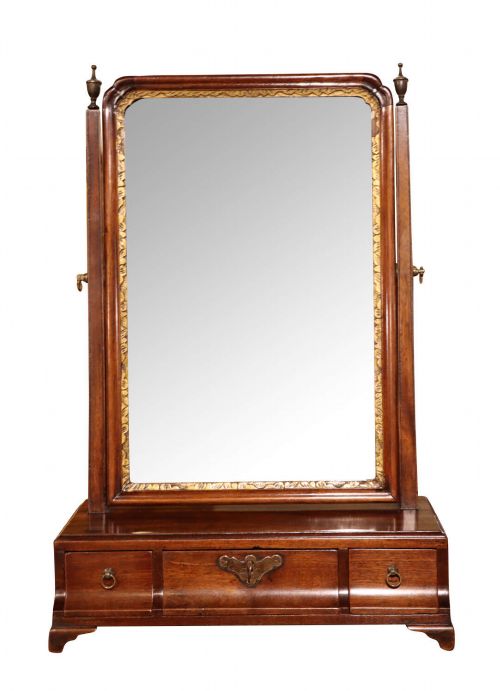
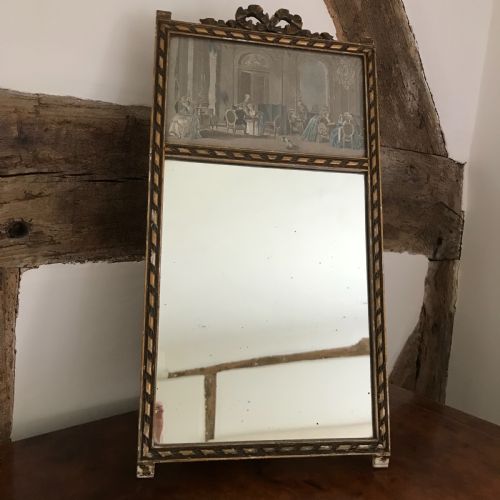
A nineteenth century tabletop mirror serves as a movable looking glass for the dressing room, designed to rest securely upon a chest of drawers or a vanity surface. These pieces range from modest rectangular frames on upright supports to elaborate swivel designs fitted with trinket drawers.
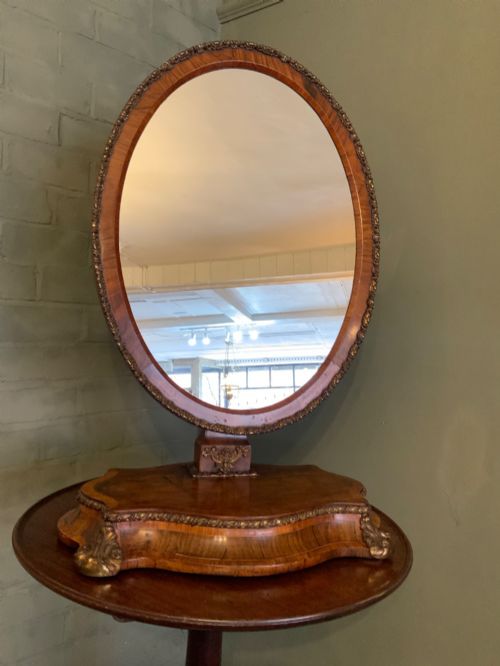
Buyers meet several distinct regional variations on this page, including Dutch marquetry examples, French ormolu pieces, and sturdy British mahogany versions. Many incorporate small compartment bases or single-drawer boxes to hold personal items.
The prevailing styles span Regency restraint, Victorian utility, and French revival ornamentation. Each object reflects the domestic habits and decorative tastes of its decade.
How they were made
Cabinetmakers constructed these frames using dense hardwoods such as mahogany, walnut, and rosewood, often applying boxwood inlay or rich veneers to the primary surfaces. Brass pivots, mounts, and ormolu details provide both structural support and decorative contrast.
Mirror plates were cast or blown, then silvered and fitted tightly into rebated wooden frames with protective backing boards. Swing mirrors rely on adjustable side screws set into upright scroll arms to alter the tilt of the glass.
Listings feature woods including mahogany, walnut, and rosewood, alongside brass and ormolu mounts.
What varies in quality
The refinement of the timber and the crispness of any inlay set the finer examples apart from standard workshop production. Highly figured grain and meticulous marquetry indicate a maker who spent extra hours on the exterior presentation.
Proportion and stability determine the success of the mechanical design, ensuring the swing frame holds its angle without slipping. Original mirror glass with soft foxing carries more character than a modern replacement.
The Nineteenth Century Tabletop Mirror Glossary
- Swing mirror
- A looking glass hung on pivots between two upright arms so the angle can be adjusted. This mechanism allows the user to tilt the reflection up or down.
- Ormolu
- Gilded bronze ornamentation applied to furniture and frames. It adds a bright metallic accent to wooden surrounds.
- Marquetry
- Inlaid wood veneers arranged in decorative patterns. Craftsmen use contrasting timbers to create pictorial designs across the surface.
- Boxwood inlay
- Narrow strips of pale wood set flush into darker surfaces. This technique creates crisp geometric borders on cabinet fronts.
Nineteenth Century Tabletop Mirror: Frequently Asked Questions
How do I secure a loose swing mirror?
Most pivoting frames rely on threaded brass screw caps set into the upright support arms. Tightening these side screws restores friction to hold the glass in place.
If the internal washer has worn away down through decades of use, a thin leather or felt replacement restores the grip without damaging the wood.
Where should I place a tabletop mirror?
These mirrors suit dressing tables, chest tops, and deep mantel ledges where they can catch indirect daylight. Ensure the supporting surface is stable and level.
Keep them away from direct sunlight to protect aged wood finishes and prevent the silver backing of the glass from degrading over time.
How do I clean antique mirror glass?
Wipe the glass gently with a soft microfibre cloth dampened slightly with distilled water. Avoid harsh chemical sprays that can seep behind the frame edge.
Take care near the bevels and edges where the original silvering may be thin or delicate from age.
Are the mirror plates original?
Many nineteenth-century pieces retain their original glass, which often shows light foxing, minor speckling, or subtle distortions. These gentle imperfections confirm the age of the piece.
Replacement glass tends to appear entirely clear and uniform, lacking the soft depth found in period plates.