
Gilt Bronze Desk Mounts
Gilt bronze desk mounts are the decorative metal fittings applied to writing furniture, prized by collectors for their intricate chasing and warm, opulent finish.
Gilt Bronze Desk Mounts
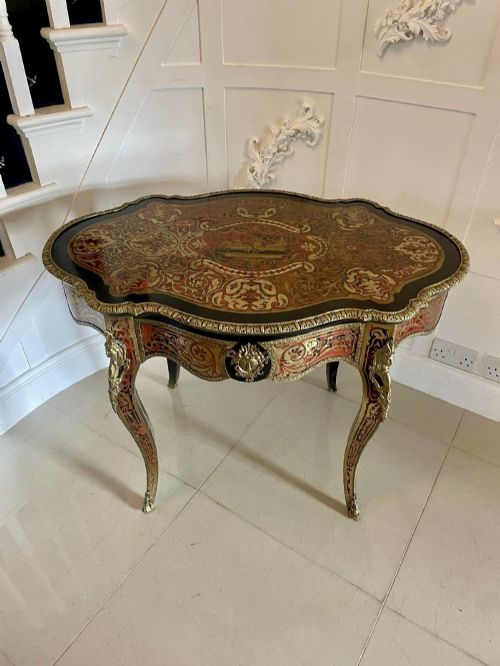
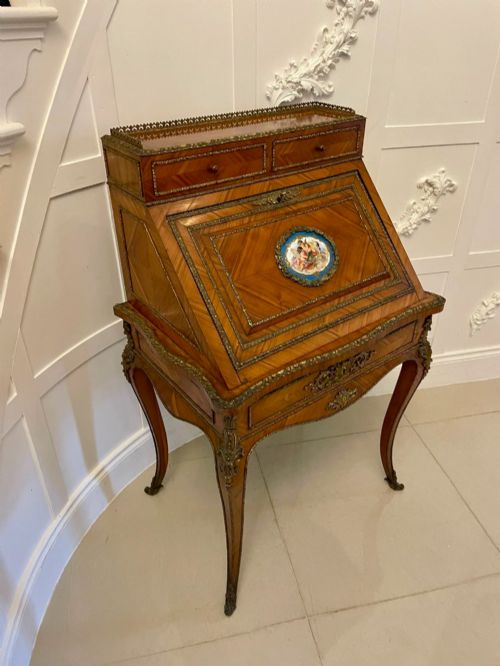
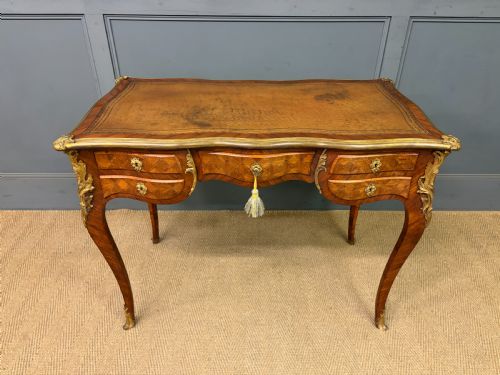
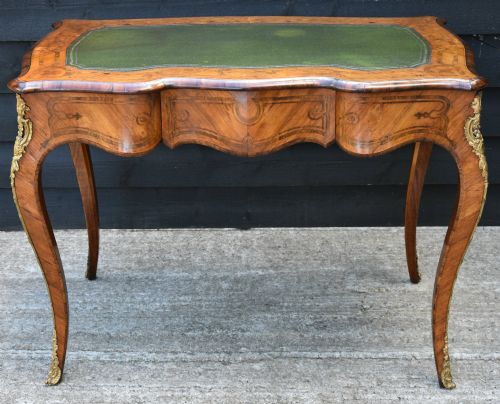
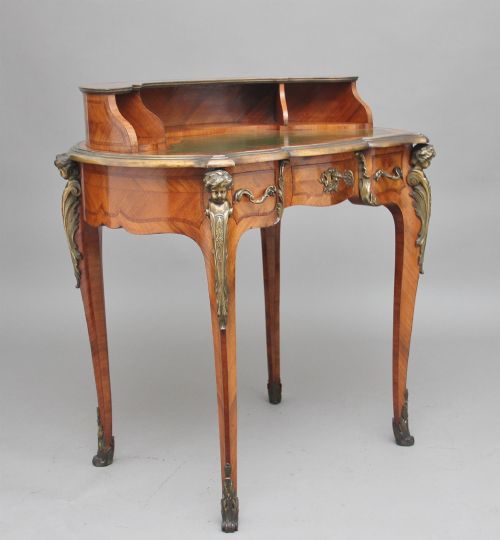
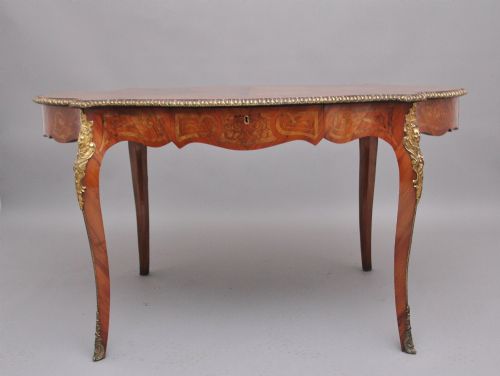
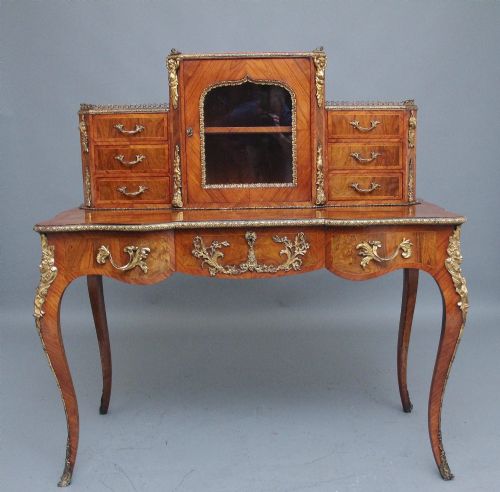
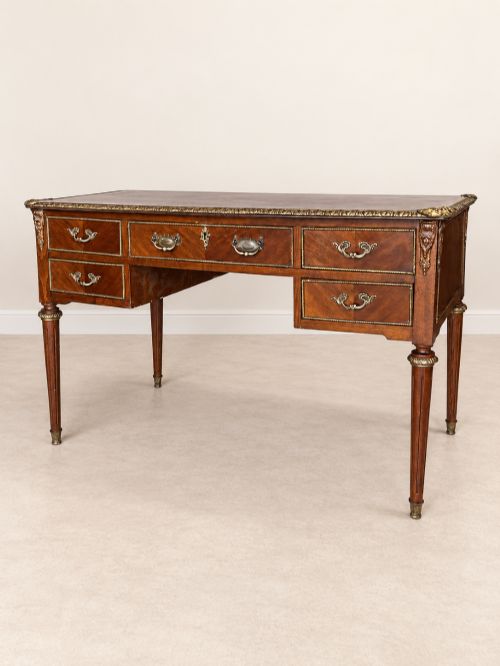
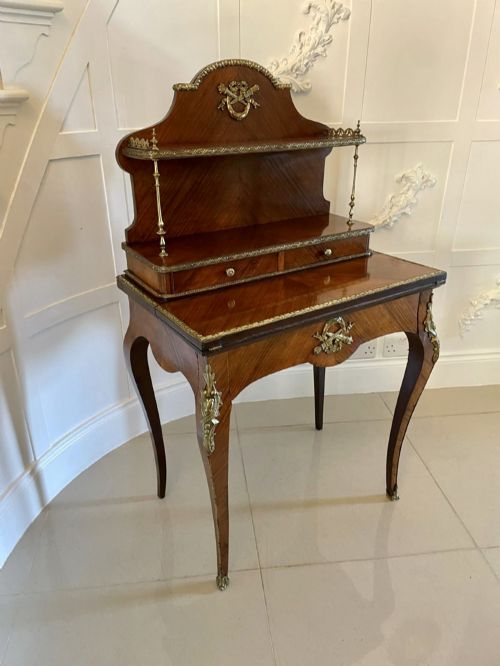
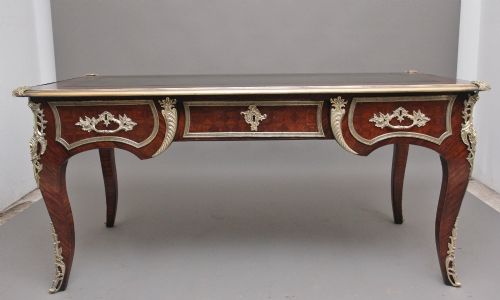
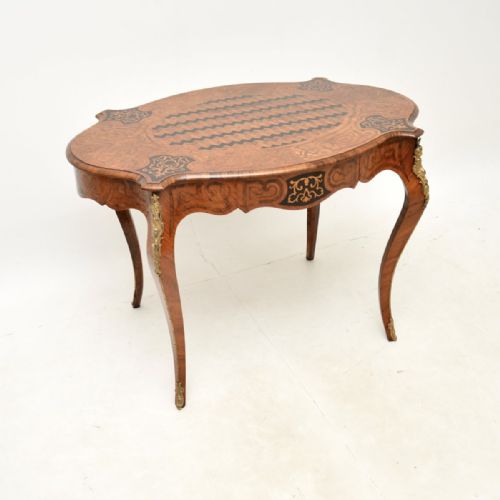
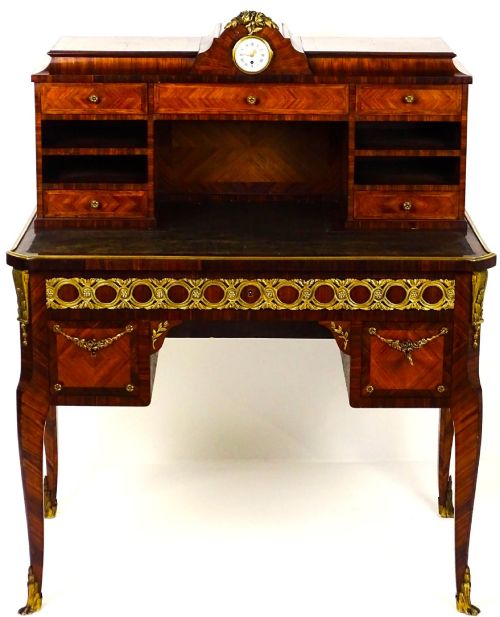
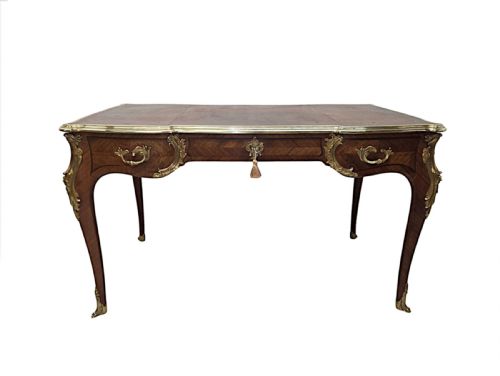
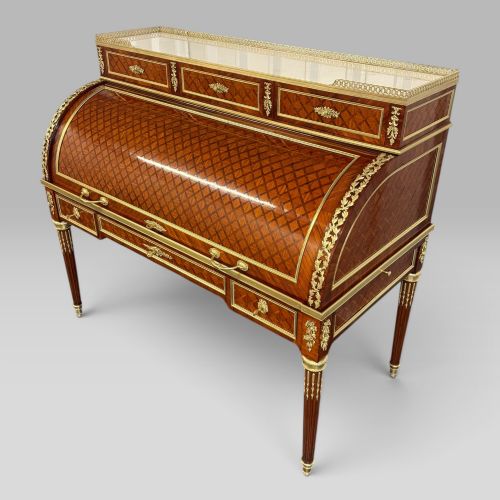
These pieces comprise decorative metal accents, predominantly ormolu and gilt bronze, fitted to writing furniture such as bureau plats, cylinder desks, and bonheur du jours. A buyer examining this selection encounters items originating primarily from the nineteenth century, reflecting periods like the Victorian era and the reigns of French revivals.
The most common formats on this page are mounts integrated into French writing tables and cabinets fashioned from kingwood, rosewood, and mahogany. Stylistically, the items draw heavily upon Louis XV and Louis XVI design vocabularies, featuring serpentine outlines, floral marquetry, and classical architectural motifs.
How they were made
Craftsmen produced these mounts through the lost-wax casting of bronze, which was subsequently chased by hand with chisels and matting tools to achieve varied surface textures. The refined metal was then amalgamated with gold and fired to drive off the mercury, leaving a durable, luminous layer of mercury gilding.
Makers applied these completed cast elements to timber carcasses constructed from exotic woods like kingwood, tulipwood, and amboyna, often enhanced by parquetry or tortoiseshell inlay. Structural elements frequently incorporated white or rouge marble tops and tooled leather writing surfaces, secured with traditional joinery.
Listings incorporate nineteenth-century French and English writing furniture, spanning styles from Louis XV Revival to Neoclassical and Spanish Baroque.
What varies in quality
The distinction between ordinary and exceptional examples rests upon the crispness of the bronze chasing and the depth of the mercury gilding. Superior mounts display sharp relief in foliage and scrollwork, whereas inferior pieces reveal softened edges from worn moulds.
Material selection and cabinetry execution further define the hierarchy of these objects. Pieces featuring dense timbers, precise parquetry, and heavy, well-balanced cast mounts command greater attention than those with simple veneers and thin metal applications.
Francois Linke·Edwards and Roberts·Paul Sormani·Maison Krieger·CH Jeanselme and Co·Durand·Millet·Blake
The Gilt Bronze Desk Mounts Glossary
- Ormolu
- Gilt bronze, specifically referring to a gold-mercury amalgam applied to a bronze base. The technique produces a rich, enduring metallic lustre.
- Bureau plat
- A flat-topped freestanding writing table, typically fitted with one or more drawers in the frieze. This form frequently showcases extensive bronze mounts along the legs and apron.
- Bonheur du jour
- A light lady's writing desk featuring a small cabinet or set of drawers on the upper surface. These delicate desks often incorporate porcelain plaques and elaborate marquetry.
- Marquetry
- The art of applying pieces of veneer to a structure to form decorative patterns. Artisans utilise contrasting timbers such as kingwood and rosewood to create pictorial designs.
- Parquetry
- Geometric wood inlay forming repetitive patterns like cubes or chequers. It serves as a primary decorative surface on nineteenth-century writing desks.
- Cassolette
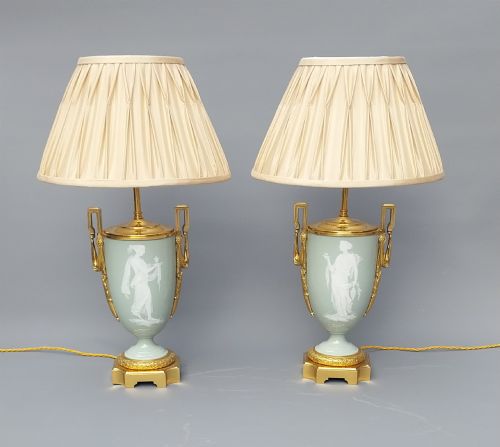
- A decorative vase or urn fitted with a dual-purpose lid that reverses to form a candle holder. These objects often incorporate marble bodies and gilt bronze mounts.
Gilt Bronze Desk Mounts: Frequently Asked Questions
What is a gilt bronze mount?
A gilt bronze mount is a cast metal ornament attached to the corners, feet, and edges of antique furniture. These pieces served to protect vulnerable wooden edges while adding ornate decorative splendour.
Craftsmen cast the bronze in moulds before refining the details by hand with chisels. A layer of gold amalgam was then applied and fired to create the distinctive golden finish.
How do I care for ormolu mounts?
Ormolu mounts require gentle dusting with a soft, dry cloth to prevent the accumulation of grime in the recessed chased details. Avoid commercial metal polishes, which can strip the thin historical gilding from the bronze base.
Maintaining a stable room temperature protects both the metal fittings and the underlying timber carcase from cracking or warping. Excessive moisture should be kept away from both the gilt bronze and the surrounding wood veneers.
Are these desks for daily writing?
Antique writing desks and tables function well for modern use provided they receive careful treatment. Many examples feature fitted leather writing surfaces that accommodate contemporary stationery.
Users should protect the polished wood surfaces and delicate bronze mounts from heavy impact or scratching. Placing blotters on the writing surface helps preserve the antique leather and timber.
How are Louis XV and Louis XVI styles told apart?
Louis XV style pieces, often termed French Rococo Revival, feature asymmetrical curves, flowing scrolls, and organic natural motifs. The lines are fluid, and the bronze mounts curve gracefully around serpentine wooden forms.
Louis XVI style items rely on classical symmetry, straight lines, and geometric precision. These pieces frequently incorporate fluted columns, urn motifs, and rectangular proportions in their design.