



Gilt Bronze Bijouterie
These gilt bronze bijouterie pieces bring French revival elegance and glass-topped display into the room.
Gilt Bronze Bijouterie
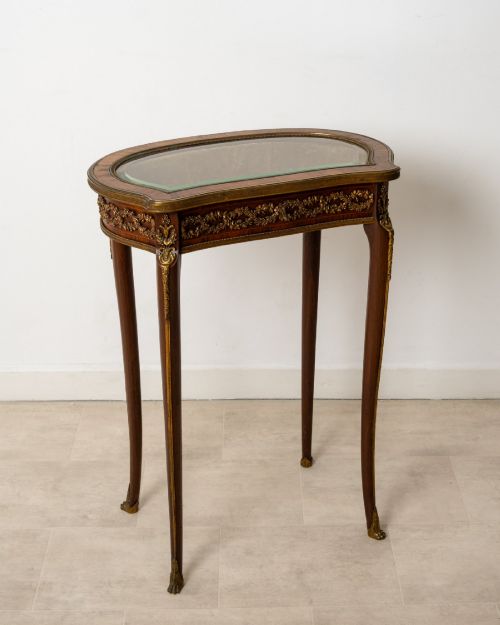
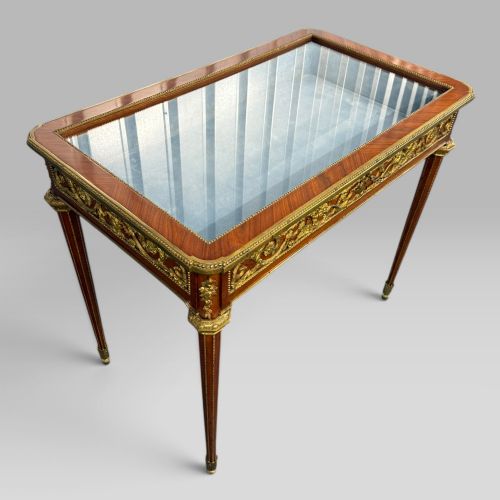
When you search for gilt bronze bijouterie, you find sophisticated glass-topped display furniture designed to showcase small treasures and ornaments. These pieces take the form of display tables, cabinets, and vitrines intended to protect and present valued objects in a drawing room or parlour.
The pieces on this page lean heavily into French Louis XV and Louis XVI revivals, bringing continental styling to British and European interiors. You will encounter freestanding tables with glazed lids alongside larger cabinets, all structured around the core purpose of display.
Originating largely from the nineteenth century, with Victorian and Edwardian examples alongside later twentieth-century interpretations, these items range from heart-shaped tables to rosewood show cases. Each piece relies on glass and timber to frame the items placed within its interior.
How they were made
Cabinet makers utilised select timbers such as mahogany, walnut, kingwood, and rosewood to construct the structural carcasses and display wells of these items. These hardwoods provided both the stability required for supporting glass panels and rich grain patterns for visual appeal.
Gilt bronze and ormolu mounts were cast and applied to accentuate the corners, legs, and frames, offering bright metallic contrast against the dark wood surfaces. Velvet and fabric linings were frequently fitted inside the display compartments to cushion and highlight the small objects placed upon them.
Gilt Bronze Bijouterie Retail Price Guide 2026
Typical asking prices for gilt bronze bijouterie among the pieces listed under this phrase on Sellingantiques today, from the lower quarter to the upper quarter. They describe what is for sale here now, not the wider market.
Listings feature materials including glass, ormolu, mahogany, gilt bronze, velvet, kingwood, fabric, and walnut across Victorian and Edwardian periods.
What varies in quality
The refinement of the cast metalwork largely separates standard furniture from finer examples, as crisp chasing in the gilt bronze demonstrates superior workshop skill. Heavier, more deeply articulated mounts reflect greater investment in the decorative bronze elements.
The choice of underlying timber and veneer work, such as figured kingwood or rosewood rather than simpler hardwoods, marks out the upper tier of production. Joinery precision in the curved glass framing and the snug fit of hinged glazed lids further distinguish the craftsmanship.
François Linke
The Gilt Bronze Bijouterie Glossary
- Bijouterie table
- A specialised display table featuring a glazed top and shallow compartment designed for holding small valuable trinkets and jewellery.
- Ormolu
- Gilt bronze decoration applied to furniture mounts, cast and finished to resemble solid gold detailing.
- Vitrine
- A glass-fronted cabinet or display case used for exhibiting ornaments and porcelain collections.
- Kingwood
- A dense, richly grained exotic timber utilised in high-end cabinet making during revival periods.
- Louis XV Revival
- A decorative style imitating the asymmetry, curves, and natural motifs of the mid-eighteenth-century French court.
Gilt Bronze Bijouterie: Frequently Asked Questions
What is a gilt bronze bijouterie table?
A gilt bronze bijouterie table is a glass-topped display piece created to show off small collectables, medals, and trinkets while protecting them from dust.
These tables combine timber frames with glazed compartments and metallic mounts for a decorative presentation in formal rooms.
How were these display cabinets used?
Owners used these cabinets and tables to exhibit their prized small possessions, such as pocket watches, snuff boxes, and miniatures, to visiting guests.
The glass lids and doors allowed people to inspect the items closely without handling them directly.
How can I tell the period of these pieces?
Dating relies on identifying the underlying timber, the casting style of the ormolu mounts, and the construction methods used in the glazed frames.
Nineteenth-century Victorian and Edwardian examples often draw directly on French Louis XV or Louis XVI revival designs.