


Gilt Bronze Allegorical Figure
These gilt bronze allegorical figure sculptures and clock housings combine mythological or abstract personifications with heavy cast metalwork.
Gilt Bronze Allegorical Figure
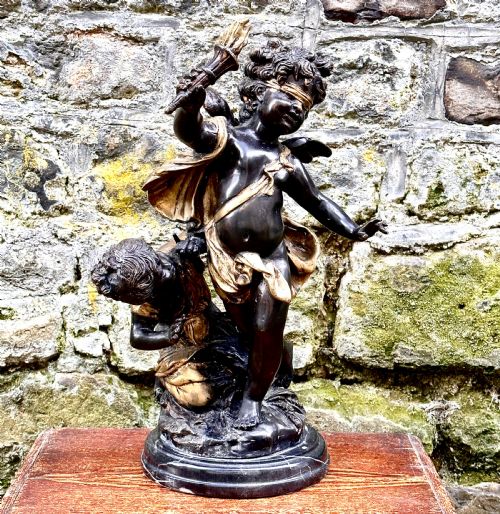
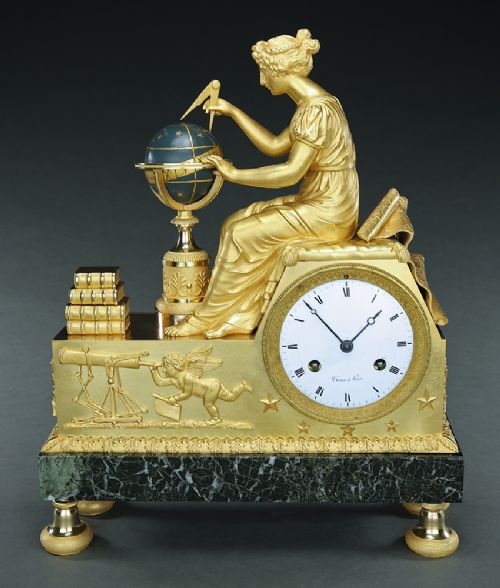
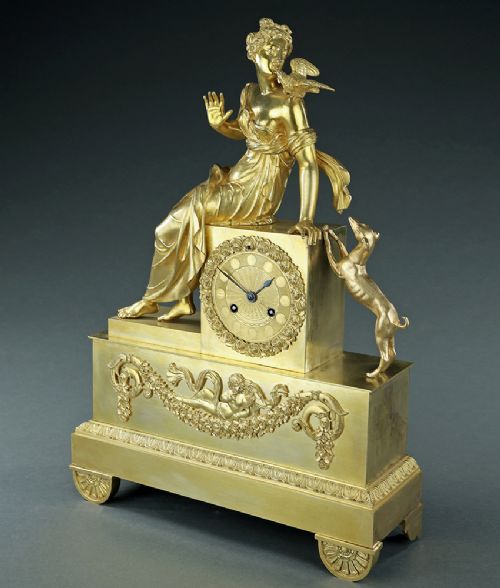
A gilt bronze allegorical figure represents an abstract concept such as astronomy, fidelity, chastity, or nature through a human form cast in metal. When you search for a gilt bronze allegorical figure, you find decorative objects primarily originating from nineteenth-century France, alongside related works from other European centres.
The objects take several distinct forms on this page, most commonly as mantel clocks featuring figural top sculptures, standalone bronze statues, and matched pairs of candlesticks or putti. Many pieces integrate contrasting materials such as marble or ormolu into their overall composition.
The styles span French Empire, Louis XVI, Rococo Revival, and Art Nouveau, reflecting shifts in taste across the Georgian and Victorian periods. You encounter pieces styled after specific historical makers as well as signed works from established nineteenth-century foundries.
Materials and construction
These works rely on bronze and cast iron as the foundational metals, shaped through traditional casting methods before receiving a gilt or ormolu surface treatment. Gilding processes apply a layer of gold to the bronze substrate, producing the characteristic bright metallic finish seen across the French Empire and Victorian pieces.
Many sculptures and clock cases incorporate heavy stone bases, using red marble, rouge marble, or white marble to anchor the metal figures. Enamel dials and brass components frequently appear within the clock mechanisms accompanying the allegorical figures.
Listings feature pieces from the nineteenth century, including items associated with the Georgian and Victorian periods.
Distinctions in quality
The refinement of the chasing and chiselling work on the metal surface distinguishes superior castings from simpler productions. Skilled artisans hand-tooled the bronze after casting to sharpen drapery folds, hair strands, and facial expressions.
The integration of materials determines the structural ambition of the piece, particularly where figures interact with complex marble bases or detailed clock movements. Foundry signatures and attributions to known makers indicate higher standards of nineteenth-century production.
Ernst Barrias·Barbedienne·Deniere Et Fils
The Gilt Bronze Allegorical Figure Glossary
- Gilt bronze
- Metal cast in bronze and treated with a gold surface layer. This finish provides a bright golden appearance that resists tarnishing.
- Ormolu
- Finely ground gold-mercury amalgam applied to bronze, common in French decorative arts. The technique creates a rich golden lustre on nineteenth-century clock mounts and sculptures.
- Allegorical figure
- A human representation of an abstract idea, virtue, or science. These figures personify concepts like nature, fidelity, or astronomy.
- Putto
- A chubby male child figure, often winged, derived from classical art. Pairs of these figures frequently appear flanking clock dials or supporting decorative elements.
- Mantel clock
- A household clock designed to sit on a fireplace mantel. These enclosures frequently incorporate figural bronze sculptures into the architectural case.
Gilt Bronze Allegorical Figure: Frequently Asked Questions
What do these figures represent?
These pieces personify abstract concepts, virtues, or natural phenomena through human forms, such as chastity, fidelity, or astronomy.
Artists drew upon classical mythology and academic traditions to communicate specific moral or intellectual themes through sculptural poses and attributes.
Are these French pieces?
The majority of these objects originate from nineteenth-century French workshops, reflecting dominant styles like Empire and Louis XVI.
French makers established distinct standards in bronze casting and ormolu gilding during the Georgian and Victorian eras.
How do I clean gilt bronze?
Dust these metal surfaces gently with a soft, dry brush to prevent the accumulation of particles in recessed details.
Avoid chemical polishes or abrasive cloths, which can strip the thin gold layer from the underlying bronze.
Where were these clocks placed?
These decorative mantel clocks stood prominently on fireplace mantelpieces in nineteenth-century drawing rooms and formal reception spaces.
Their substantial marble bases and figural top sculptures functioned as both timekeepers and sculptural centrepieces.