
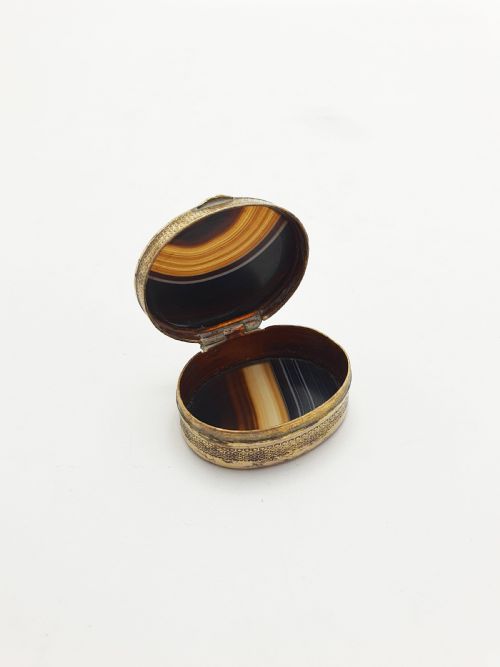


Gilt Brass Trinket Casket
These gilt brass trinket caskets are small, decorative containers designed for jewellery and keepsakes, offering a glimpse into nineteenth-century domestic elegance.
Gilt Brass Trinket Casket
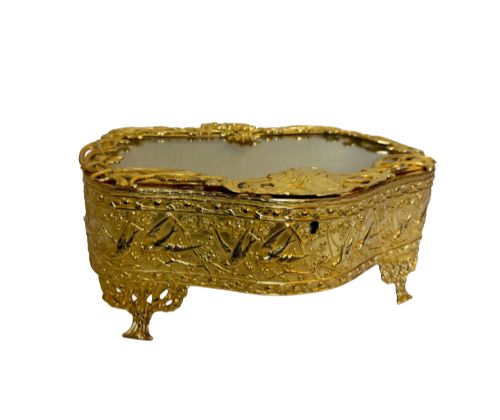
A gilt brass trinket casket is a small container designed for holding jewellery or personal valuables, often found in nineteenth-century domestic interiors. These pieces take various forms, including jewellery boxes, decorative caskets, and novelty carriage boxes.
The versions most commonly met on this page date from the nineteenth century, ranging from eighteen hundred through to nineteen hundred. Many originate from France and Italy, reflecting continental taste and decorative styles.
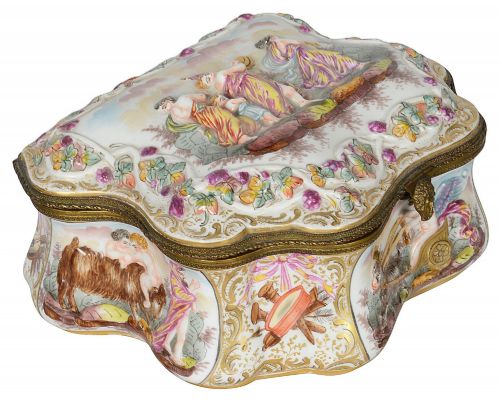
Examples appear in distinct aesthetic movements, encompassing Rococo Revival, Victorian, Art Nouveau, and Napoleon III designs. Buyers frequently encounter objects that incorporate glass, porcelain, or marble panels alongside metallic frames.
Materials and technique
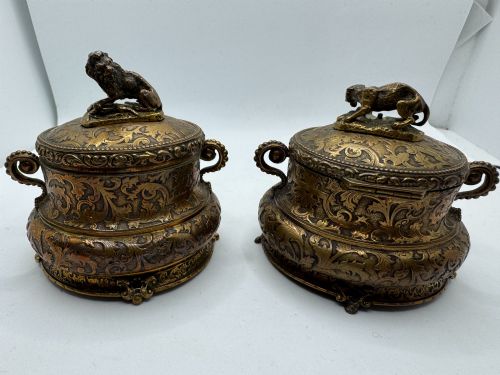
Metalworking techniques form the structural foundation of these pieces, utilising brass, gilt metal, ormolu, and bronze frames. Gilded copper electro-forming and silvered finishes also appear among the manufacturing methods.
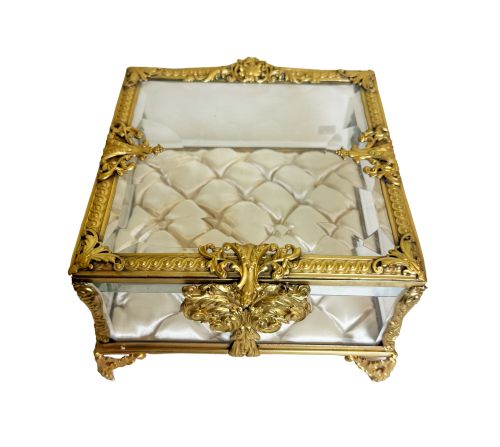
Many boxes combine metallic frames with contrasting materials such as glass, crystal, porcelain, agate, and marble. Interiors are occasionally lined with silk to protect the contents, whilst decorative details include painted finishes and sculpted finials.
One nineteenth-century French novelty box takes the delightful form of a miniature coach and horses designed as an opaline egg trinket carriage.
What separates the tiers
Quality varies according to the precision of the cast metalwork and the integration of decorative elements like hand-painted porcelain panels or bevelled glass. Finer examples display crisp detailing in the ormolu mounts and substantial weight in the bronze or brass framework.
The choice of secondary materials influences the overall standard, with natural hardstones such as agate or fine Capodimonte porcelain elevating the piece. Interiors with intact silk linings and well-fitted hinged lids represent higher levels of original craftsmanship.
AB Paris
The Gilt Brass Trinket Casket Glossary
- Ormolu
- A gilded bronze or metal mount used extensively in nineteenth-century decorative arts. This technique gives the surface the appearance of solid gold.
- Capodimonte
- A style of fine Italian porcelain noted for its sculptural relief decoration. Pieces from this tradition often feature on nineteenth-century table caskets.
- Palais Royal
- A term associated with novelty items and luxury goods sold in Parisian arcades during the nineteenth century. These objects frequently include whimsical designs like miniature carriages.
- Electro-form
- A manufacturing method using electroplating to deposit metal onto a form. This technique allowed makers to create detailed gilded copper boxes in the late nineteenth century.
- Napoleon III
- A nineteenth-century French revival style characterised by eclectic ornamentation and opulent materials. Caskets from this period often combine ormolu mounts with glass panels.
Gilt Brass Trinket Casket: Frequently Asked Questions
What were gilt brass trinket caskets used for?
These caskets served as desktop or dressing table accessories for storing small valuables, rings, and personal mementos.
Their decorative nature also made them display pieces within nineteenth-century boudoirs and drawing rooms.
How do I identify a Napoleon III casket?
Napoleon III pieces typically feature ornate ormolu mounts combined with glass or marble panels, reflecting mid-nineteenth-century French taste.
They often display heavy casting and eclectic decorative influences drawn from earlier historical periods.
Are these boxes fragile?
Many examples incorporate delicate elements such as glass panels, porcelain plaques, or silk linings that require careful handling.
The metal frames themselves are robust, but inset materials demand gentle placement on stable surfaces.
How do I date a nineteenth-century box?
Dating relies on stylistic clues such as Art Nouveau curves, Rococo Revival scrolls, or Victorian manufacturing traits.
Materials like gilded copper electro-form and specific ceramic types also help narrow down the period of production.