


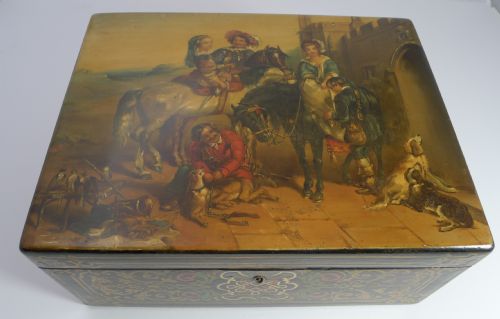

19th Century Lacquer Casket
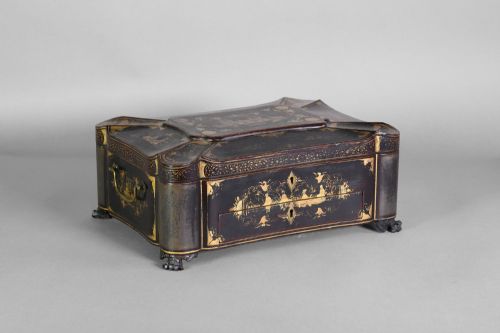
These 19th century lacquer casket examples combine intricate hand-painting with durable papier-mache and wood to hold your most treasured trinkets.
19th Century Lacquer Casket
A 19th century lacquer casket is a decorative storage container designed for sewing equipment, stationery, letters, or jewellery. These pieces range from compact personal boxes to larger cabinets intended for display on a table or desk.
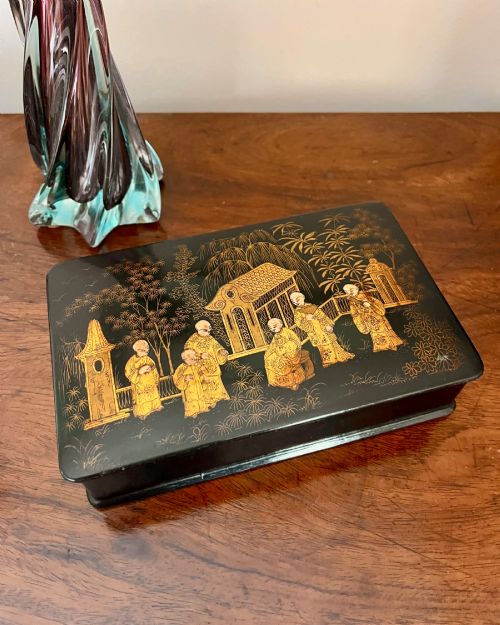
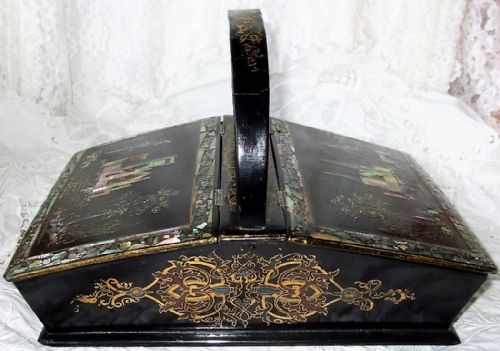
You are most likely to encounter Victorian papier-mache needlework caskets and stationery boxes on this page, often finished with black lacquer and gilt decoration. Examples also include Regency chinoiserie boxes, workboxes, and Qajar cashier boxes.
The objects serve multiple domestic purposes, functioning simultaneously as ornate surface decoration and secure storage. Their interiors frequently feature fitted compartments, trays, and compartments tailored for needles, thread, or papers.
How they were made
Maker construction relies heavily on papier-mache and lacquered wood as primary structural bases, supplemented by brass mounts for hinges and locks. Artisans applied layers of lacquer to achieve a smooth, glossy surface ready for ornamentation.
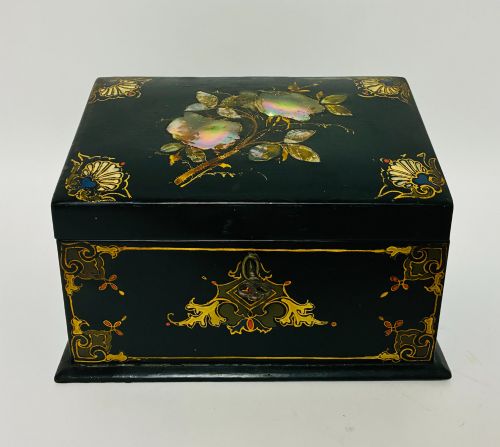
Decoration involved hand-painting, gold leaf, and mother-of-pearl inlay to create contrasting visual textures. Some items utilise Japanning techniques or delicate penwork alongside traditional gilt motifs to render pictorial scenes on the lids and sides.
Listings feature 19th century, Victorian, and Regency periods, alongside materials like papier-mache, mother-of-pearl, and gold leaf.
What varies in quality
The refinement of the hand-painted details and the precision of the gilt work dictate the aesthetic tier of each piece. Finer examples display meticulous brushwork, complex pictorial narratives, and integrated mother-of-pearl elements that catch the light.
Structural integrity of the papier-mache or wooden carcase, alongside the completeness of internal fitted trays and original brass hardware, influences the overall standard. Pieces retaining their original interior compartments and working locks command greater appreciation.
Jennens and Bettridge
The 19th Century Lacquer Casket Glossary
- Papier-mache
- A composite material made from paper pulp or reinforced paper sheets mixed with glue, pressed and dried to form a rigid shape suitable for lacquering.
- Japanning
- A European imitation of East Asian lacquerwork, created by applying layers of varnish and heat-treating the surface to produce a glossy black or coloured finish.
- Chinoiserie
- A European artistic style reflecting Chinese motifs and decorative techniques, frequently applied to furniture and boxes during the Regency and Victorian periods.
- Workbox
- A portable container fitted with compartments and accessories specifically designed for needlework, sewing supplies, and small crafting tools.
- Bijouterie
- A small display case or decorative box intended to hold precious trinkets, jewellery, and personal ornaments.
19th Century Lacquer Casket: Frequently Asked Questions
What were 19th century lacquer caskets used for?
These boxes served specialised domestic functions, holding items such as sewing needles, correspondence, or valuable jewellery. Wealthy households placed them in parlours and bedrooms as both functional storage and decorative ornaments.
Their fitted interiors kept delicate items organised and protected from dust and light. Over time, their usage evolved from practical work containers to prized display objects.
How do I clean a lacquer box?
Dust the surface gently with a soft, dry microfibre cloth to remove loose particles. Avoid using water, abrasive cloths, or chemical cleaning sprays, as moisture can damage the fragile lacquer and gilt decoration.
Keep the box away from direct sunlight and heat sources to prevent the lacquer from cracking or warping. Professional conservation is recommended for any deeper cleaning or structural repairs.
How can I tell a Regency box from a Victorian one?
Regency pieces often feature lighter wood foundations, penwork, or delicate chinoiserie designs reflecting early nineteenth-century aesthetics. They frequently take the form of specialised workboxes or baskets.
Victorian examples commonly utilise dense papier-mache construction with heavy black lacquer, mother-of-pearl inlay, and elaborate hand-painted floral or animal motifs. Stationery boxes and ladies' jewellery caskets become particularly prevalent in this later era.
Are the interiors usually original?
Many boxes retain their original paper linings, silk compartments, and wooden lift-out trays designed for specific tasks like needlework. The presence of these fitted elements adds significant historical context to the piece.
Some interiors show signs of wear or have received sympathetic repairs over the decades of use. Examining the joinery and lining materials helps determine if the internal components match the age of the outer carcase.