


Gilt Brass Trinket Box
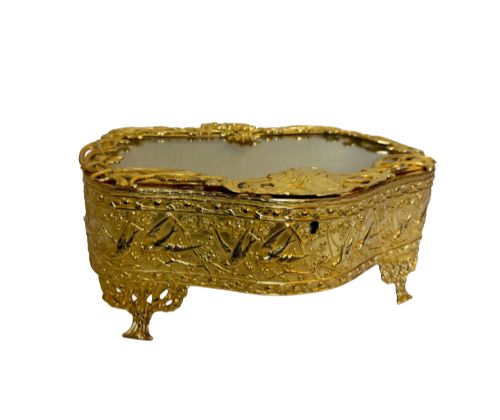
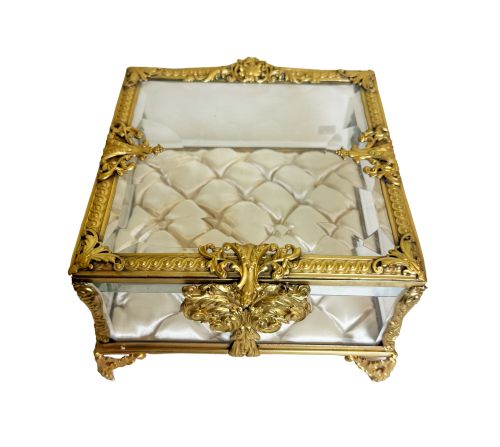
A gilt brass trinket box brings small-scale elegance to a dressing table, housing rings and keepsakes within structured metal frames.
Gilt Brass Trinket Box
A gilt brass trinket box functions as a small container for jewellery, pills, or personal mementos, appearing across periods from the eighteenth century into the twentieth. These pieces take various forms, including jewellery caskets, pill boxes, and table containers.
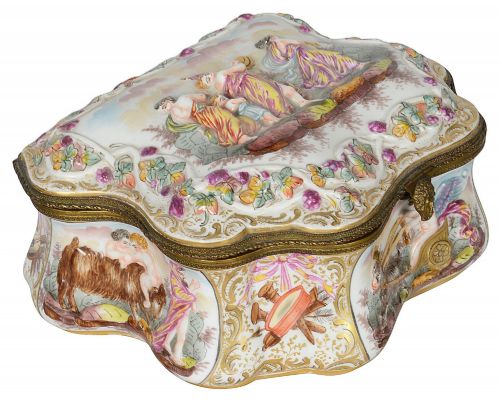
The selection ranges from Georgian and Victorian examples to specific continental designs, notably French ormolu and Italian porcelain caskets. Buyers encounter objects shaped as oval boxes, glass containers, and novelty pieces like carriages.
What varies in quality
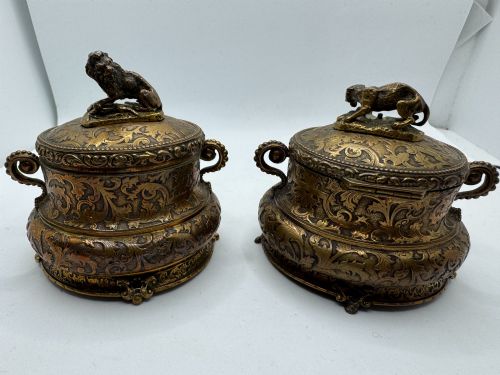
Quality depends on the crispness of the metal casting and the precision of the chording or chasing on the gilt bronze and ormolu mounts. Finer pieces display sharply defined ornamentation and well-fitted hinges that operate smoothly.
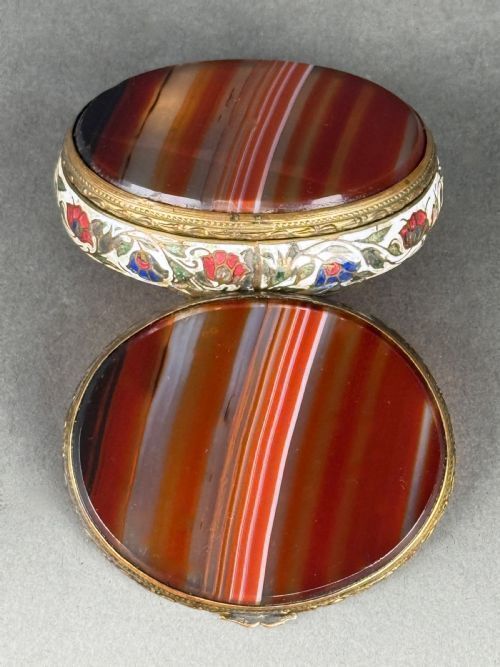
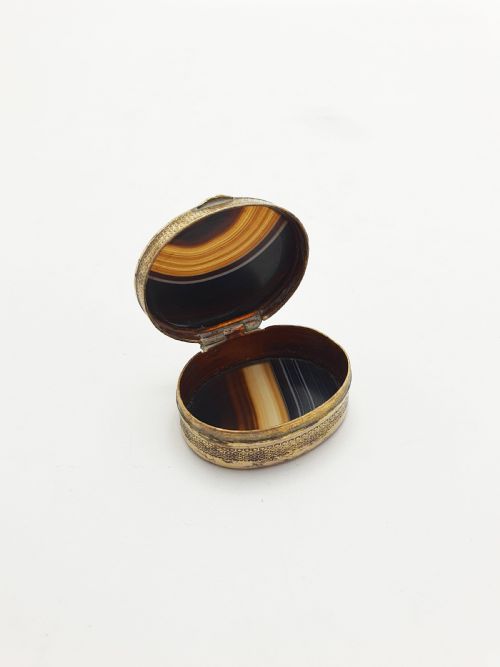
Material selection marks another distinction, where natural hardstones like banded agate or carnelian, and hand-painted porcelain or enamel plaques, elevate standard brass work into superior decorative objects.
Miniature coach and horse novelties from the nineteenth century allowed travellers to carry their trinkets inside a tiny gilded carriage.
The Gilt Brass Trinket Box Glossary
- Ormolu
- Gilt bronze ornamentation applied to furniture and decorative objects. This technique involves coating bronze with a finely ground gold-mercury amalgam and heating it to leave a rich gold layer.
- Champleve enamel
- A technique where troughs or cells are sunk into the surface of a metal plate and filled with vitreous enamel before firing. The resulting piece shows vibrant coloured designs bordered by thin metal lines.
- Capodimonte
- A style of Italian porcelain originating from Naples, known for highly detailed modelled figures and relief decoration. Table caskets utilise these decorated porcelain plaques within metal frames.
- Palais Royal
- A term associated with luxury goods retailed near the Palais-Royal in Paris during the nineteenth century. These items often include novelty pieces, miniature carriages, and finely made glass or gilt metal containers.
- Hardstone
- A semi-precious stone such as agate, carnelian, or jasper used in miniature box construction. Artisans sliced and polished these stones to form the lids and panels of decorative boxes.
Gilt Brass Trinket Box: Frequently Asked Questions
What is a gilt brass trinket box used for?
These boxes served historically to hold small valuables such as rings, brooches, snuff, or pills on a dressing table or desk. Today they function similarly as decorative containers for modern jewellery and small keepsakes.
Their compact scale allows them to sit neatly on surfaces while adding a decorative focal point to a room.
How do I identify French pieces?
French examples often utilise ormolu, champleve enamel, or specific forms like glass and gilt bronze caskets associated with nineteenth-century production. Details such as floral mounts and finely cast frames point towards French manufacture.
Makers and retailers from Paris produced numerous decorative boxes featuring distinctive stylistic elements of the period.
What materials are used besides brass?
Makers incorporated porcelain, glass, marble, and silk alongside gilt metal frames. Hardstones like banded agate and carnelian frequently form the lids and panels of nineteenth-century boxes.
These varied combinations distinguished simpler utility boxes from more elaborate decorative containers.