


Antique Agate Box
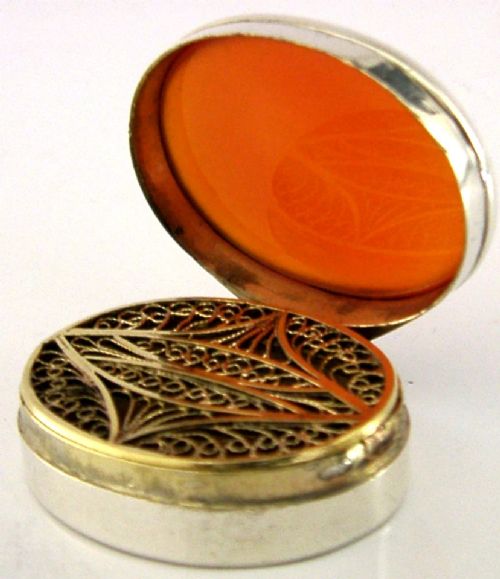
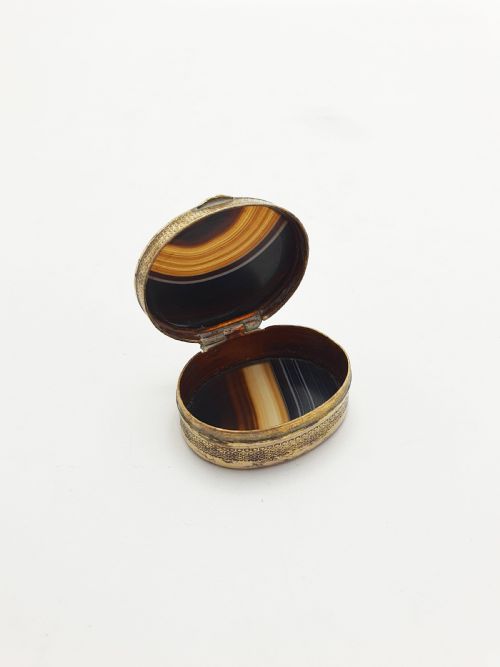
An antique agate box brings together natural chalcedony and precious metal mounts to form a small, tactile vessel designed for snuff, pills, or keepsakes.
Antique Agate Box
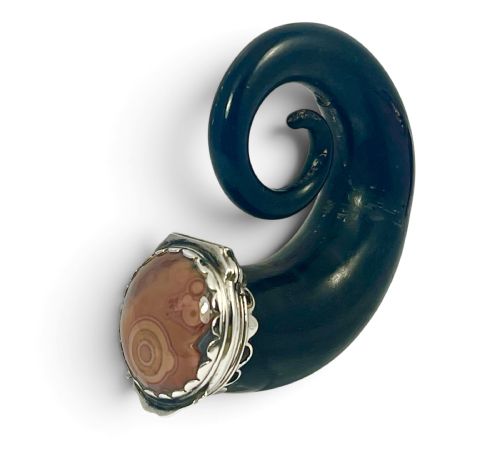
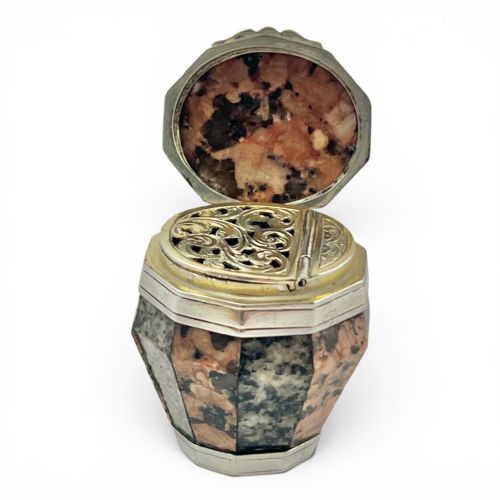
The form adapts to various uses, including desk accessories, double-sided pill containers, and larger trinket boxes mounted in silver, gilt brass, or gold. Scottish and English iterations dominate the record, often incorporating pebble-work or silver gilt mounts.
Buyers encounter items ranging from miniature pocket vinaigrettes to substantial table boxes, all utilising natural stone slices fitted closely to metal frames.
How they were made
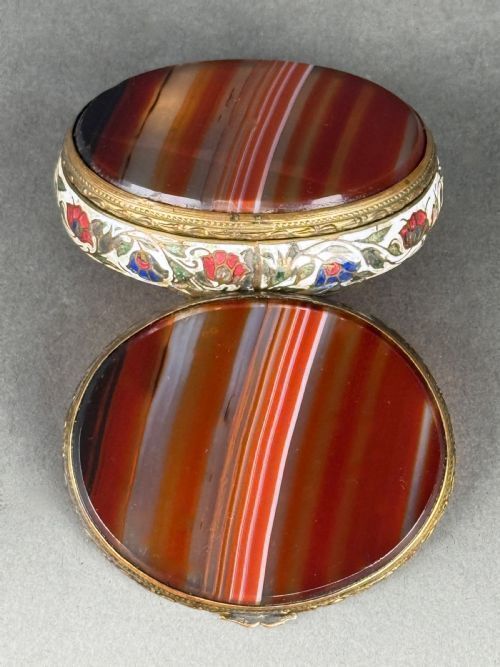
Lapidaries selected stones like banded agate and moss agate, slicing the chalcedony thin to reveal natural strata before polishing the exterior to a smooth lustre. These stone panels were then mounted into frames constructed from sterling silver, gilt metal, brass, or gold.
Silversmiths and box makers fabricated hinges and bezels to secure the brittle stone plates without fracturing the material, sometimes adding champleve enamel or horn elements to complete the structure.
Watchmakers occasionally repurposed old boxwood pots for storing delicate watch oils, proving that even tiny mineral slices found a practical workbench home.
What varies in quality
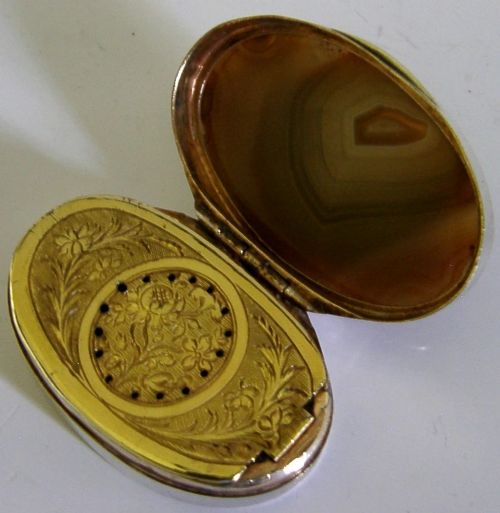
Quality rests in the intensity and natural patterning of the agate stone itself, alongside the precision with which the mineral plates meet their metal mounts. Finer examples display vivid, uninterrupted banding and tight hinge mechanics that operate without lateral play.
The weight and purity of the housing metal, whether sterling silver, gold, or gilded brass, distinguish standard commercial boxes from exceptional workshop productions.
Hilliard & Thomason·Edward Smith·J. Fraser
The Antique Agate Box Glossary
- Agate
- A form of cryptocrystalline quartz, notable for its colourful concentric bands or moss-like inclusions. Lapidaries slice and polish this mineral to form the primary lid and body panels of the box.
- Vinaigrette
- A small ornamental box featuring a pierced internal grill, designed to hold a sponge soaked in aromatic vinegar. These vessels date principally to the Georgian and Victorian eras.
- Snuff box
- A pocket-sized container fashioned to hold dry powdered tobacco for nasal ingestion. The tight closure prevents moisture from spoiling the contents.
- Banded agate
- A variety of chalcedony displaying distinct, parallel lines of contrasting colour. This material forms the characteristic striped lid panels seen on Scottish pebble jewellery and boxes.
- Gilt metal
- Base metal treated with a thin layer of gold applied through fire gilding or electroplating. This technique provided the appearance of solid gold for mounts and frames.
Antique Agate Box: Frequently Asked Questions
What were antique agate boxes used for?
These small containers primarily held snuff, medicinal pills, or scented sponges used to refresh the senses in crowded rooms. Wealthy owners carried them daily in pockets or reticules as practical fashion accessories.
Larger versions remained on dressing tables or writing desks to store stamps, trinkets, or sealing wax. Their dual function as utility items and displays of mineral wealth made them popular gifts throughout the nineteenth century.
How do I date an antique agate box?
Dating relies heavily on assay marks stamped onto the silver or gold mounts, which record the exact year and city of manufacture. Stylistic shifts in the metalwork, such as Georgian neoclassical lines versus Victorian rococo revival scrolls, offer further chronological clues.
Construction methods also change over time, with earlier Georgian hinges showing hand-file marks while later Victorian pieces utilise more standardised machine fabrication. Comparing the housing style against documented maker marks secures the period.
Are Scottish agate boxes different from English ones?
Scottish boxes often incorporate local pebble stones gathered from riverbeds and hillsides, frequently arranged in geometric mosaic patterns or set within horn and silver mounts. These regional pieces reflect the nineteenth-century enthusiasm for Highland-themed ornaments popularised during the Victorian era.
English boxes tend to feature imported banded or moss agates mounted in sterling silver or gilt brass without the specific pebble-mosaic arrangement characteristic of Scottish workshops.
How should I care for an antique agate box?
Protect the piece by keeping it away from extreme temperature shifts and harsh chemical cleaners that can degrade the metal mounts or damage the stone polish. Soft cloths suffice for removing dust from both the chalcedony panels and the metal frames.
Store the box in a stable, dry environment and avoid dropping it, as thin agate slices remain vulnerable to impact fracture despite their crystalline hardness.